
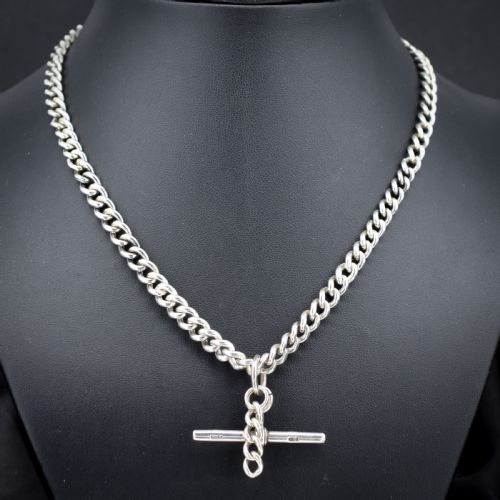
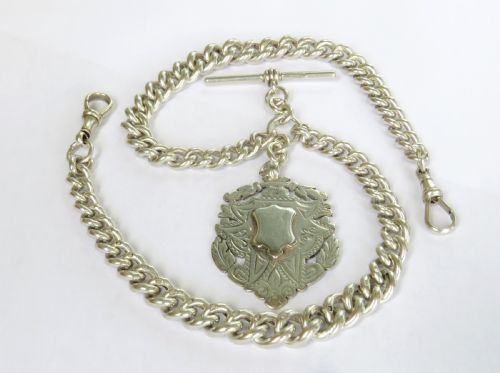
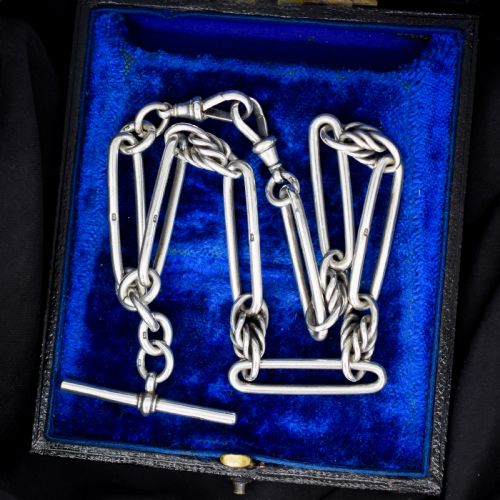
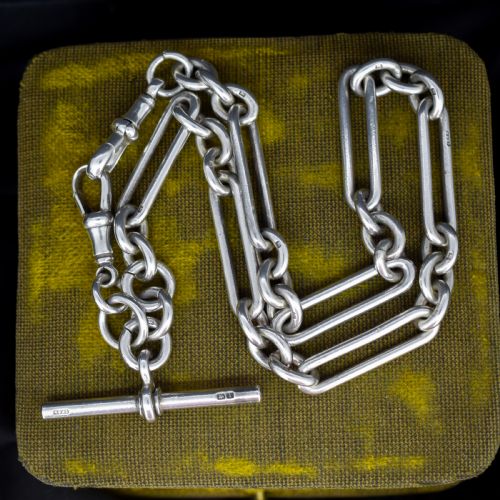

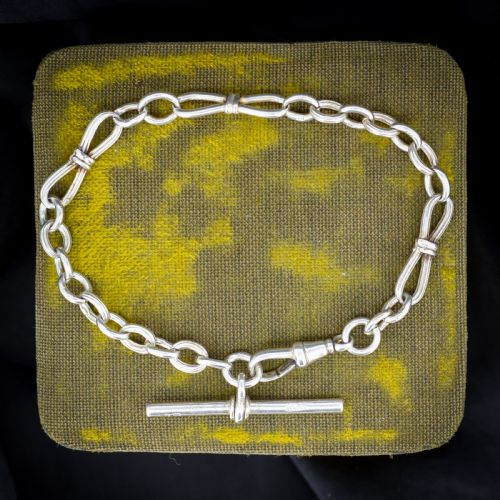


Heavy Sterling Silver Chain
A heavy sterling silver chain provides substantial weight and utility, evolving from a functional pocket watch attachment to a striking necklace.
Heavy Sterling Silver Chain
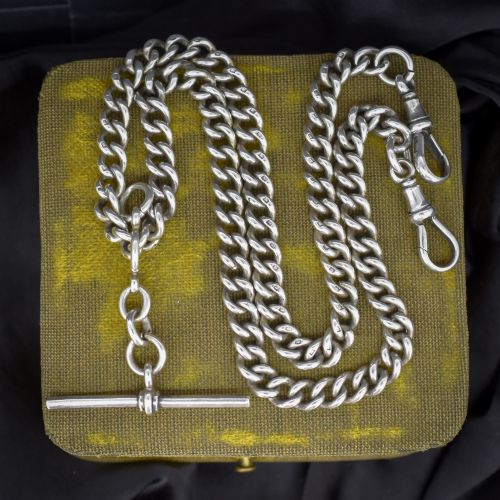
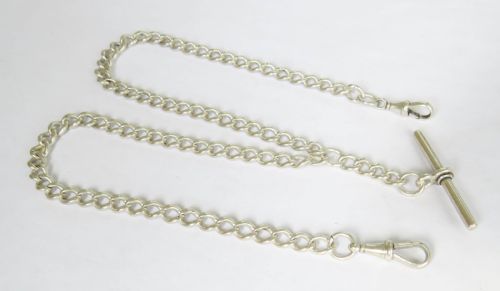
When you search for a heavy sterling silver chain, you encounter pieces designed to secure timepieces in the nineteenth and early twentieth centuries. These items predominantly take the form of pocket watch chains, albert chains, and necklaces spanning the Victorian, Edwardian, and Art Deco periods.
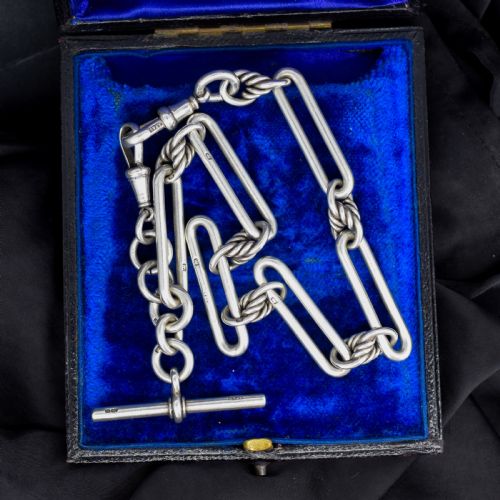
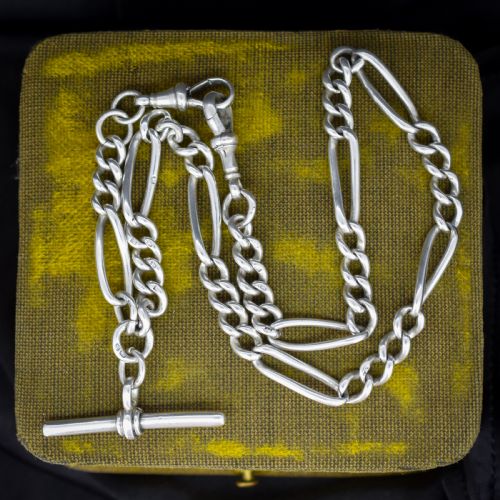
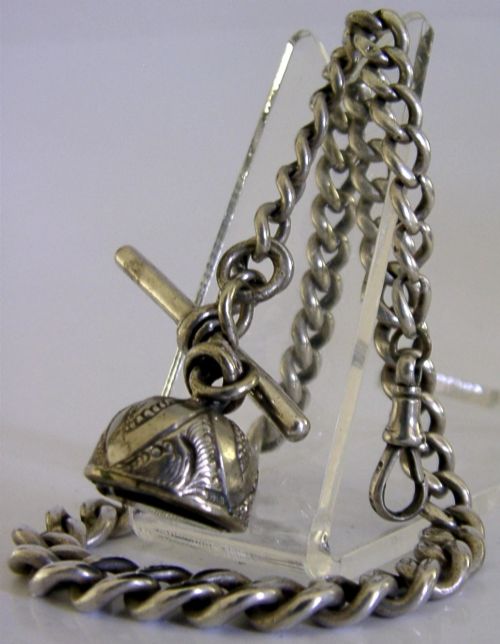
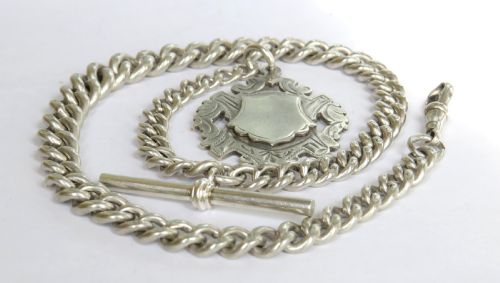
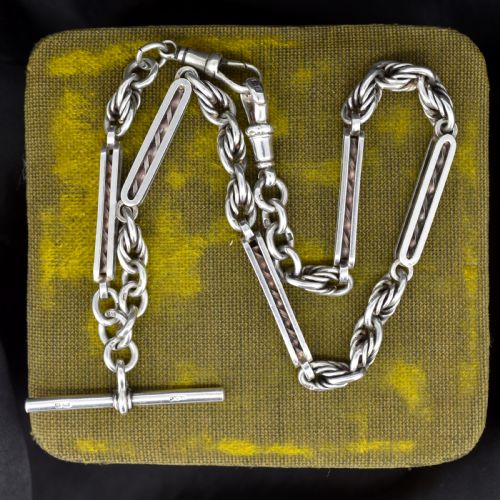
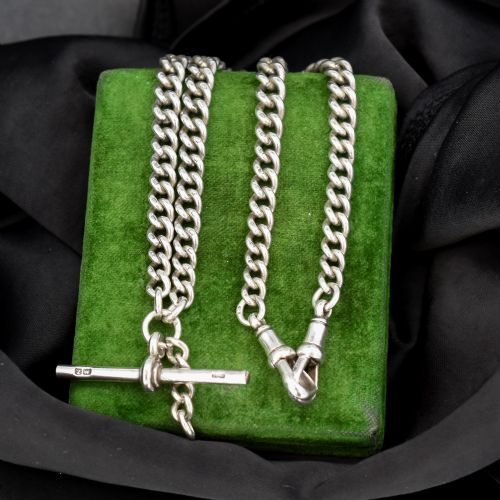
You are most likely to meet substantial curb link chains and trombone link designs fitted with dog clips and T-bars. The inventory demonstrates that these robust ornaments frequently incorporate love knots, seal fobs, or floral medallions alongside the primary links.
The objects originate across the late nineteenth century and the decades leading up to 1930, reflecting an era of solid metalwork. Surviving examples adapt readily to contemporary wear as necklaces and bracelets.
Distinctions in quality
The standard of a heavy sterling silver chain rests upon the crispness of its links and the integrity of its mechanical fittings. Superior pieces display well-defined hallmarks, tight jump rings, and fully operational dog clips that snap shut firmly.
Substantial gram weight and balanced proportions distinguish finer examples from lighter iterations. The retention of original components, including matching T-bars and associated fobs, elevates the completeness and historical character of the piece.
Listings feature sterling silver and gold materials across Victorian, Edwardian, and Art Deco styles.
The Heavy Sterling Silver Chain Glossary
- Albert chain
- A watch chain designed to secure a pocket watch in a waistcoat pocket, typically featuring a T-bar at one end and a dog clip at the other. This format is widely worn today as a necklace.
- Dog clip
- A spring-loaded swivel clasp attached to watch chains for fastening to a pocket watch or fob. It allows the attached item to rotate freely without twisting the chain.
- T-bar
- A short transverse bar attached to a watch chain that slips through a buttonhole to anchor the chain securely. It remains a decorative feature on pieces converted to necklaces.
- Trombone link
- An elongated rectangular metal link with rounded ends, frequently alternated with smaller connecting links in period chains. This pattern provides a distinct geometric rhythm.
- Curb link
- A type of chain made of interlocking uniform links that lie flat against the skin. Chunky variations of this form provide notable weight and presence.
Heavy Sterling Silver Chain: Frequently Asked Questions
How do I wear a pocket watch chain?
You can wear a pocket watch chain around the neck as a necklace by joining the ends or utilising the dog clip. Many buyers remove the T-bar or let it hang as a decorative pendant drop.
Alternatively, longer iterations wrap multiple times to form a layered bracelet or shorter choker style.
How do I date these chains?
You date these pieces by examining the assay office hallmarks stamped onto the individual links, T-bars, and dog clips. These stamps often include date letters and sterling silver markers.
Stylistic elements like trombone links or floral fob medals also point towards Victorian, Edwardian, or Art Deco production periods.
Are these chains solid silver?
The pieces recorded in the evidence consist of solid sterling silver and continental silver standards. They are built for durability and carry substantial gram weights.
Makers constructed them to hold heavy pocket watches securely, utilising robust metal throughout each link and fastening.