

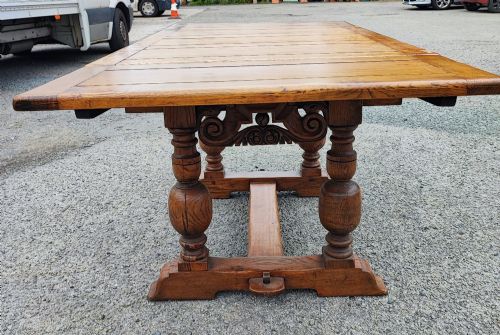
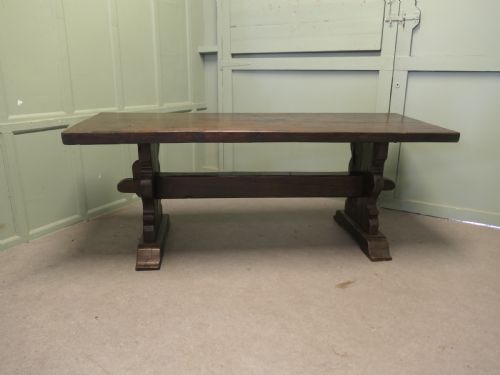
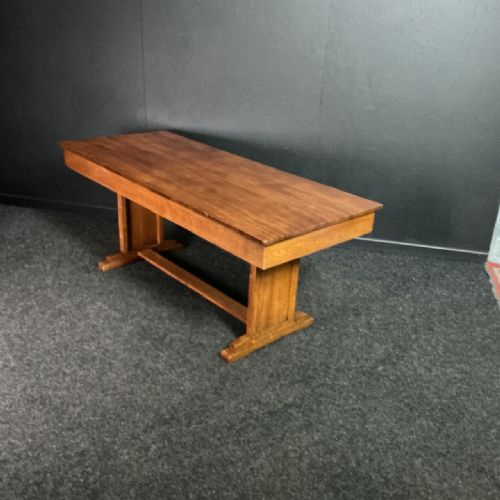
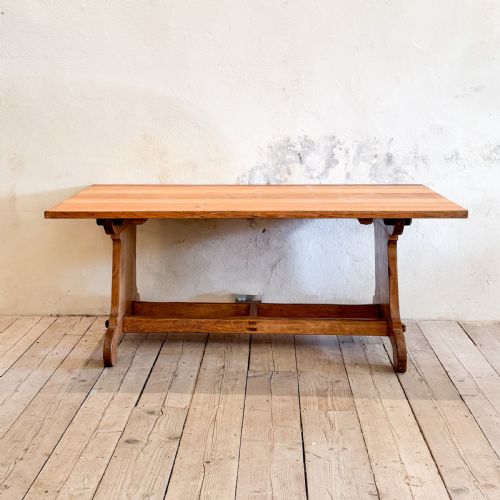
Heavy Refectory Table
A heavy refectory table anchors a room with substantial timber and centuries of utilitarian purpose.
Heavy Refectory Table
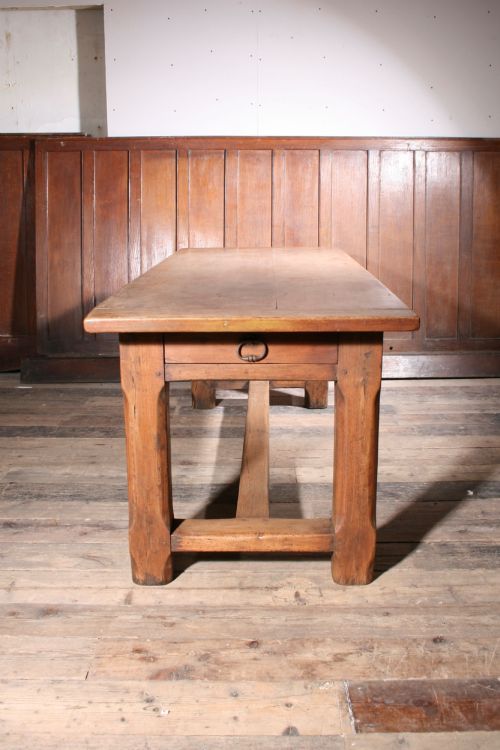
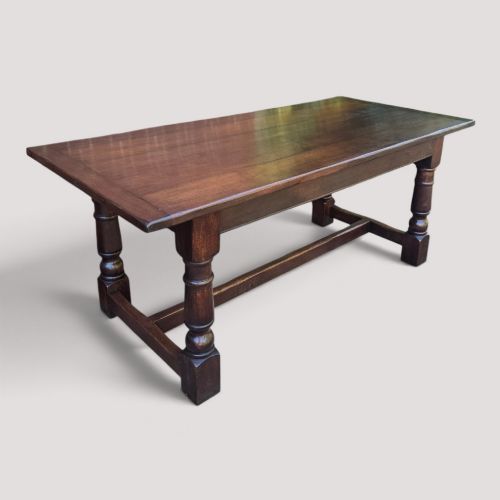
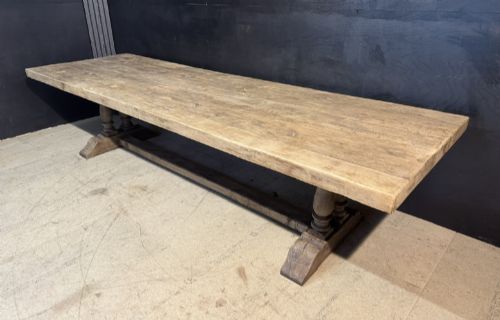
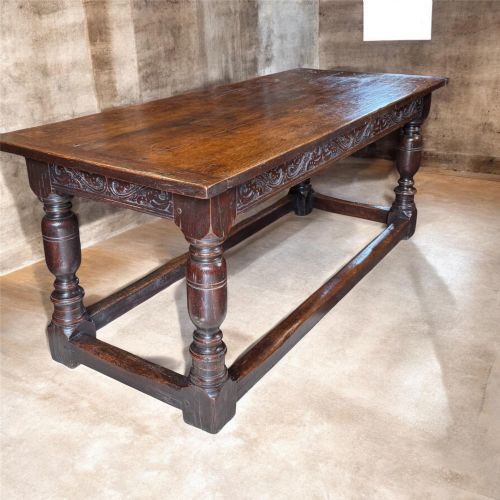
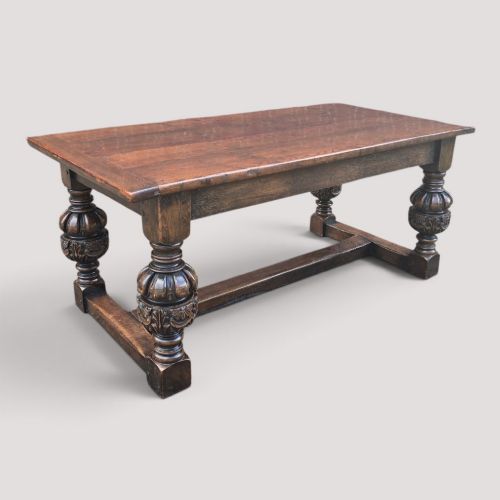
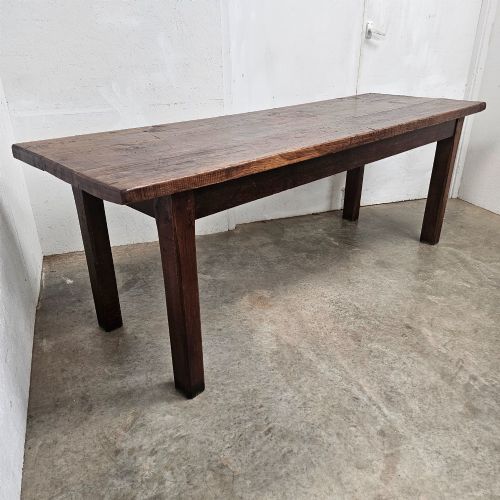
A heavy refectory table is a long, sturdy dining or utility surface designed originally for communal dining in monasteries and large halls. When buyers search for this phrase, they find substantial timber boards supported by trestles, turned legs, or heavy frames.
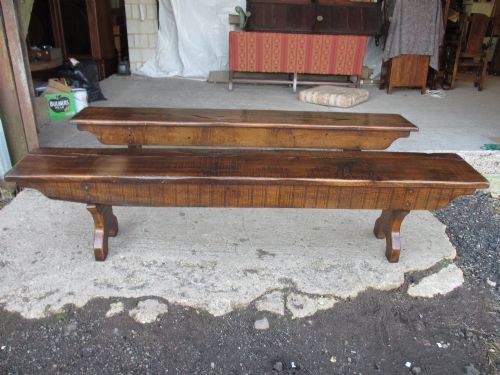
The pieces on this page span several centuries and revival styles, though the majority are substantial oak examples from the nineteenth and early twentieth centuries. Alongside traditional dining tables, the listings include related forms such as library tables, tavern tables, and paired benches.
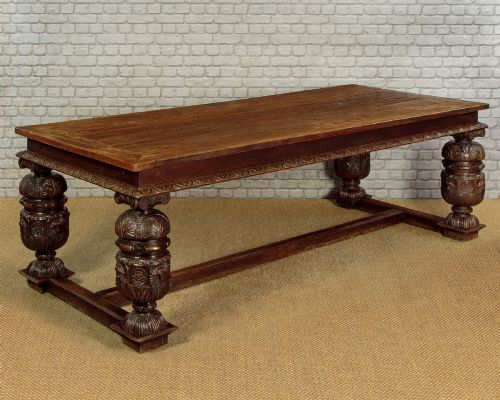
Origins vary between English workshops and continental European makers, with French oak and English oak being the most common timbers. Buyers encounter both genuine early period survivals and later nineteenth-century revival interpretations built in the Elizabethan or Jacobean taste.
Construction and materials
Construction relies heavily on native hardwoods, primarily oak, with occasional use of elm, walnut, and pine for tops and framing. Timber is selected for thick section size, providing the substantial weight and structural rigidity characteristic of the form.
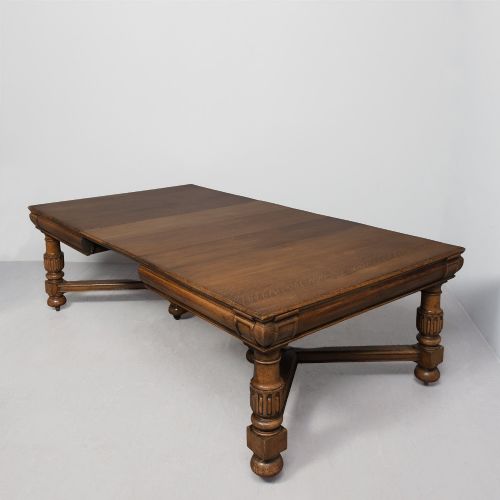
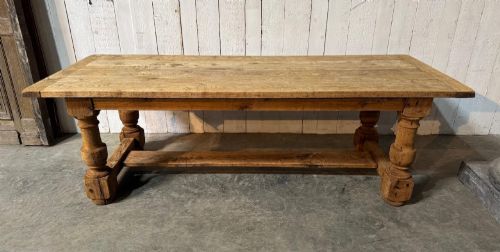
Joinery methods include traditional pegged mortise and tenon joints connecting heavy legs to thick top planks. Tops are constructed from single, double, or multiple planks, sometimes incorporating draw leaves or trestle bases with shaped ends for extra support.
Heavy Refectory Table Retail Price Guide 2026
Typical asking prices for heavy refectory table among the pieces listed under this phrase on Sellingantiques today, from the lower quarter to the upper quarter. They describe what is for sale here now, not the wider market.
Listings feature timbers including oak, solid oak, walnut, elm, pine, and cast iron across periods spanning from the seventeenth century to the 1930s.
Quality variations
Quality in a heavy refectory table is determined by the selection of timber and the integrity of the original construction. Tables featuring single-plank timber tops or dense heartwood oak display greater material substance than those assembled from smaller secondary boards.
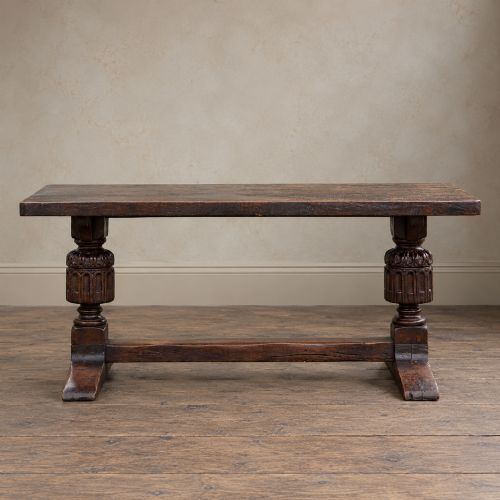
Hand-carved detailing on trestle ends and skirts distinguishes finer workshop production from plain utilitarian pieces. The proportion between the massive top and the supporting underframe dictates the visual balance and overall stability of the table.
The Heavy Refectory Table Glossary
- Refectory table
- A long dining table traditionally used in monastic refectories for communal meals. These pieces are characterised by their elongated proportions and sturdy underframes.
- Draw leaf table
- A dining table equipped with sliding leaves tucked beneath the main top that pull out to extend the surface length. This mechanism allows the table to accommodate larger gatherings when needed.
- Trestle base
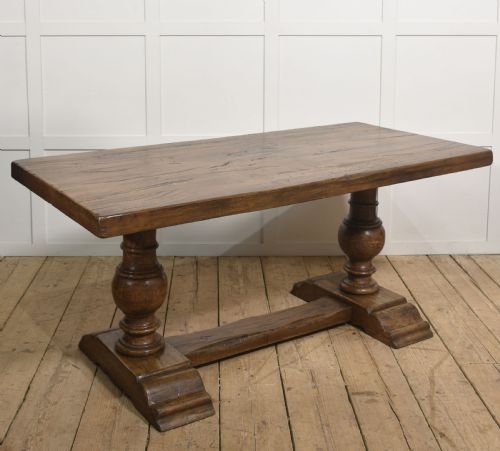
- A support structure consisting of two or more upright frames connected by a horizontal stretcher beam. This design provides robust load-bearing strength for long timber tops.
- Plank top
- A table surface constructed from individual boards joined edge to edge. The width and grain pattern of these boards indicate the maturity of the timber used.
Heavy Refectory Table: Frequently Asked Questions
What is a heavy refectory table used for today?
These tables function primarily as large kitchen or dining surfaces suitable for daily family life and entertaining. Their robust construction handles heavy everyday use without instability.
Beyond dining, many people utilise them as generous library or workspace desks in larger domestic rooms and studies.
How do I tell an older refectory table from a revival piece?
Examining the underside timber marks, joint construction, and wear patterns helps determine the age of the piece. Seventeenth-century examples display hand-cut joinery and surface oxidation developed over centuries of exposure.
Revival pieces from the nineteenth and twentieth centuries often utilise machine-sawn components and standardised fixings while mimicking earlier Elizabethan or Jacobean styles.
Are single plank tops better than multi plank tops?
Single plank tops are uncommon and valued for displaying wide, uninterrupted grain patterns from mature trees. They represent substantial timber selection from large historical trees.
Multi-plank tops remain entirely authentic to the tradition, as wide trees were historically scarce, requiring joiners to edge-join multiple boards together.
How do I care for a heavy oak refectory table?
Maintaining solid timber surfaces involves regular dusting with a dry cloth and occasional application of natural beeswax to nourish the wood grain. Avoiding excessive moisture and direct heat sources prevents the timber from warping or splitting.
Because the wood responds to ambient humidity changes in the room, keeping a stable indoor climate protects the historic joinery over time.