




Heavy Oak Desk
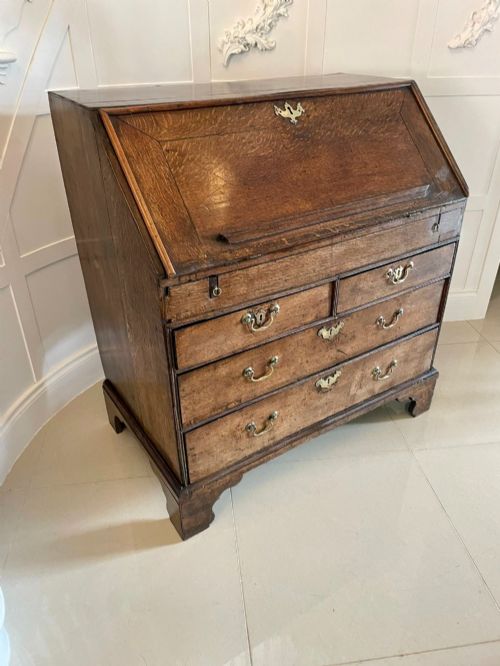
A heavy oak desk anchors a room with substantial timber and presence, built to last generations in working spaces.
Heavy Oak Desk
A heavy oak desk brings together dense domestic timber and solid construction from the Victorian period through to the nineteen thirties. These pieces serve as working surfaces designed for serious study, business, or library use.
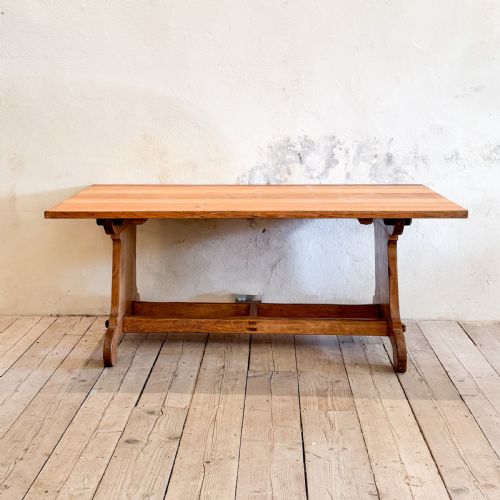
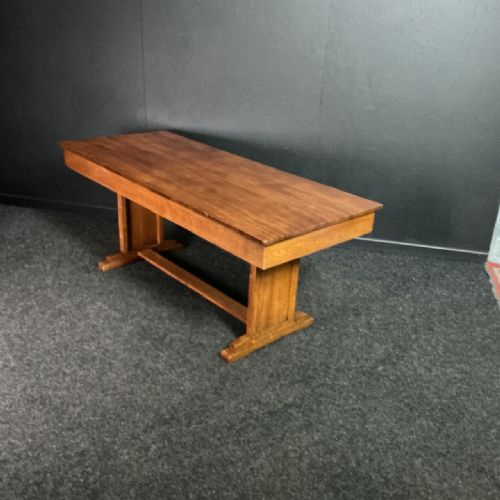
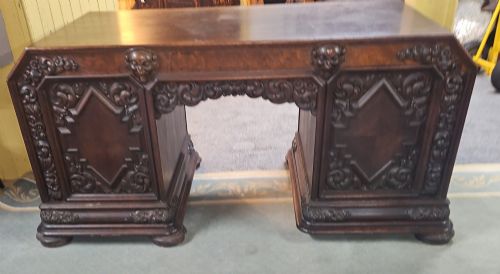
The version most commonly met on this page relies on robust oak frames, often paired with pedestal arrangements or writing table formats. Gothic Revival, Jacobean Revival, and Arts and Crafts influences appear frequently across the timber surfaces.
How they were made
Makers utilised solid oak for the primary framework and writing surfaces, imparting the characteristic heft and durability seen in these pieces. Joinery relied on traditional methods to support the heavy weight of the timber.
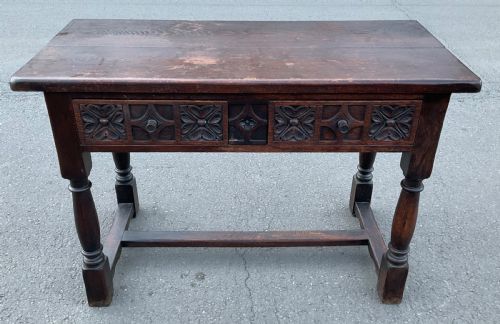
Carving and surface shaping appear across panels and edges, reflecting Victorian and revivalist tastes of the nineteenth and early twentieth centuries.
Heavy Oak Desk Retail Price Guide 2026
Typical asking prices for heavy oak desk among the pieces listed under this phrase on Sellingantiques today, from the lower quarter to the upper quarter. They describe what is for sale here now, not the wider market.
An equestrian jockey cap inkstand stands ready to oversee the paperwork.
What varies in quality
The standard of timber selection and the depth of carving separate individual examples, with superior pieces displaying carefully chosen grain patterns. The integration of secondary materials such as brass fittings or leather inserts alters the overall character.
Proportion and structural integrity dictate the standing of a desk, where balanced design matches the inherent weight of the oak.
The Heavy Oak Desk Glossary
- Pedestal desk
- A form comprising two freestanding banks of drawers supporting a central writing surface. This layout provides substantial storage alongside a fixed top.
- Writing table
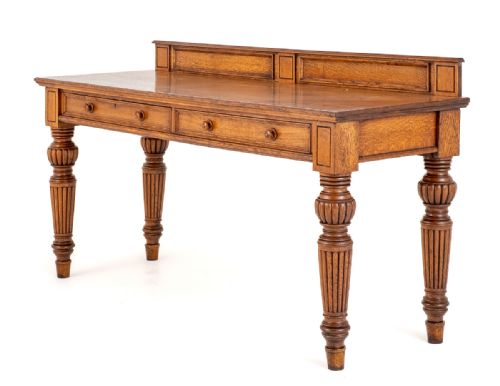
- A freestanding table designed primarily for correspondence rather than storage. These examples feature legs rather than pedestals.
- Gothic Revival
- A design movement drawing inspiration from medieval architecture and ornament. Pieces display pointed arches, tracery, and heavy carved details.
- Arts and Crafts
- A style emphasising honest construction and visible craftsmanship over applied ornament. Simple lines and natural timber textures define this approach.
- Jacobean Revival
- A revival style referencing seventeenth-century English furniture. Turning, geometric panels, and deep relief carving typify this aesthetic.
Heavy Oak Desk: Frequently Asked Questions
What is a heavy oak desk?
A heavy oak desk is a solid timber workspace built during the nineteenth or early twentieth century. These pieces were constructed for demanding administrative or library use.
They utilise dense oak timbers and traditional joinery to achieve exceptional durability and a commanding visual presence in a room.
How do I date a desk?
Dating relies on examining the construction methods, timber preparation, and decorative styles present on the piece. Revival movements offer clear stylistic clues.
Victorian and early twentieth-century examples display specific characteristics in their handles, drawer construction, and carved motifs that help place them in time.
Are these desks suitable for daily work?
These desks provide sturdy, generous surfaces well suited to contemporary study or office use. Their solid construction easily accommodates modern equipment.
Placing them in a room requires attention to their considerable weight and physical dimensions to ensure a proper fit.
What styles influence these pieces?
Revival styles dominate this category, drawing heavily on Gothic, Jacobean, and Arts and Crafts traditions. Makers adapted historical motifs for Victorian interiors.
Carved panels, geometric mouldings, and robust structural forms connect these desks to broader nineteenth-century design movements.