





Heavy Metal Trunk
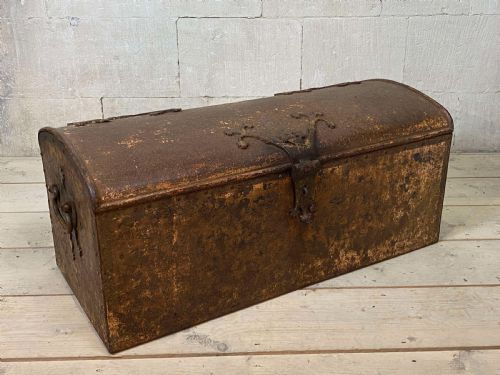
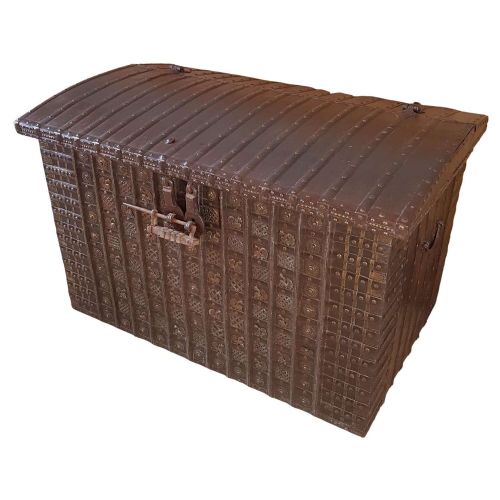
These heavy metal trunk examples combine timber and iron for serious security, offering robust storage for everything from silver to travel gear.
Heavy Metal Trunk
A heavy metal trunk functions primarily as a secure storage container, frequently encountered in oak and pine alongside iron bands and bindings. These pieces range from Victorian silver chests to earlier continental coffers.
The selection here encompasses military campaign cases, Indian dowry chests, and traditional European coffers. Oak and pine dominate the domestic examples, while hardwood and sheet metal appear in regional pieces.
Buyers seeking a heavy metal trunk will find forms varying from domed storage boxes to reinforced travel packing cases. Many retain original brass and iron hardware, showing utilitarian origins across the nineteenth century.
How they were made
Construction relies on solid timbers such as oak, pine, and teak, joined to form rigid boxes. Iron bands, straps, and brackets are then fastened to reinforce the corners and lids against heavy strain.
Blacksmiths and cabinetmakers utilised wrought iron and steel for hinges, locking mechanisms, and exterior strapping. Brass plating and corner mounts appear on finer Victorian and Middle Eastern boxes for decorative accent.
Heavy Metal Trunk Retail Price Guide 2026
Typical asking prices for heavy metal trunk among the pieces listed under this phrase on Sellingantiques today, from the lower quarter to the upper quarter. They describe what is for sale here now, not the wider market.
Geographic origins range from British country houses and German workshops to Rajasthan and Middle Eastern trading routes.
What varies in quality
Quality rests in the integrity of the original construction and the survival of working locking mechanisms. Pieces retaining intact internal fitted trays and maker details command greater interest.
The proportion of the timber and the weight of the metal bindings define the physical character of each box. Superior examples display careful dovetailing and substantial ironwork rather than superficial decoration.
Allen of London
The Heavy Metal Trunk Glossary
- Coffers and Chests
- Sturdy storage boxes with hinged lids, traditionally used for valuables before the widespread use of fitted wardrobes and drawers.
- Silver Chest
- A heavy timber box reinforced with iron or steel bands, specifically designed and lined to store family silver securely.
- Campaign Case
- A portable packing trunk built for travel, often featuring recessed brass handles and robust metal corners to withstand transit.
- Wrought Iron
- Iron worked by hand into bars and straps, utilised to bind and reinforce the exterior corners of heavy storage chests.
- Damchiya Dowry Chest
- An ornate regional storage trunk from India, typically banded in iron and used traditionally for household linens and valuables.
Heavy Metal Trunk: Frequently Asked Questions
What were heavy metal trunks used for?
These trunks served to secure valuable household possessions, plate silver, or personal effects during transit and storage. Their robust construction protected contents from theft, moisture, and rough handling.
Domestic silver chests stayed within country houses to guard dining wares, while military packing cases accompanied officers on campaign journeys across regions.
How do I date a metal bound trunk?
Dating relies upon the construction joints, timber choice, and the style of the ironwork or locks. Early pieces from the sixteenth or seventeenth centuries display hand-forged strapwork and simpler dovetailing.
Nineteenth-century examples, such as Victorian silver chests, often incorporate machine-rolled steel bands, brass corners, and maker stamps or fitted internal partitions.
Are these trunks suitable for daily storage?
They provide exceptionally sturdy storage for blankets, books, or bulky items within a modern interior. Their deep proportions make them practical for contemporary living spaces.
Placing them carefully protects both the antique timber and modern flooring from the substantial weight of the iron-bound structure.
How should I care for iron and oak?
Maintenance involves keeping the timber nourished with appropriate wax while monitoring the metal bindings for oxidation. A dry environment prevents the oak and pine from warping.
Gentle dusting preserves the original patina on both the wood surfaces and the aged iron or brass hardware without stripping historical character.