



Heavy Metal Jardiniere
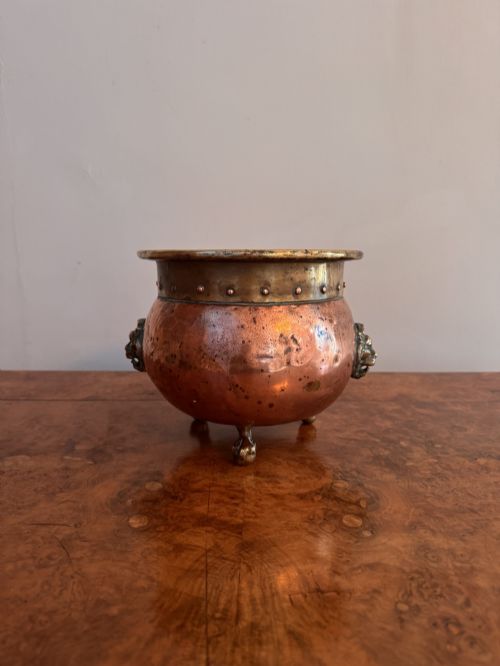
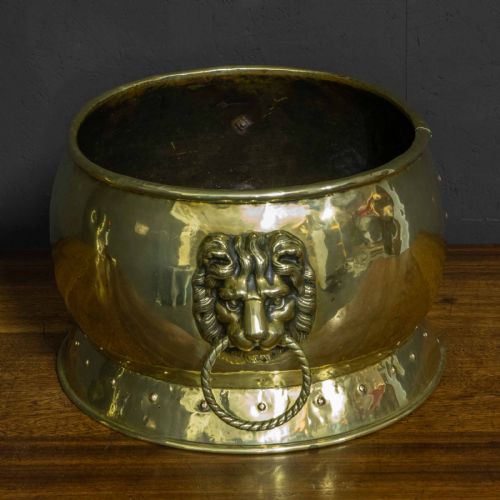
These heavy metal jardiniere pieces offer substantial plant displays in brass, bronze, and cast iron.
Heavy Metal Jardiniere
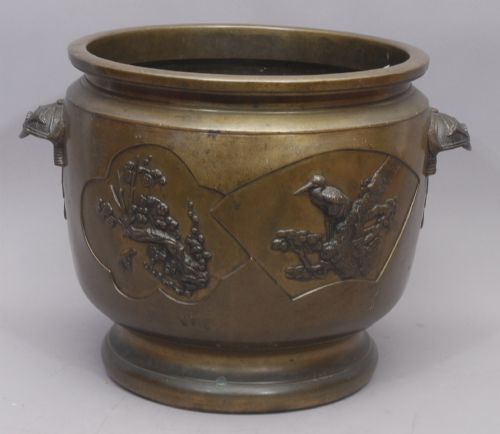
The selection ranges from large Victorian garden urns to heavy brass bowls and oriental bronze planters. Examples vary from English Georgian mortar and pestle duos repurposed as planters to Japanese Meiji period and Chinese Qing dynasty bronze bowls.
Victorian Orientalism and Neoclassical styles appear frequently alongside traditional domestic brass vessels. These planters utilise significant weight and durable metal construction to anchor botanical arrangements securely.
How they were made
Makers utilised cast iron for garden urns and large outdoor planters requiring maximum weather resistance and structural heft. Brass and bronze formed the primary media for interior vessels, shaped through casting and finishing techniques.
Detailed surface ornamentation on oriental bronze bowls reflects the intricate metalworking traditions of the Meiji period and Qing dynasty. Heavier pieces often incorporate robust handles and thick walls to support substantial weight.
Heavy Metal Jardiniere Retail Price Guide 2026
Typical asking prices for heavy metal jardiniere among the pieces listed under this phrase on Sellingantiques today, from the lower quarter to the upper quarter. They describe what is for sale here now, not the wider market.
Some heavy metal planters started life as apothecary mortars before finding a second career holding ferns.
What varies in quality
Quality rests in the thickness of the metal wall and the purity of the casting, which dictates the overall heft of the vessel. Superior examples display crisp surface detail and balanced proportions rather than crude mass.
The sophistication of the decorative motifs, whether Neoclassical relief work or oriental patination, separates standard utility vessels from finer artistic pieces.
The Heavy Metal Jardiniere Glossary
- Jardiniere
- An ornamental pot or stand for holding flowers or plants. These vessels sit on tables or floor pedestals.
- Urn
- A tall, rounded vase, often with a pedestal base, used for planting or decoration. Garden variants tolerate outdoor elements.
- Patina
- The surface appearance created by age, oxidation, and handling on metal objects. It indicates the passage of time.
- Meiji Period
- A Japanese historical era lasting from eighteen sixty-eight to nineteen twelve, noted for fine bronze work. Pieces from this time often feature oriental motifs.
- Neoclassical
- A style inspired by classical antiquity, marked by restrained ornamentation and formal symmetry. This aesthetic influences nineteenth-century metal vessels.
Heavy Metal Jardiniere: Frequently Asked Questions
How do I clean a brass jardiniere?
Wipe the surface with a soft, dry cloth to remove dust. Avoid harsh chemical polishes that strip away the aged patina collectors value.
For stubborn grime, use mild soap and water, drying the metal thoroughly afterwards to prevent spotting.
Can these metal planters go outside?
Cast iron garden urns suit outdoor settings because they withstand weather exposure. Brass and bronze vessels work best indoors or in sheltered garden spots to protect their finish.
Check for drainage holes before exposing any metal planter to direct rainfall and damp soil.
How do I date a bronze bowl?
Examine the casting quality, weight, and surface wear patterns. Nineteenth-century examples often carry specific regional characteristics, such as Japanese Meiji period markings.
Comparing the manufacturing technique with documented pieces helps establish the likely production era.