

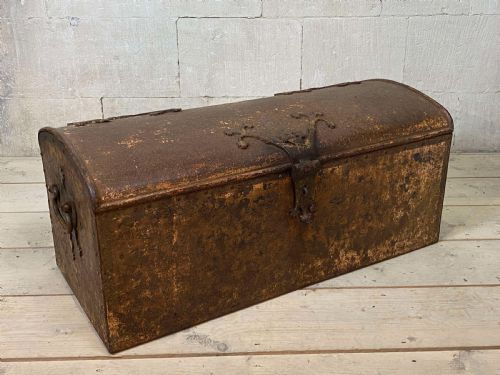

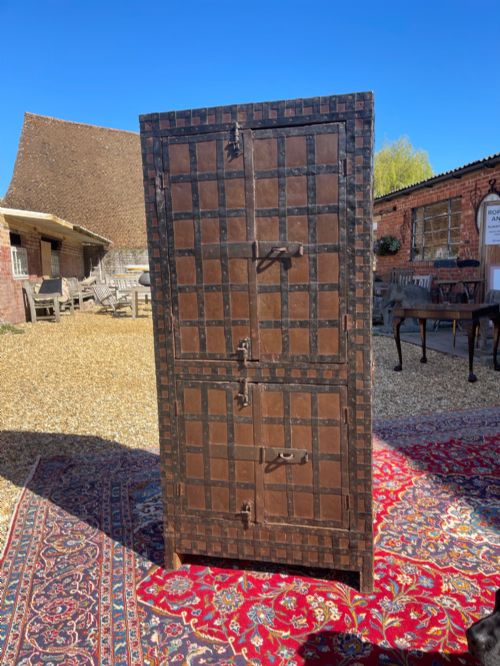

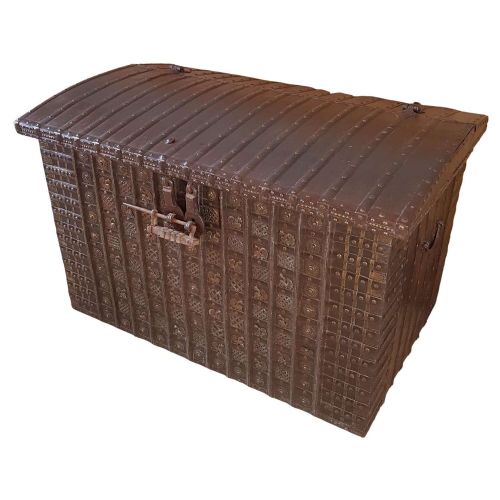


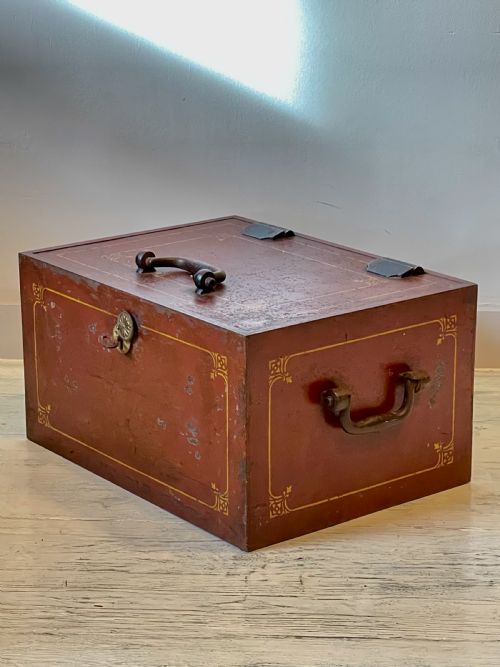


Heavy Metal Chest
A heavy metal chest brings utilitarian strength into a room, combining industrial gravity with centuries of functional design.
Heavy Metal Chest
When you search for a heavy metal chest, you encounter a robust mix of storage vessels designed to secure valuables, plate, or documents against theft and travel.
The selections span from sixteenth-century Nuremberg strongboxes and Armada coffers to nineteenth-century oak silver chests reinforced with iron bands and brass corners.
You will also find regional variations including Indian Damchiya dowry chests, Middle Eastern hardwood boxes, and Arts and Crafts coal boxes.
Materials and construction
These pieces rely on a dense core of timber such as oak, pine, teak, or hardwood, completely encased or heavily banded in wrought iron, cast iron, steel, or brass.
Constructive integrity depends on complex locking mechanisms, often featuring multi-bolt systems concealed within the lid or internal housing, alongside heavy strap hinges and corner brackets.
Heavy Metal Chest Retail Price Guide 2026
Typical asking prices for heavy metal chest among the pieces listed under this phrase on Sellingantiques today, from the lower quarter to the upper quarter. They describe what is for sale here now, not the wider market.
Many sixteenth-century Nuremberg strongboxes conceal their master keyholes beneath deceptive sliding panels on the front fascia to fool opportunistic thieves.
Assessing quality
Quality rests upon the complexity of the locking mechanism and the integrity of the original metalwork relative to the timber carcase.
Pieces featuring intricate internal strapwork, functional secret locking plates, or documented makers distinguish themselves from standard utilitarian storage boxes.
Allen of London·Milners of Liverpool
The Heavy Metal Chest Glossary
- Strongbox
- A secure container built primarily from iron or steel, designed specifically to protect currency, bullion, or important documents from theft.
- Armada chest
- A heavy iron-banded storage box originating in the sixteenth or seventeenth century, traditionally fitted with a complex multi-bolt locking mechanism operated through the lid.
- Damchiya
- A traditional low dowry chest from Rajasthan, frequently featuring heavy iron banding and structural compartments for household goods.
- Silver chest
- A heavy timber trunk reinforced with metal bands and lined to store family silver plate securely during transport or estate storage.
Heavy Metal Chest: Frequently Asked Questions
What were heavy metal chests used for?
These vessels served secure domestic and institutional functions, holding precious silver plate, legal documents, currency, and travel provisions.
Their substantial weight and intricate locking systems deterred theft both within country houses and during long maritime or military campaigns.
How do I care for a metal and wood chest?
Maintain stable indoor humidity levels to protect the timber carcase from splitting while keeping the iron and brass components lightly oiled to prevent surface oxidation.
Avoid placing damp items directly onto interior surfaces and handle heavy lids with care to protect original hinges and locking arms.
How can I tell an older chest from a later one?
Examine the construction of the metal bands, hinges, and locking mechanisms, as hand-forged wrought iron and complex internal box locks typically indicate sixteenth to eighteenth-century origins.
Later nineteenth-century examples often utilise machine-rolled steel bands, cast iron plates, and standardised patent locks associated with industrial production.