


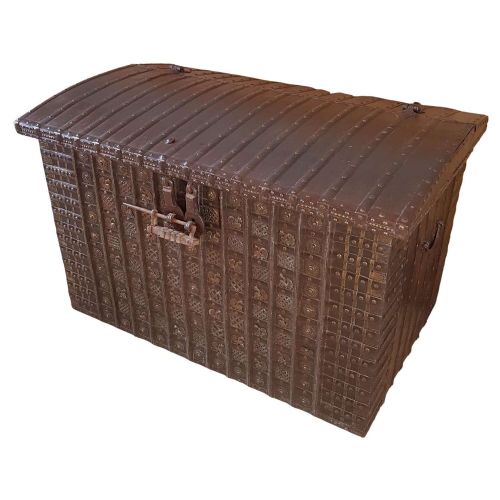


Heavy Metal Bound Trunk
These heavy metal bound trunk examples combine timber and iron for serious storage, offering robust security and centuries of functional history.
Heavy Metal Bound Trunk
A heavy metal bound trunk serves as a sturdy storage solution, often taking the form of silver chests, dowry chests, or campaign travelling cases. The selection spans centuries, ranging from early coffer forms to later Victorian and Edwardian examples.
Oak, pine, and teak form the primary wooden bodies, while iron, brass, and wrought metal provide structural reinforcement and banding. Origin points vary widely from English country houses to German workshops and Indian colonial centres.
Buyers will encounter robust domestic silver chests alongside more exotic dowry trunks and compact caskets. Each piece reflects the specific transit or security needs of its original owners.
Construction and materials
Carpenters joined dense timbers like oak, teak, and pine using traditional joinery before securing the structures with heavy metal straps. Iron and brass bands, often held by numerous rivets, reinforce corners and lids against the strains of travel and heavy use.
Specialised hardware such as wrought iron locks, flush drop handles, and corner brackets define the manufacturing approach. These functional elements were hand-forged or cast to withstand the rigours of shipping and military campaigns.
Heavy Metal Bound Trunk Retail Price Guide 2026
Typical asking prices for heavy metal bound trunk among the pieces listed under this phrase on Sellingantiques today, from the lower quarter to the upper quarter. They describe what is for sale here now, not the wider market.
Listings feature woods like oak, teak, and pine, reinforced with iron and brass across periods from the sixteenth century to the Edwardian era.
Quality variations
The sophistication of the internal fittings and the integrity of the original locking mechanisms set finer examples apart from utility boxes. Fitted interiors with multiple compartments indicate higher-status commissioned pieces designed for valuables or silver.
The gauge of the metalwork and the quality of the timber selection dictate durability and visual presence. Thick oak or teak boards combined with heavy, hand-wrought iron banding represent the upper tier of production.
Allen of London
The Heavy Metal Bound Trunk Glossary
- Coffer
- A heavy wooden chest, often iron-bound, traditionally utilised for storing valuables or documents. These early forms precede the more specialised domestic trunks of later centuries.
- Silver chest
- A robust storage box lined to protect table silver from tarnishing and damage during transport. They typically feature sturdy oak construction with iron carrying handles and substantial locks.
- Campaign case
- A portable trunk or packing chest built for military officers or travellers on the move. These pieces prioritise structural resilience and practical organisation.
- Damchiya
- A traditional Indian dowry chest featuring low proportions and ornate metal banding. They serve as decorative storage furniture within domestic settings.
- Wrought iron
- Iron beaten into shape by hand, resulting in textured metal straps and brackets. This material provides the primary structural reinforcement on older trunks.
Heavy Metal Bound Trunk: Frequently Asked Questions
What were heavy metal bound trunks used for?
These trunks primarily served to transport and secure valuable possessions, family silver, or personal documents during travel. Their robust construction protected contents from theft, moisture, and the bumps of transit.
Over time, many transitioned into static household furniture, providing deep storage within country houses and domestic settings while keeping contents organised.
How do I identify a 16th century coffer?
Sixteenth-century coffers typically display heavy hand-forged iron banding, complex locking mechanisms, and dense timber construction such as oak. Their construction methods rely on pegged joints and heavy blacksmith work rather than mass-produced hardware.
These early pieces often have simple rectangular forms with visible tool marks, reflecting the period's reliance on manual woodworking and metalworking techniques.
Are Victorian silver chests waterproof?
Victorian silver chests were built to withstand travel conditions and maritime shipping, offering good resistance to dust and moisture. However, they were designed for security and transport rather than permanent outdoor exposure.
The tight-fitting lids and metal corner reinforcements helped keep the interior contents safe from the elements during transit.
Where were Indian iron bound trunks made?
Indian trunks and dowry chests originate from various regions, including Rajasthan, reflecting distinct local craftsmanship and decorative styles. These pieces often incorporate regional hardwoods like teak alongside intricate iron strapwork.
Colonial influence and local traditions combined to produce distinctive storage pieces suited to both domestic life and long-distance transport.
How should I clean an iron bound oak trunk?
Maintenance involves dusting the timber and metal surfaces regularly with a dry cloth to prevent dirt buildup. Applying a microcrystalline wax to the wood helps preserve the finish without harming the historic surface.
Metal components benefit from light cleaning to remove active rust while retaining the dark patina accumulated over centuries of use.