
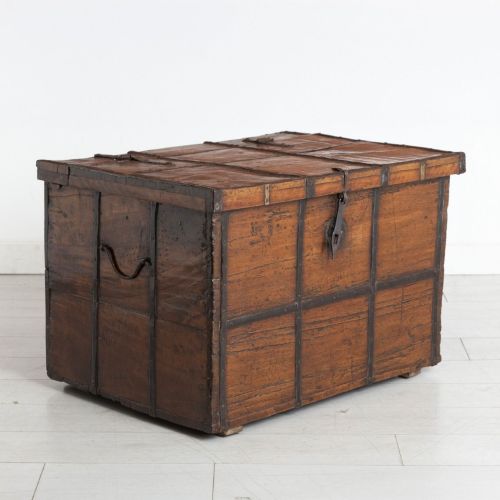
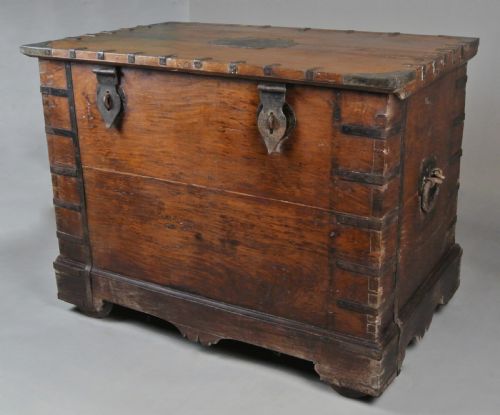
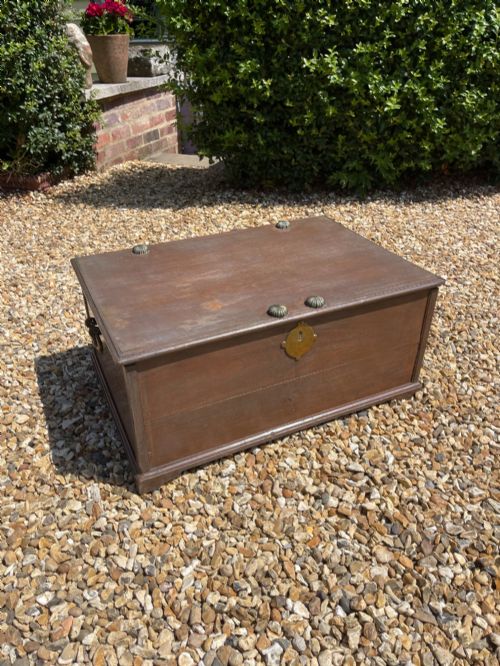
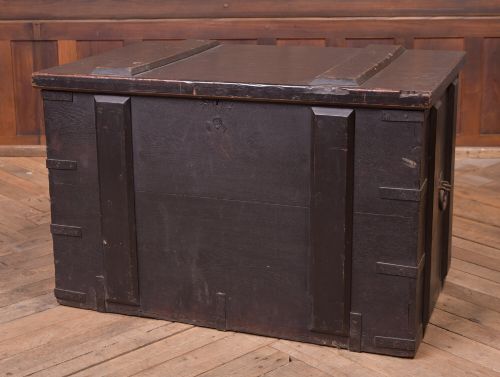


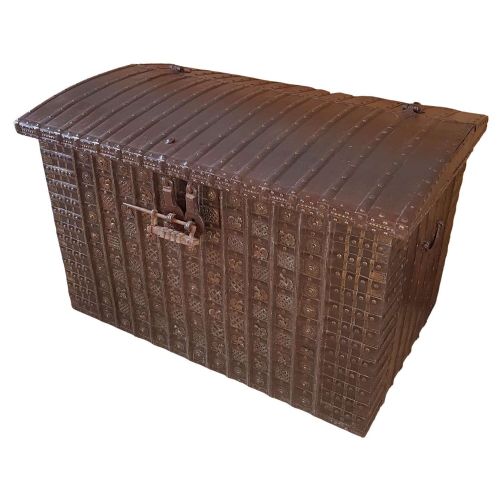


Heavy Iron Coffer
A heavy iron coffer is a robust storage container built to secure valuables, holding centuries of utility in thick timber and banded metal.
Heavy Iron Coffer
A heavy iron coffer combines dense structural timber with substantial metal reinforcement to secure valuables, documents, or household goods. Buyers seeking a heavy iron coffer will find an array of forms ranging from early continental caskets and armada chests to British silver chests and colonial dowry trunks.
The pieces appearing on this page span several centuries, with nineteenth-century examples and Victorian silver chests predominating alongside earlier continental and regional Indian trunks. Common formats include oak storage chests, teak travel trunks, pine boxes, and specialised log bins or coal boxes.
Origins vary widely across the selection, encompassing English country house pieces, French elm cannonball boxes, German Nuremberg caskets, and Rajasthani damchiya chests. Each regional tradition applies iron bands, hasps, and corner brackets to suit local materials and security demands.
How they were made
Construction relies upon durable hardwoods like oak and teak, or softer timbers such as pine and elm, assembled into thick-walled boxes designed to withstand heavy use. Artisans reinforced these timber carcases with hand-forged wrought iron, cast iron, or steel straps, bands, and corner plates secured by heavy rivets.
Periods represented range from sixteenth-century Nuremberg caskets and seventeenth-century armada chests through to Victorian and Edwardian travel trunks.
What varies in quality
The standard of a heavy iron coffer depends upon the integrity of its timber construction and the complexity of its metalwork. Superior examples display substantial dovetail or pegged joints in the wood, paired with intricately forged iron bands and original, working locking mechanisms.
Proportion and material selection also dictate standing, with dense golden oak, richly grained teak, and specialised fitted interiors marking out finer domestic or military pieces. Secondary examples rely on simpler pine carcases and standard strapwork intended strictly for utilitarian storage.
Elkington·H D Dean
The Heavy Iron Coffer Glossary
- Cofer
- A heavy storage chest typically used for valuables, money, or documents. It represents the foundational form from which many later trunks and strongboxes evolved.
- Armada chest
- A heavy iron-banded steel strongbox produced in seventeenth-century Germany and Flanders. They feature complex spring locks concealed beneath the lid and dummy keyholes on the front.
- Silver chest
- A robust oak or mahogany container lined to store domestic plate and silverware safely. These Victorian and Georgian examples often incorporate brass handles and maker plates.
- Damchiya
- A traditional low dowry chest originating from Rajasthan, featuring heavy iron banding and intricate surface decoration. They serve as secure storage for bridal trousseaus.
- Nuremberg casket
- A portable sixteenth-century strongbox made of engraved iron plates and intricate locking mechanisms. Their internal levers often secure multiple bolts around the rim simultaneously.
Heavy Iron Coffer: Frequently Asked Questions
What were heavy iron coffers used for?
These robust containers served to secure valuable possessions, family silver, bullion, or important documents against theft and fire. Their thick wooden walls and iron bands provided necessary protection during transit or storage in country houses and merchant vessels.
Over time, many adapted to domestic roles such as blanket boxes, log bins, or specialised storage trunks. Their durable construction ensured they could handle heavy loads without structural failure.
How do I care for an iron and wood chest?
Maintain the timber by applying appropriate wax or polish periodically to prevent the wood from drying out in centrally heated rooms. Keep metal bands clean and dry, addressing any surface corrosion promptly with light oil.
Avoid placing these heavy pieces in direct sunlight or damp environments, as extreme temperature shifts can cause the ancient woods and iron straps to contract or expand unevenly.
How can I tell a Victorian silver chest from a Georgian one?
Georgian examples often exhibit simpler hand-sawn dovetails and early forged iron strapping, reflecting eighteenth-century workshop practices. Their interiors frequently show utilitarian timber arrangements suited to estate storage.
Victorian silver chests typically incorporate refined brass recessed handles, standardised steel or cast iron bindings, and frequently feature fitted internal baize-lined trays. Maker plaques and stamped serial numbers also become more common in the nineteenth century.
Are these chests heavy to move?
Due to their dense construction of solid oak, teak, or pine combined with thick iron banding and heavy hardware, these pieces possess substantial weight. Most feature side carrying handles or iron hoops to assist with repositioning.
When placing a heavy iron coffer in a room, ensure the floor can support concentrated weight and consider placing felt pads beneath the base to protect wooden flooring.