

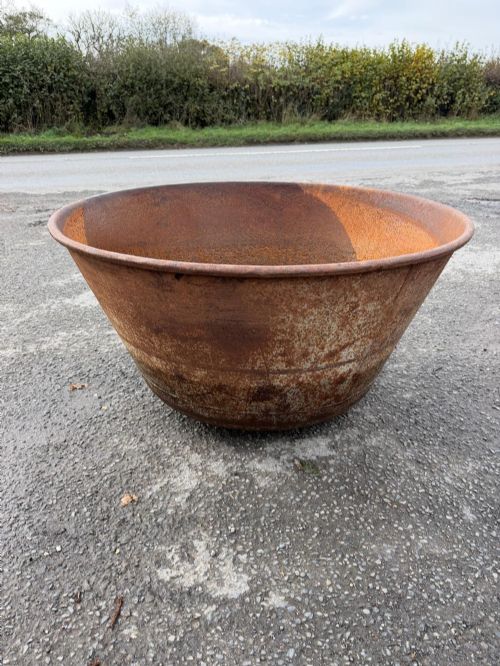



Heavy Garden Urn
A heavy garden urn anchors an outdoor scheme with structural weight, turning a simple terrace or pathway into a formal focal point.
Heavy Garden Urn
A heavy garden urn brings substantial presence to outdoor spaces, drawing on classical and vernacular forms to shape terraces, lawns and entrances. These vessels function primarily as planters or jardinieres, holding seasonal flora or standing alone as architectural ornaments.
The heavy garden urn options on this page span several distinct periods, notably the nineteenth century, Edwardian era and mid twentieth century. Cast iron and lead form the core of the selection, reflecting durable construction designed to withstand exposure to the elements.
Makers drew on neoclassical, Victorian classical revival and rustic farmhouse styles to shape these vessels. Buyers encounter single pots and matched pairs alike, often raised on integrated pedestals or stands that elevate the planting zone.
How they were made
Foundries produced these metal vessels using traditional casting techniques, pouring molten iron or lead into moulds to achieve crisp classical detailing and thick walls. Copper pieces required skilled hand-riveting to join heavy sheet metal into robust boilers, tubs and cylindrical planters.
Makers incorporated structural reinforcement such as riveted seams and heavy iron rims to support damp earth and root systems over decades of use. Surfaces developed natural patinas over time, from verdigris on copper to rusted oxidation on cast iron.
Heavy Garden Urn Retail Price Guide 2026
Typical asking prices for heavy garden urn among the pieces listed under this phrase on Sellingantiques today, from the lower quarter to the upper quarter. They describe what is for sale here now, not the wider market.
Cast iron dominates the selections, spanning the eighteenth century through to the nineteen-fifties alongside copper and cast lead.
What varies in quality
The refinement of the cast ornament distinguishes standard utility vessels from high-status classical revival pieces. Sharp relief in moulding and well-proportioned handles or pedestals indicate superior foundry work.
Material density and wall thickness dictate the structural integrity of each piece. Surviving examples that retain their original matched pairs and accompanying stands hold greater significance for balanced garden schemes.
The Heavy Garden Urn Glossary
- Cast Iron
- An iron-carbon alloy poured into moulds to create heavy, rigid vessels with detailed surface ornamentation. It forms the primary material for nineteenth-century garden vessels.
- Verdigris
- A green patina formed naturally on copper and brass through atmospheric oxidation. This surface layer protects the underlying metal from further corrosion.
- Neoclassical
- A style drawing inspiration from classical antiquity, featuring symmetrical lines and architectural motifs such as urns and swags. It dominates nineteenth-century garden ornament design.
- Jardiniere
- An ornamental pot or stand designed to hold growing plants or flowers. These vessels often feature decorative relief work suited to prominent garden positions.
Heavy Garden Urn: Frequently Asked Questions
Can heavy garden urns stay outside all winter?
Cast iron and lead handle frost well, though keeping drainage holes clear prevents ice from expanding and cracking the metal.
Elevating the base slightly on bricks or feet ensures water escapes freely during prolonged freezing weather.
How do I clean verdigris off copper planters?
Leaving the natural verdigris undisturbed preserves the protective patina and historic character of the copper surface.
Wash away loose dirt with plain water and a soft brush rather than using abrasive chemical cleaners.
Are these urns heavy enough to resist strong winds?
The substantial weight of cast iron and lead provides natural stability on open lawns and exposed terraces.
Adding soil and gravel inside the planter increases the downward mass further against seasonal gales.
How do I identify a nineteenth-century cast iron urn?
Look for heavy casting seams, thick wall sections and traditional classical revival motifs such as fluting or egg-and-dart borders.
Nineteenth-century foundry work often displays greater depth in relief than later twentieth-century reproductions.