





Heavy Fireplace Andirons
Heavy fireplace andirons are substantial hearth supports designed to hold burning logs, combining robust utility with decorative presence.
Heavy Fireplace Andirons
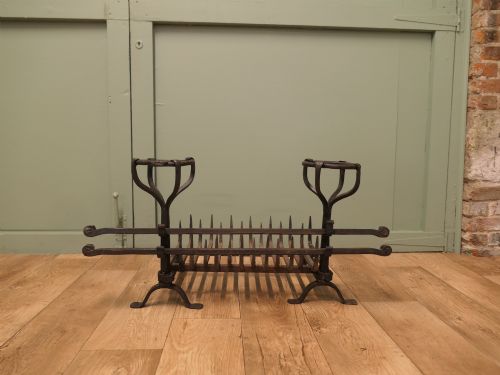
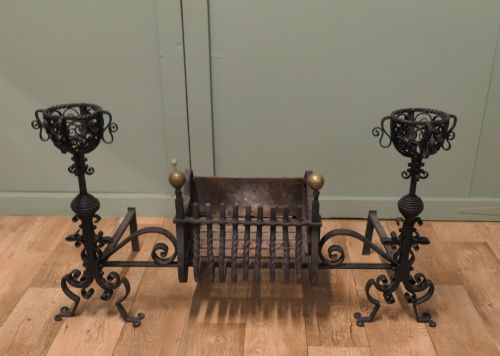
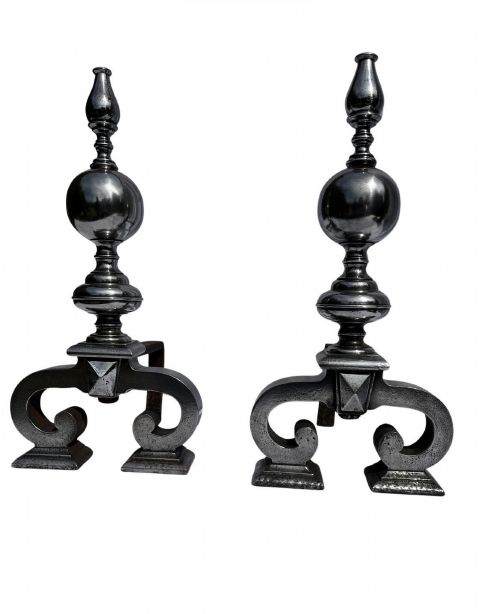
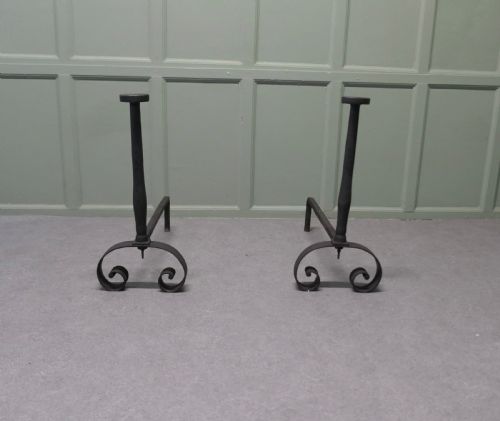
Heavy fireplace andirons support logs within open hearths, often appearing alongside fire baskets, grates, and complete hearth sets. These items serve a functional role in raising fuel for better airflow while anchoring the visual composition of the fireplace.
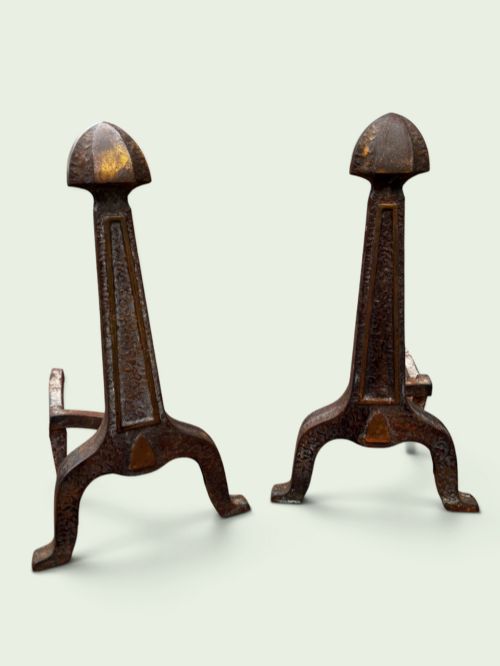
The pieces encountered here date principally from the nineteenth century, including Victorian examples alongside revivals of seventeenth-century, Baroque, and Gothic styles. French, English, Dutch, and Italian origins shape the distinct ornamental vocabularies found across the selection.
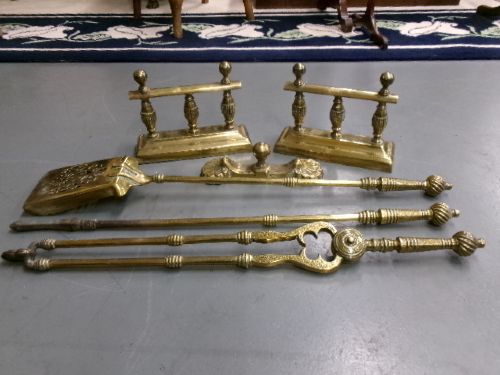
Most entries take the form of paired fire dogs or fire irons, sometimes accompanied by matching fire backs, grates, or companion tools. Buyers encounter substantial heights and notable weights, reflecting the demands of large period hearths.
Materials and Techniques
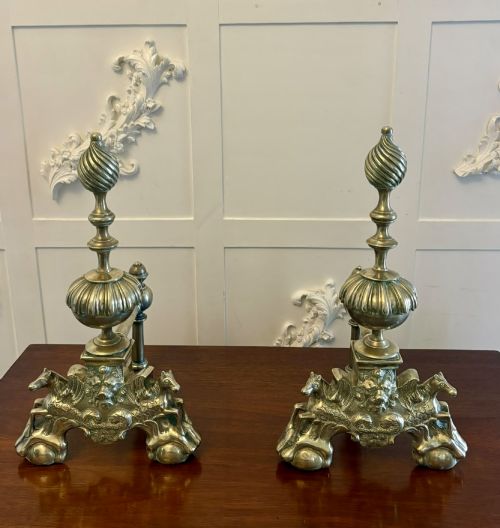
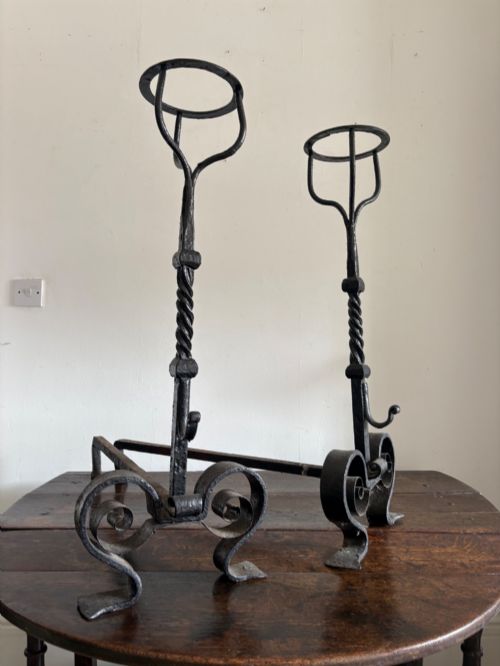
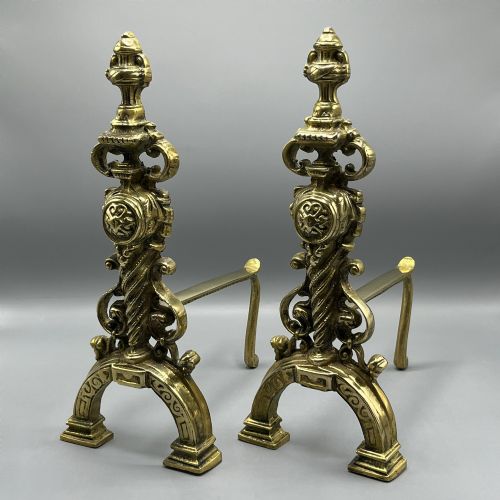
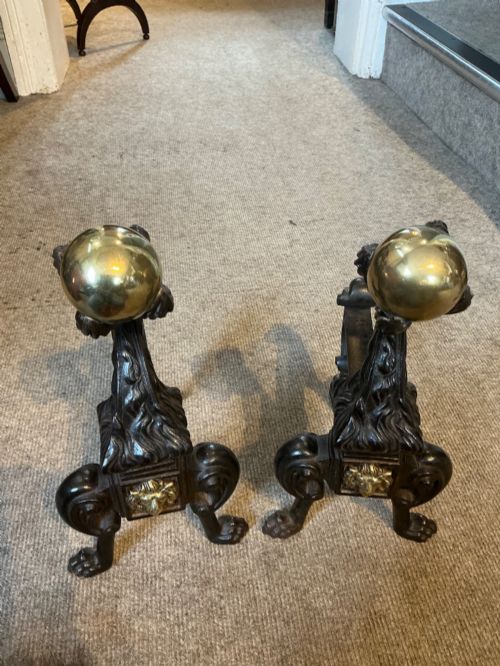
Foundry work dominates construction, utilising cast iron, wrought iron, steel, and bronze to achieve structural durability under intense heat. Brass appears both as solid cast elements and as gilt plating over base metals, providing bright decorative contrast.
Ornamentation relies on casting and forging techniques, producing ornate Victorian motifs, Gothic revival tracery, and Baroque scrollwork. Artisans shaped metal through hot forging and detailed mould casting, finishing surfaces with polished brightness or dark patination.
Heavy Fireplace Andirons Retail Price Guide 2026
Typical asking prices for heavy fireplace andirons among the pieces listed under this phrase on Sellingantiques today, from the lower quarter to the upper quarter. They describe what is for sale here now, not the wider market.
Several heavy iron items listed as andirons double happily as robust door stops or door porters when retired from hearth duty.
Distinctions in Quality
Quality rests upon the weight of the metal and the crispness of the casting, where finely chased details and heavy gauge construction separate standard utility items from monumental pairs. Substantial mass ensures stability when supporting large logs in deep hearths.
Artistic execution defines the upper tier, visible in sculptural bronze work, elaborate brass ornamentation, and balanced proportions across matching pairs. Finer examples display meticulous attention to decorative surface work and robust structural joints.
The Heavy Fireplace Andirons Glossary
- Andiron
- A metal support used in pairs to hold logs above the hearth floor. These items allow air to circulate beneath the fire.
- Fire Dog
- An alternative term for an andiron, historically named for the animal forms often cast into their front uprights. They function identically to support firewood.
- Fire Basket
- A metal grate holding fuel within a fireplace, frequently utilised alongside matching andirons. They contain the burning wood in a central basket.
- Gothic Revival
- An architectural and decorative style drawing inspiration from medieval design. Pieces in this mode feature pointed arches and architectural tracery.
- Baroque Style
- An ornate aesthetic characterised by dynamic curves, heavy scrollwork, and theatrical detail. This European style influenced hearth furniture design across multiple centuries.
Heavy Fireplace Andirons: Frequently Asked Questions
What is the purpose of heavy fireplace andirons?
Heavy fireplace andirons elevate logs above the hearth floor to improve combustion and airflow beneath the burning wood.
They also provide a stable front barrier that prevents rolling logs from spilling out onto the floor.
How do you style andirons in a modern room?
Andirons can be placed within an active hearth to support logs or arranged statically inside an empty fireplace as a decorative focal point.
Their substantial metal forms introduce architectural presence and historical texture to a chimney breast.
Are andirons the same as fire dogs?
The terms are generally used interchangeably to describe the paired metal supports placed inside hearths.
Historically, fire dogs often featured animal-inspired finials, while andirons describe the broader category of hearth supports.
How do I identify Victorian andiron styles?
Victorian andirons frequently incorporate Gothic revival motifs, heavy brass casting, or ornate scrollwork inspired by earlier periods.
Examination of the metalwork reveals the distinct industrial casting methods and decorative preferences of the nineteenth century.