
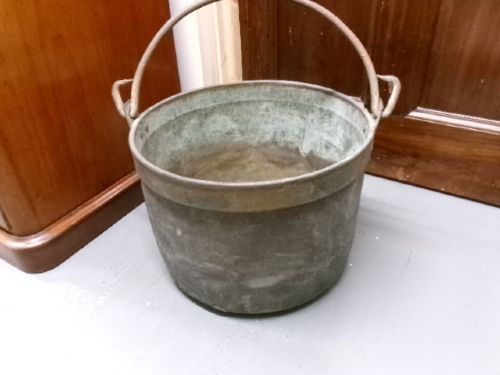


Heavy Copper Hearth Bucket
These heavy copper hearth bucket pieces are substantial fireside vessels that bring warmth and genuine metal character to a room.
Heavy Copper Hearth Bucket
When you search for a heavy copper hearth bucket, you are looking at sturdy vessels traditionally utilised for holding coal, logs, or water by the fireplace. The selection here spans the nineteenth century up through the nineteen-thirties, featuring robust utilitarian items such as cauldrons, coal helmets, boilers, and grain measures.
You are most likely to meet Victorian examples alongside French country pieces and Georgian pots. Many of these items now find a second life serving as log bins, planters, or decorative hearth vessels in contemporary homes.
How they were made
Makers constructed these vessels primarily from heavy sheet copper, frequently joining the seams with visible hand-beaten rivets that ensured structural strength for daily hearth use. Smiths added contrasting elements such as brass swing handles, wrought iron bails, and iron fixings to bear the heavy loads of coal or water.
Working metal by hand left distinct surface textures and tool marks across the bodies of these pots and cauldrons. Over decades of use, the metal developed rich patinas, and some pieces display verdigris oxidation from exposure to moisture.
Some of these heavy copper vessels started life measuring grain before retiring to the hearth as log bins.
What varies in quality
Quality in these vessels rests on the thickness of the metal sheet and the integrity of the original riveted construction. Heavier gauge copper retains its structural form better under the strain of heavy logs and daily handling.
The refinement of the handles, the proportion of the body, and the character of the surface patina separate utilitarian kitchen vessels from finer decorative hearth accessories. Original wrought iron or brass swing handles that remain secure to the body elevate the piece.
The Heavy Copper Hearth Bucket Glossary
- Cauldron
- A large round pot, often with a curved bottom and swing handle, designed for boiling or holding bulk materials. These metal vessels were staples of early kitchens and hearths.
- Coal Helmet
- A specialised bucket featuring a tapered shape and a sloped mouth intended for easy pouring of coal into a grate. They typically sit upon a stepped or footed base.
- Patina
- The deep surface sheen and colour variation developed by metal through age, handling, and exposure to the atmosphere. This natural ageing process is prized by collectors.
- Riveted
- Joined together using metal bolts hammered flat at the ends to secure overlapping sheets. This technique provided the necessary strength for heavy-duty containment.
- Verdigris
- A green patina or crust that forms naturally on copper and brass through prolonged oxidation. It adds a distinct chromatic layer to older metal surfaces.
Heavy Copper Hearth Bucket: Frequently Asked Questions
How do I clean a heavy copper hearth bucket?
Wash the surface gently using warm water and mild soap to remove dust and soot without stripping the aged finish. Avoid harsh chemical polishes that destroy the historic patina.
Dry the metal thoroughly with a soft cloth to prevent water spots and further oxidation.
Can I use an antique copper bucket for real logs?
These vessels were built specifically for heavy materials like coal and wood by the hearth. Placing logs inside poses no structural harm to sturdy riveted copper.
Line the bottom if you wish to protect the interior metal from scratches caused by rough bark.
How do I date a nineteenth century copper bucket?
Examine the construction methods, noting whether the seams feature hand-beaten rivets or machine finishing. The style of the swing handle mounts and the specific type of metal handle offer further clues.
Compare the overall weight and form against documented nineteenth century domestic and industrial metalware.
Can these metal buckets be used outdoors as planters?
Many people repurpose these copper and brass vessels as garden planters or log bins. The durable metal withstands outdoor placement well.
Keep in mind that exposure to moisture will accelerate the formation of verdigris and alter the existing surface patina.