




Heavy Copper Boiler
These heavy copper boiler vessels are robust industrial and domestic containers that bring striking metallic warmth and texture to modern rustic interiors.
Heavy Copper Boiler
A heavy copper boiler is a substantial utility vessel originally designed for washing, brewing, or bulk cooking during the nineteenth century. Today, these pieces survive primarily as large log bins, garden planters, and decorative cauldrons.
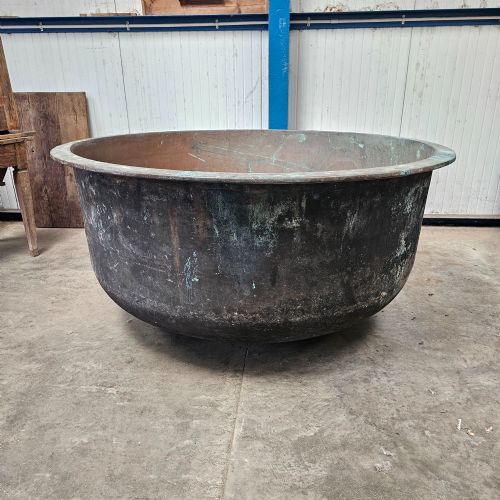
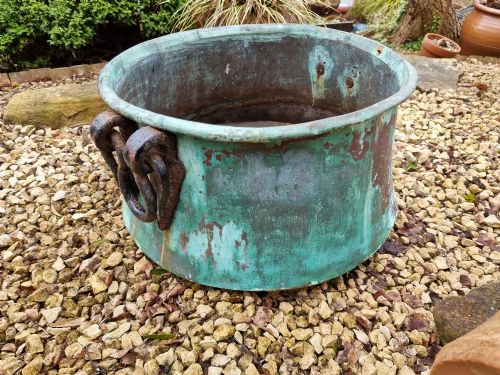
The selections available here span the Victorian era and the broader nineteenth century, drawing heavily on rustic farmhouse, country, and industrial aesthetics. You will encounter substantial riveted bodies, cheese vats from regions like Franche-Comte, and cooking pots fitted with wrought iron swing handles.
Most examples double easily as striking log buckets or deep planters for the home and garden. Their generous proportions and weathered patinas make them focal points in both contemporary and traditional settings.
How they were made
Construction relies heavily on thick sheet copper shaped by hand and joined with robust metal rivets to withstand intense heat and heavy use. These overlapping seams and visible fastener heads give the vessels their distinct industrial character.
Makers incorporated heavy iron, cast iron, and wrought iron for swing handles, rims, and structural reinforcement. This combination of base metals provided the necessary rigidity for lifting and carrying immense loads of water, fuel, or produce.
Heavy Copper Boiler Retail Price Guide 2026
Typical asking prices for heavy copper boiler among the pieces listed under this phrase on Sellingantiques today, from the lower quarter to the upper quarter. They describe what is for sale here now, not the wider market.
Some of these heavy copper vessels spent their early days bubbling away in French cheese dairies before retiring to hold firewood by a British fireplace.
What varies in quality
Quality rests in the structural integrity of the heavy copper body and the honesty of its surface wear. Vessels that retain their original weight without excessive thinning from centuries of scouring sit firmly at the top of the range.
The character of the patina sets finer examples apart, distinguishing naturally formed verdigris and authentic oxidation from artificial finishes. Original wrought iron handles and secure, period-correct rivets further elevate the integrity of a piece.
The Heavy Copper Boiler Glossary
- Verdigris
- A green patina or crust that forms naturally on copper and brass surfaces through long-term exposure to atmospheric elements and moisture. This chemical reaction creates a coveted protective layer with varied blue-green colouration.
- Riveted
- A method of joining sheet metal plates together by inserting metal pins through overlapping sections and hammering them flat. This technique provides immense structural strength before modern welding became standard.
- Cauldron
- A large metal pot used traditionally over an open fire for boiling liquids or cooking in bulk. These vessels typically feature rounded bases and sturdy swing handles for suspension or lifting.
- Patina
- The surface sheen and colour acquired by materials like copper and iron through age, use, and exposure to the environment. It serves as a visual record of a piece's history and handling.
Heavy Copper Boiler: Frequently Asked Questions
How do I clean a heavy copper boiler?
Maintenance depends entirely on whether you prefer a bright polished metallic shine or an untouched historic surface. Most collectors choose to preserve the original dark oxidation and verdigris by simply dusting the vessel with a soft dry cloth.
If you prefer to reduce heavy grime, warm soapy water applied with a non-abrasive sponge is sufficient. Avoid harsh chemical cleaners that strip away the authentic character accumulated over the nineteenth century.
Can I use these copper boilers outdoors?
Many of these robust vessels function exceptionally well as garden planters or patio log containers. Copper naturally withstands outdoor exposure, developing a richer verdigris finish when subjected to rain and soil.
Ensure that adequate drainage is considered if planting directly inside the vessel, though many owners prefer placing potted plants inside to protect the historic base metal from constant moisture.
How do I date a nineteenth century copper vessel?
Dating relies heavily on observing manufacturing techniques, material choices, and the style of the hardware. Hand-hammered bodies joined with irregular iron rivets typically point toward the earlier decades of the nineteenth century.
Factory production methods and standardised cast iron fittings became more prevalent by the Victorian era. Comparing the weight of the copper sheet and the form of the swing handle provides further clues to its period of origin.
What is the difference between a log bin and a cheese vat?
A log bin is typically a domestic container adapted for storing fireplace fuel near a hearth. These often feature decorative patinas and sturdy bases suited for interior display.
A cheese vat is a much larger industrial agricultural vessel, such as those originating from French provincial dairies, designed for processing massive quantities of milk. Both share heavy copper construction but differ greatly in their original agricultural or domestic purpose.