



Heavy Carved Sideboard
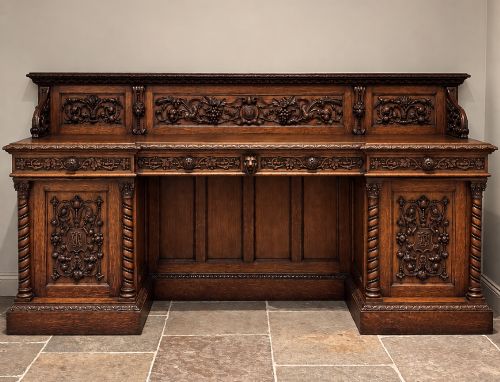
A heavy carved sideboard grounds a room with dense timber and deep relief, built to hold heavy service and anchor a dining space.
Heavy Carved Sideboard
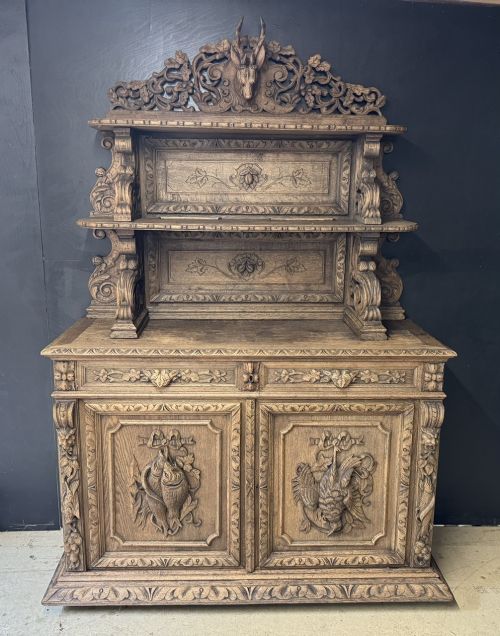
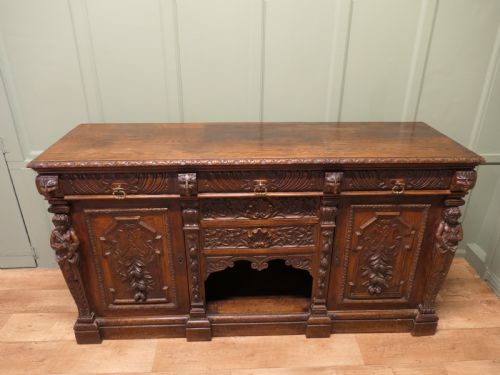
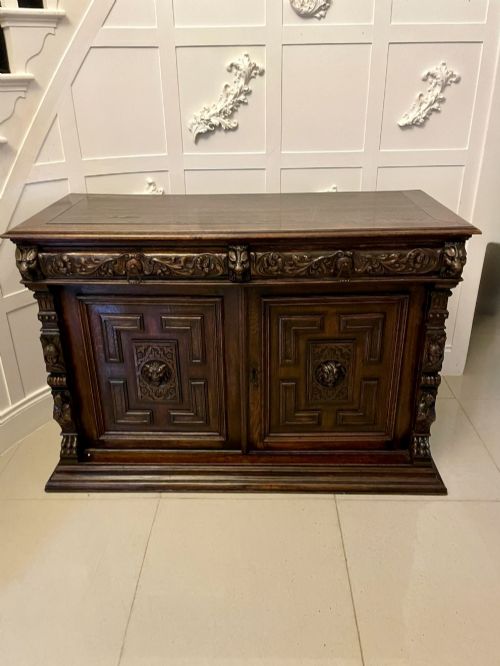
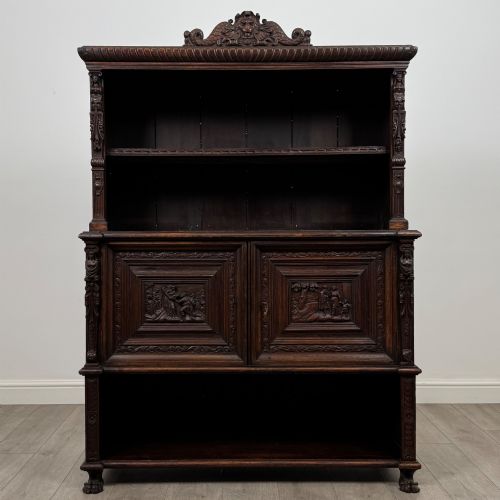
A heavy carved sideboard brings monumental storage into a room, taking the form of large sideboards, buffets, dresser bases, and court cupboards. These pieces emerge predominantly from Victorian and nineteenth-century workshops, alongside early twentieth-century examples.
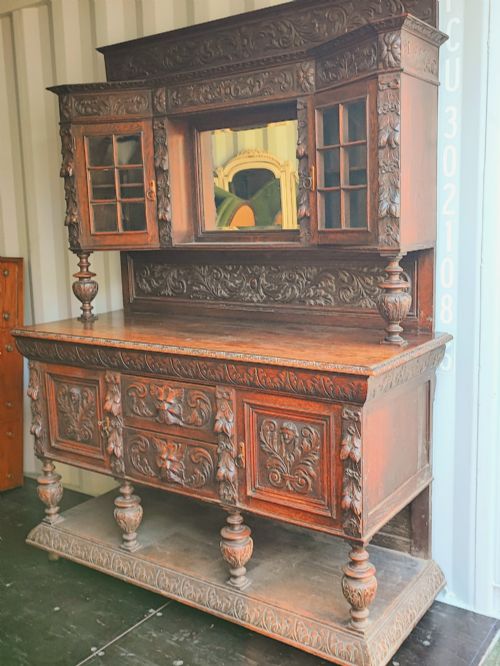
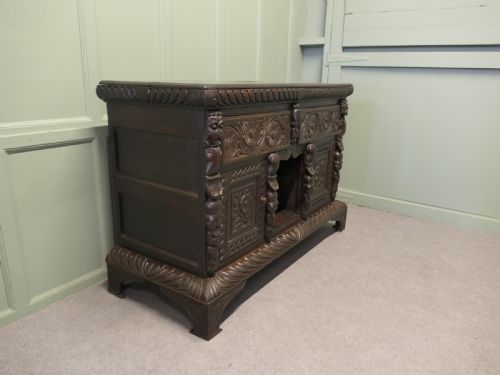
The heavy carved sideboard you meet most often on this page is constructed from oak, rendered in styles that draw on Jacobean Revival, Gothic Revival, and Renaissance Revival vocabularies. Deeply carved panels, stretcher bases, and substantial proportions define the majority of these domestic furnishings.
How they were made
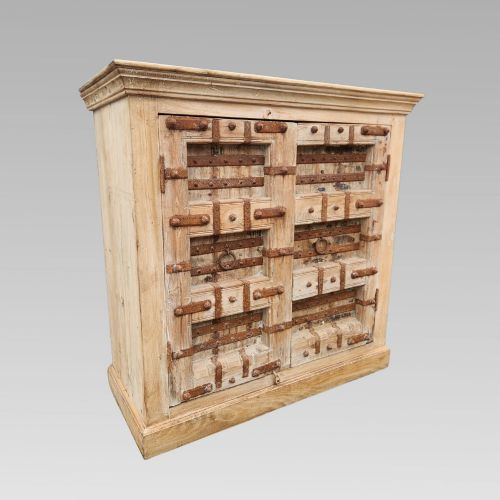
Construction relies heavily on solid oak, shaped through manual carving to produce high-relief figures, foliate scrolls, and architectural mouldings. Iron and brass hardware, such as drop handles and hinges, secure heavy doors and drawers.
Many examples incorporate bevelled glass within upper cabinet doors or integrate mirrored panels into tall superstructure backs. Secondary materials such as teak and reclaimed timber appear in specific regional or later variants.
Heavy Carved Sideboard Retail Price Guide 2026
Typical asking prices for heavy carved sideboard among the pieces listed under this phrase on Sellingantiques today, from the lower quarter to the upper quarter. They describe what is for sale here now, not the wider market.
Listings span the nineteenth and early twentieth centuries, featuring oak predominantly alongside teak, mirrored glass, and brass fittings in revival styles.
What varies in quality
Depth and crispness of the carving dictate the distinction between standard production and exceptional execution, where figures like Green Men and Flemish scrollwork show sharp undercut details rather than soft contours. Proportion and timber selection also divide utilitarian storage from monumental showpieces.
The integrity of structural joints, original hardware, and heavy stretcher bases governs the physical standing of each cabinet. Thick oak tops and well-fitted internal shelving reflect the ambition of the original maker.
The Heavy Carved Sideboard Glossary
- Green Man
- A sculptural face emerging from foliage, frequently carved onto Victorian and nineteenth-century oak furniture panels. This motif symbolises rebirth and forest spirits.
- Stretcher base
- Horizontal wooden bracing connecting the lower legs of a sideboard for added stability. These heavy rails often feature turned or carved decoration.
- Renaissance Revival
- A nineteenth-century design movement drawing inspiration from sixteenth-century European architecture and ornament. Pieces in this style use heavy mouldings and classical figural carving.
- Court cupboard
- A traditional enclosed double-tiered storage cabinet with a recessed upper section supported by heavy posts. These compact forms prefigure later sideboard designs.
Heavy Carved Sideboard: Frequently Asked Questions
What is a heavy carved sideboard?
A substantial wooden storage furniture piece featuring deep relief carving and large proportions, designed for dining rooms and large halls.
Most examples date from the Victorian period through the early twentieth century and utilise oak as the primary construction material.
How do I style a heavy carved sideboard?
Pair the dark timber and prominent carving with neutral walls and simple lighting to let the substantial proportions define the room.
Keep decorative objects on the top surface large in scale so they balance the heavy architectural presence of the base.
How do I date a carved oak sideboard?
Examine the construction methods, drawer linings, and hardware styles alongside the prevailing revival movement visible in the ornamentation.
Nineteenth-century pieces often combine Gothic or Renaissance revival motifs with hand-cut joinery and heavy oak boards.
What is a court cupboard?
An early form of enclosed storage featuring a recessed upper section above a broader lower cabinet, supported by sturdy posts.
These pieces provide substantial lower capacity while maintaining a tiered silhouette that differs from standard flat-topped sideboards.