



Heavy Carved Pedestal
A heavy carved pedestal gives a room immediate architectural weight, anchoring displays with robust timber or stone.
Heavy Carved Pedestal
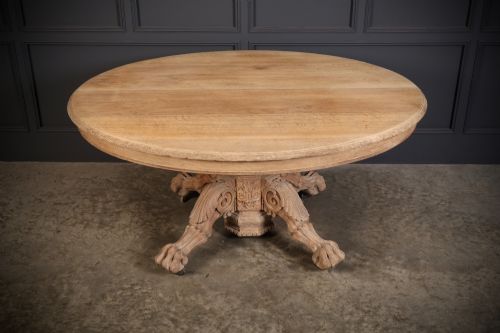
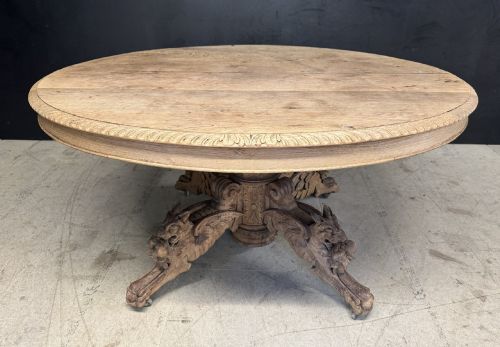
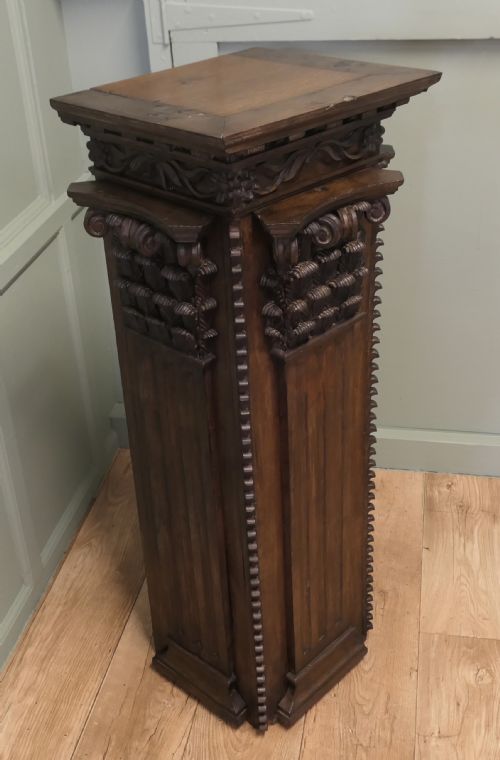
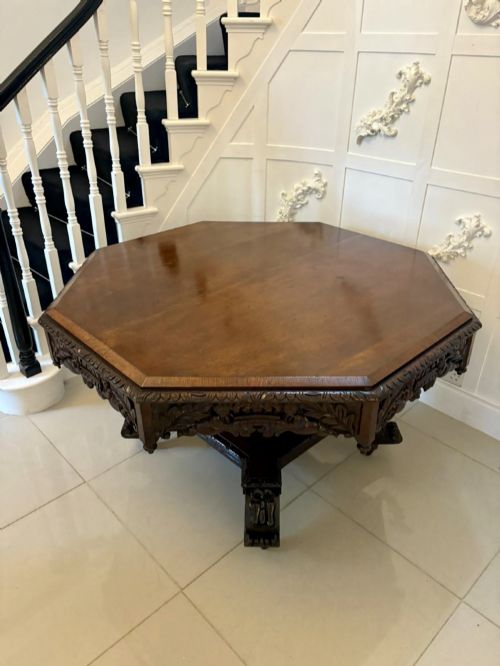
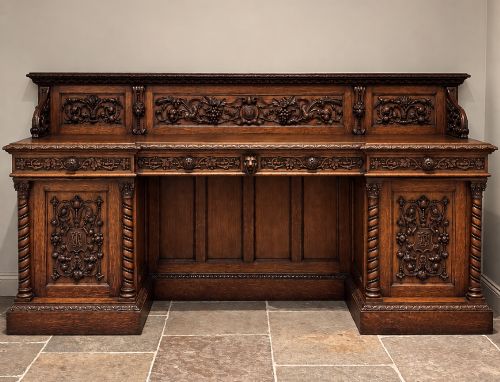
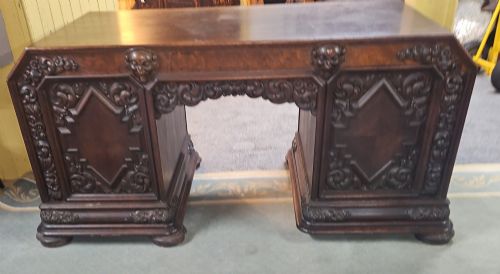
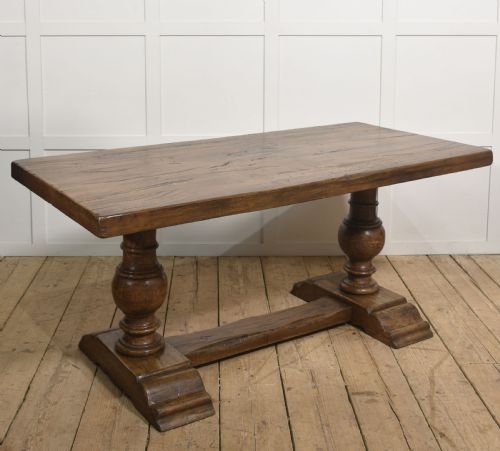
A heavy carved pedestal acts as a sturdy structural support for display or forms part of grand furniture assemblies like dining tables and sideboards. When you search for a heavy carved pedestal, you encounter architectural columns, display plinths, and substantial tables rooted in nineteenth-century and early twentieth-century traditions. The selection spans domestic indoor furniture in oak and walnut alongside garden statuary in cast and reconstituted stone.
Victorian pieces dominate the selection, bringing heavy revival styles such as Jacobean, Tudor, and French Renaissance into domestic interiors. You frequently meet solid oak construction, often enriched with deep relief carving, spiral pillars, and column designs. These forms range from freestanding display columns to grand dining tables and sideboards supported by substantial pedestals.
Outdoor garden pieces also appear, represented by stone bird baths from the mid-twentieth century that share the solid, weighty character of indoor pedestals. Whether rendered in variegated green marble or bleached oak, each piece relies on physical mass and intricate carving to command attention in a room or garden.
Judging quality
The distinction between ordinary and exceptional pieces lies in the depth and crispness of the carving. Superior items display undercut relief and sharply defined motifs rather than shallow, mechanical tooling.
Material selection dictates longevity and visual impact, with dense solid hardwoods and heavily figured marble outperforming softer woods or composite substitutes. Proportions remain balanced despite the immense weight, ensuring structural integrity matches ornamental ambition.
Heavy Carved Pedestal Retail Price Guide 2026
Typical asking prices for heavy carved pedestal among the pieces listed under this phrase on Sellingantiques today, from the lower quarter to the upper quarter. They describe what is for sale here now, not the wider market.
Some nineteenth-century pedestals feature hidden spiral pillars that make guests pause to trace the twist.
The Heavy Carved Pedestal Glossary
- Refectory table
- A long, narrow dining table traditionally supported by heavy trestles or carved pedestals. These items date from various historical periods and offer substantial surface area.
- Spiral pillar
- A twisted column design frequently turned from solid oak. This decorative form creates dynamic movement on pedestals and table supports.
- Reconstituted stone
- Manufactured stone material composed of aggregate and binder, moulded into architectural forms like garden bird baths. It provides durability for outdoor settings.
- Jacobean Revival
- A nineteenth-century style imitating seventeenth-century English decoration. It is characterised by dark oak, geometric panels, and robust turned elements.
Heavy Carved Pedestal: Frequently Asked Questions
Where should I place a heavy carved pedestal?
These pieces require solid flooring to support their substantial weight, whether placed in a hallway, reception room, or garden.
Position them away from damp areas if timber, or ensure stone pieces are level on outdoor patios.
How do I care for antique oak pedestals?
Dust regularly with a soft, dry cloth and apply natural beeswax occasionally to nourish the timber grain.
Avoid placing wooden furniture near direct heat sources or in fluctuating humidity to prevent splitting.
What is the difference between oak and walnut furniture?
Oak provides a coarse grain and immense structural density, making it the preferred choice for heavy Victorian and revival furniture.
Walnut offers a finer grain and richer dark tones, often utilised for sophisticated nineteenth-century dining tables.
Can stone pedestals remain outside all year?
Reconstituted stone and marble withstand outdoor conditions, though freezing winter temperatures can occasionally affect unprotected garden items.
Cover or store sensitive marble elements during severe frost to preserve the surface polish.