




Heavy Carved Furniture
Heavy carved furniture brings together robust timbers and deep chisel work, offering enduring utility and striking period presence for the home.
Heavy Carved Furniture
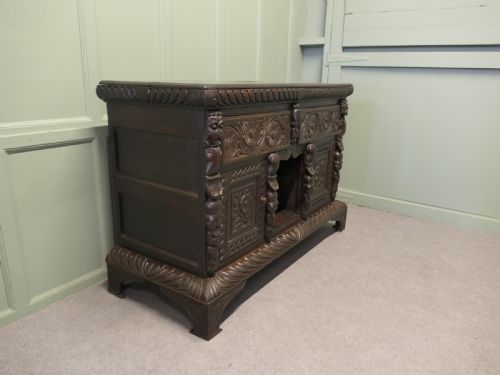
Heavy carved furniture encompasses substantial seating, storage pieces, and tables rooted primarily in the 17th century, Victorian era, and early 20th century. Buyers seek out these robust items to anchor a room with tangible history and functional character.
The selections span distinct regional idioms, including English wainscot chairs, Flemish sideboards, and Anglo-Indian coffers. Oak forms the backbone of these offerings, supplemented by walnut, elm, teak, and padouk.
Large functional forms dominate the selection, ranging from refectory tables and settle benches to expansive hall stands and sideboards. These pieces were built for heavy domestic use, employing solid timbers that survive centuries of handling.
How they were made
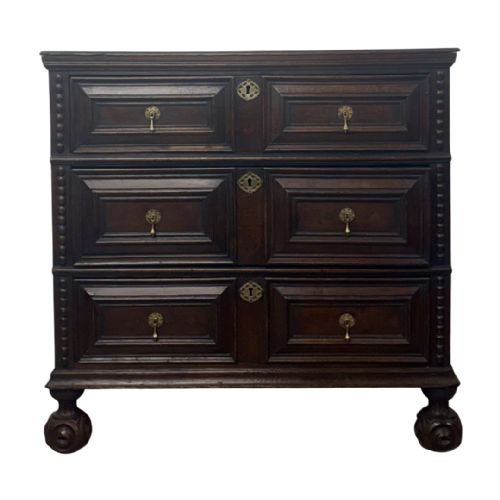
Maker construction relies heavily on solid oak, elm, and walnut joined with traditional methods suited to supporting heavy proportions. Iron and brass hardware frequently reinforce coffers, chests, and cabinets.
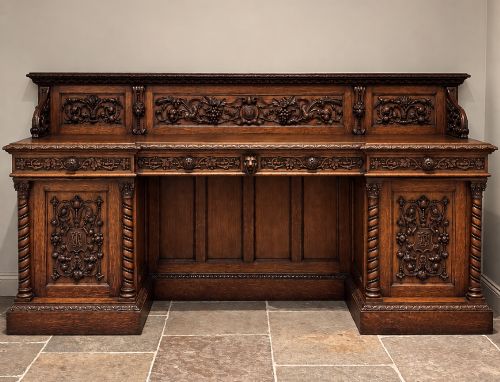
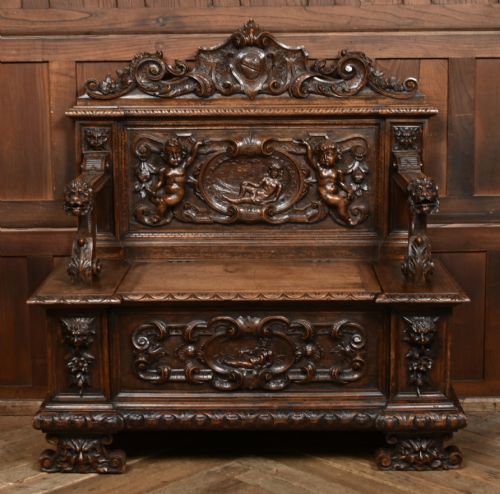
Surface ornament relies on deep hand chiselling rather than applied veneers, producing bold relief work found on panels, stiles, and friezes. Timber selection prioritised dense grain and durability to withstand structural carving.
Heavy Carved Furniture Retail Price Guide 2026
Typical asking prices for heavy carved furniture among the pieces listed under this phrase on Sellingantiques today, from the lower quarter to the upper quarter. They describe what is for sale here now, not the wider market.
Listings feature oak, elm, walnut, teak, and padouk across periods spanning the 17th century through the Edwardian era.
What varies in quality
The depth, crispness, and artistic ambition of the chisel work dictate the standing of individual items. Pieces featuring deeply undercut relief and confident proportions command greater visual authority than simpler, shallower ornament.
Integrity of timber selection and the retention of original structural components distinguish finer survivals. The harmony between the heavy timber frame and the scale of the carved decoration determines overall success.
The Heavy Carved Furniture Glossary
- Wainscot chair
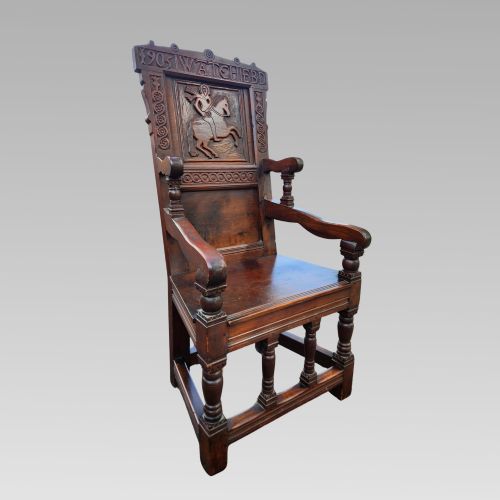
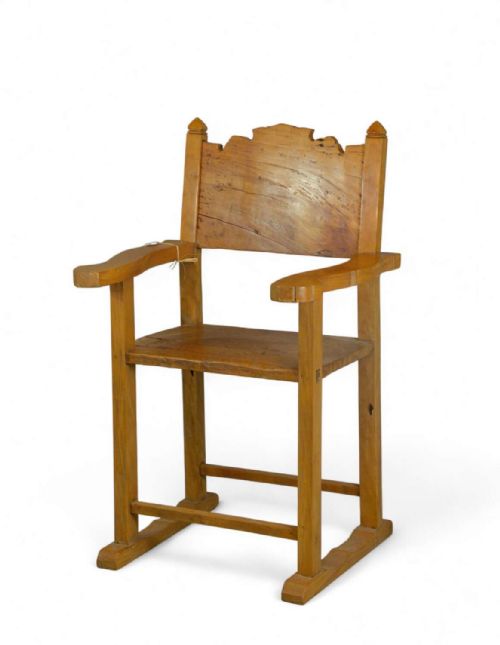
- A solid wooden armchair of sturdy proportions, typically constructed from oak with panelled backs and heavy armrests. These early seat forms were reserved for heads of households.
- Refectory table
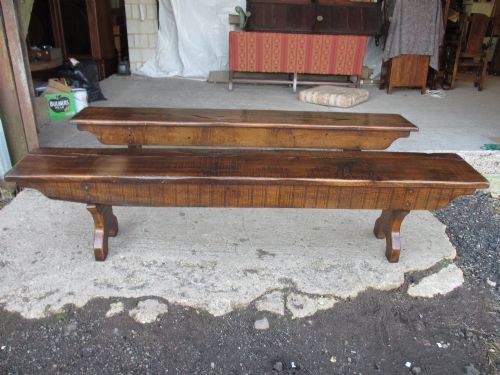
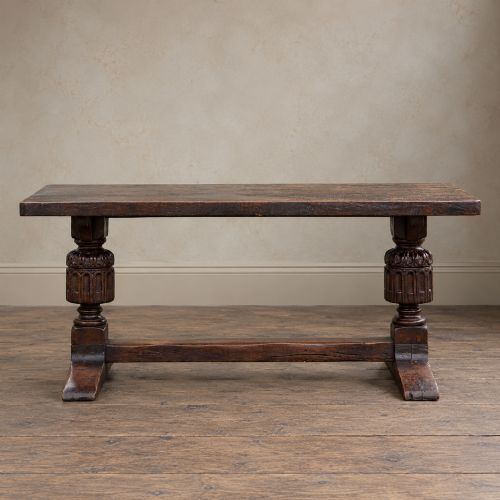
- A long, narrow dining table traditionally built with substantial timber legs and stretcher bases for communal dining. Single plank tops denote earlier examples of notable quality.
- Cassapanca
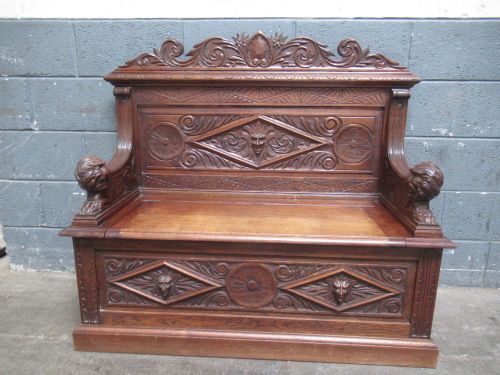
- An Italian wooden bench featuring a storage chest base beneath the seat and a panelled back with armrests. They combine seating and linen storage within a single architectural form.
- Green Man
- A sculptural architectural ornament depicting a human face disgorged from foliage or entirely made of leaves. This motif appears frequently on revival and 19th-century carved oak furniture.
- Coffer
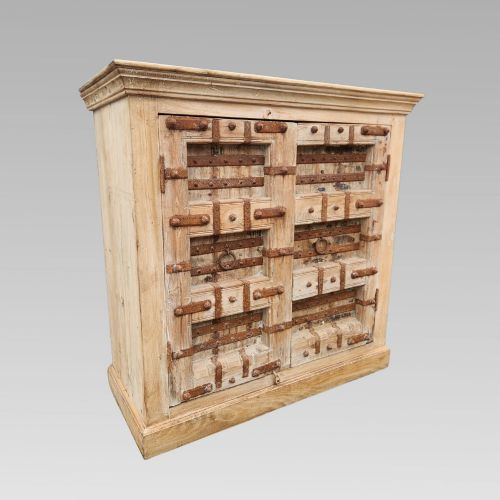
- A heavy box or chest with a hinged lid, often bound with iron straps for security and travel. They served multiple domestic functions including storage for valuables and textiles.
Heavy Carved Furniture: Frequently Asked Questions
Where should I place a heavy carved oak table?
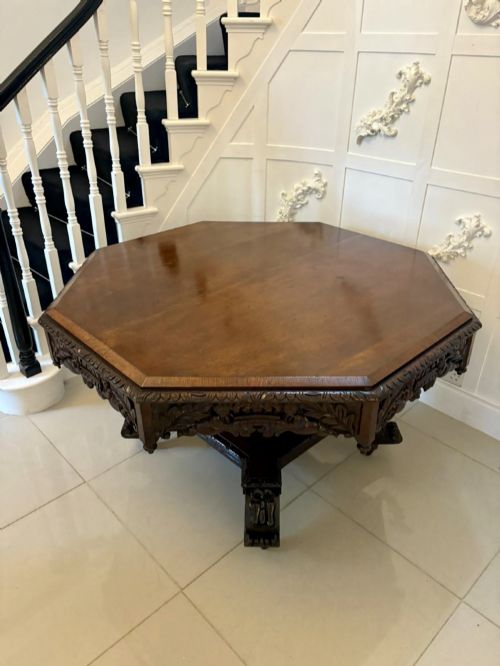
These robust tables function well as dining surfaces or central room anchors where their solid proportions can be fully appreciated.
Ensure adequate floor clearance around the piece to allow the substantial trestle or leg assemblies to remain visible.
How do I care for antique carved timber?
Dust the deep recesses of the carving regularly with a soft brush to prevent particulate buildup in the grain.
Maintain stable humidity levels in the room to protect the old timber from drying out or splitting.
What is a wainscot chair used for?
Historically utilised as a primary seat of authority in a hall or parlour, these rigid armchairs provide upright seating.
Today they serve effectively as statement reading chairs or sculptural accents in an entryway.
How do I distinguish 17th-century oak from later revivals?
Early pieces display tool marks, peg construction, and timber shrinkage consistent with centuries of age and hand working.
Revival furniture from the Victorian or Edwardian periods often adopts historical styles like Jacobean or Gothic with heavier symmetry and distinct machine assistance.