



Heavy Brass Log Dogs
Heavy brass log dogs hold logs securely inside a hearth, combining robust utility with polished metal presence.
Heavy Brass Log Dogs
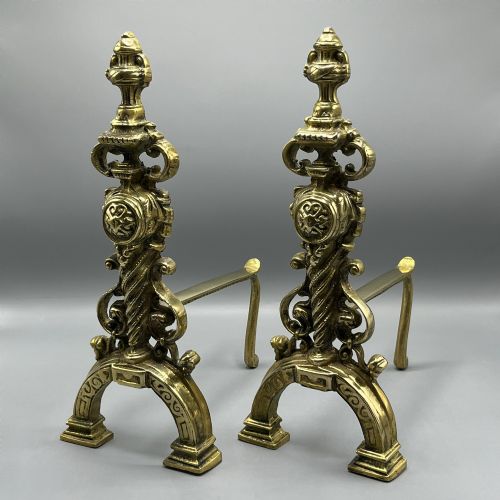
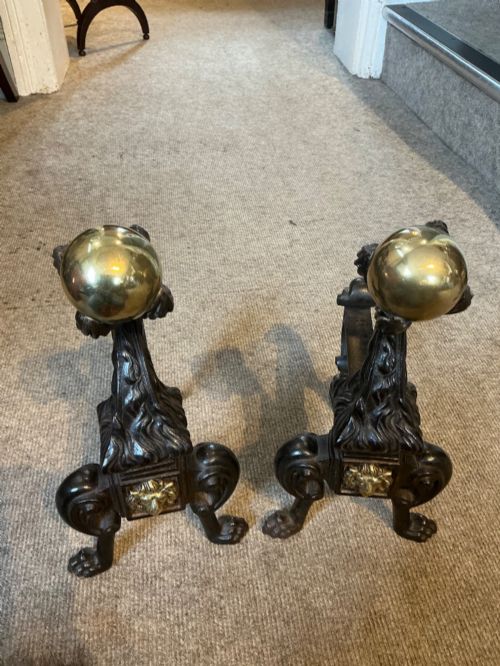
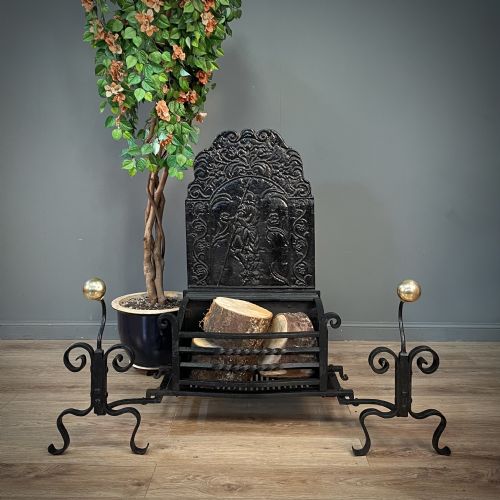
Most examples function as andirons or fire dogs, standing upright to keep fuel elevated for better air circulation. Alongside these, the inventory includes cast and wrought iron fire baskets incorporating brass elements. These objects originate predominantly from the nineteenth and early twentieth centuries.
The aesthetic ranges from plain utilitarian forms to ornate pieces reflecting Baroque, Jacobean, and Neo-Classical revivals. Buyers encounter large solid brass constructions as well as mixed metal variants pairing iron with brass components. Each pair displays the heavy weight necessary to bear large logs safely.
How they were made
Production relies heavily on metal casting, creating solid brass and cast iron components that provide structural heft. Workshops utilised sand-casting methods to shape decorative fronts and sturdy vertical standards. Gilt brass finishes appear on select high-end examples, adding a layer of bright metallic lustre.
What varies in quality
Quality separates simple cast utilitarian items from finely chased and ornate decorative pieces. Superior examples exhibit crisp detail in their revival ornamentation, whether following Baroque curves or Victorian Classical motifs. Heavier gauge metal and substantial overall mass indicate higher grade production.
The choice of materials also defines the tier of a piece, with solid brass and gilt finishes sitting above basic cast iron. Craftsmanship shows in the clean integration of iron structural bars with decorative brass fronts. The refinement of surface finishing distinguishes standard hearth furniture from exceptional examples.
The Heavy Brass Log Dogs Glossary
- Log dog
- A metal support placed in a fireplace to hold logs off the hearth floor. These items share functions with andirons and fire dogs.
- Andiron
- A horizontal metal bar raised on legs with a vertical pillar at the front, used to support burning wood. They frequently feature decorative brass finials and heavy cast construction.
- Fire basket
- A self-contained metal grate for holding fuel inside a fireplace, often combined with a protective back plate. These units frequently integrate brass and iron materials.
- Baroque style
- An ornate design aesthetic characterised by exuberant detail, curving lines, and dramatic ornamentation. This style appears in revival pieces from the nineteenth century.
- Gilt brass
- Brass treated with a thin layer of gold or gold-coloured finish to enhance brightness. This treatment elevates the decorative presence of hearth accessories.
Heavy Brass Log Dogs: Frequently Asked Questions
What do heavy brass log dogs do?
Heavy brass log dogs support logs inside an open hearth to allow proper airflow beneath the fire. Elevating the fuel improves combustion and helps ash fall clear of the burning wood.
They also serve a decorative role, framing the fireplace opening with polished metal surfaces. Their substantial weight ensures stability when large timber is loaded onto the hearth.
Are log dogs the same as andirons?
The terms are often used interchangeably to describe upright metal supports placed inside a fireplace. Both serve to keep burning wood elevated above the hearth floor.
Log dogs specifically emphasise the function of holding logs in place, while andirons encompass a broader range of ornamental firedogs. Both categories appear frequently in nineteenth-century fireplace furnishings.
How do I identify Victorian pieces?
Victorian fireplace pieces often draw on historical revival styles such as Gothic, Baroque, and Neo-Classical. The inventory shows distinct nineteenth-century manufacturing techniques using heavy cast brass and iron.
Look for robust construction methods typical of the period, alongside ornamentation that mimics earlier centuries. Makers during this era frequently combined functional iron frames with decorative brass fronts.
Can these be used in a modern fireplace?
These pieces function effectively in open masonry fireplaces sized to accommodate their dimensions. Buyers should measure the hearth depth and width to ensure proper clearance for the fire dogs and logs.
They also suit decorative hearths where no active fire burns, adding period character to a room. Their solid construction makes them fully operational for traditional wood-burning fires.