




Heart Gemstone Jewellery
Heart gemstone jewellery brings together romantic forms and precious materials, offering lasting sentiment across Edwardian, Victorian and mid-century designs.
Heart Gemstone Jewellery
When you examine heart gemstone jewellery, you encounter pendants, brooches, rings and lockets shaped around symbolic contours. These pieces span the Victorian and Edwardian eras, stretching into the 1930s, 1940s, 1950s and 1960s with distinct aesthetic shifts.
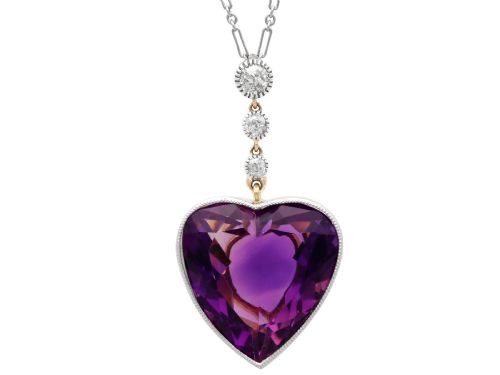
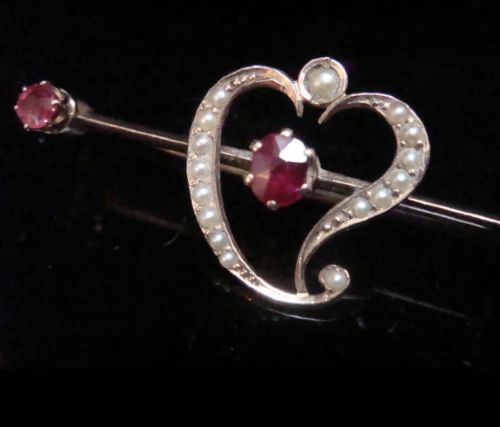
You are most likely to meet Edwardian and Victorian iterations featuring amethysts, rubies and seed pearls set in yellow gold. Pendant and brooch formats dominate the selection, often incorporating intricate detailing like knot links and drop motifs.
Materials and construction methods
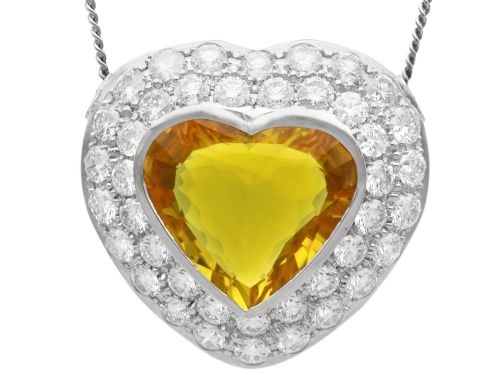
Goldsmiths utilised 9ct and 15ct yellow gold alongside 18k white and yellow gold, platinum and silver to form the structure of each piece. Gemstones including yellow sapphire, diamond, amethyst, ruby, citrine, tourmaline, peridot, opal and chalcedony are shaped into heart profiles.
Techniques range from delicate seed pearl halos bordering central cabochons to hinged earrings and intricate bar brooches. Metalwork includes curb links, witch's heart charm loops and secure settings that frame the coloured stones.
Heart Gemstone Jewellery Retail Price Guide 2026
Typical asking prices for heart gemstone jewellery among the pieces listed under this phrase on Sellingantiques today, from the lower quarter to the upper quarter. They describe what is for sale here now, not the wider market.
Listings feature yellow gold, white gold, platinum and silver alongside diverse gemstones including amethysts, tourmalines, opals and diamonds.
Distinctions in craftsmanship and design
The standard of a piece rests on the integration between the gemstone cut and the surrounding metalwork. Refined examples display careful stone matching, such as balanced multi-gem clusters or substantial central sapphires and amethysts.
Construction depth separates standard production from finer output, visible in the weight of the gold and the precision of seed pearl placement. The integrity of the hinge, pin or suspension loop further distinguishes the calibre of the item.
Arthur and Georgie Gaskin
The Heart Gemstone Jewellery Glossary
- Cabochon
- A gemstone shaped and polished with a smooth convex surface rather than faceted facets. This style highlights the natural colour and inclusions of stones like chalcedony.
- Seed pearl
- Very small natural or cultured pearls used extensively in Victorian and Edwardian jewellery. They are often clustered around central gemstones or arranged in delicate halos.
- Witch's heart
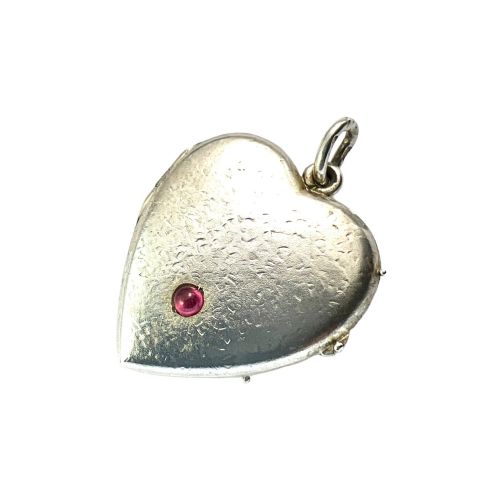
- A heart motif with a distinctive twisted tail, historically associated with romantic devotion and French jewellery design. It appears frequently in antique charm pendants.
- Padlock bracelet
- A bracelet secured with a heart-shaped padlock clasp, popular during the Victorian period. These clasps often double as decorative charms on curb link chains.
- Belle Epoque
- A period of refined jewellery design spanning the late nineteenth century to the First World War. It is characterised by platinum settings, diamonds and delicate openwork.
Heart Gemstone Jewellery: Frequently Asked Questions
How do I date a gold heart pendant?
Dating relies on examining the alloy colour, gemstone cuts and manufacturing techniques used in the piece. Edwardian examples often feature lighter 9ct gold with seed pearls, while Victorian items frequently incorporate closed backs or heavier claw settings.
Looking closely at the clasp mechanism and any hallmarking helps narrow the decade of production. Stylistic cues such as Belle Epoque platinum work or Retro Modern bold gold shapes provide further temporal context.
Were heart brooches worn differently in the past?
In the Victorian and Edwardian periods, brooches were pinned to lapels, collars or the centre of necklines. They often secured lace or ribbon rather than serving purely as decorative ornaments.
Many brooch designs from this era also included hidden loops on the reverse, allowing them to transform into pendants. This versatility was practical for wearers who wanted to interchange how their jewellery was displayed.
What is a double heart motif?
A double heart motif depicts two intertwined hearts, symbolising union, partnership or romantic affection. This design gained popularity during the Victorian and Edwardian eras in rings and bangles.
These pieces often paired contrasting gemstones, such as an amethyst alongside a citrine or ruby, held together by seed pearl accents. The layout represented two lives joined as one.
How should I care for antique gemstone jewellery?
Gentle cleaning with a soft cloth removes everyday oils without harming delicate settings or organic materials like pearls. Harsh chemical dips should be avoided, particularly for softer stones like opal, chalcedony and amber.
Storing pieces individually in padded boxes prevents scratching between harder diamonds and softer coloured gems. Periodic checks by a specialist ensure that claw settings and hinges remain secure.