

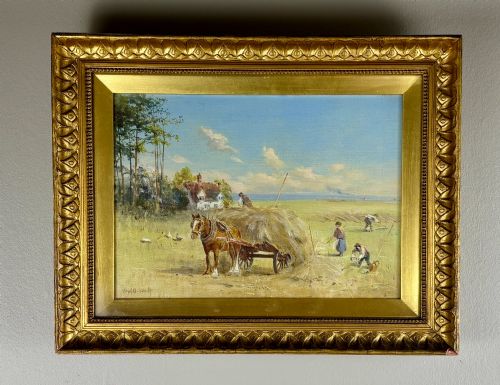
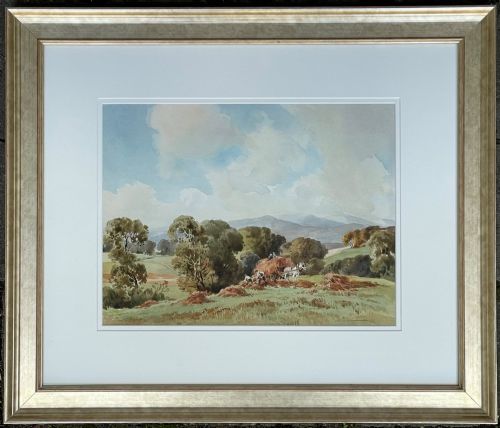


Haymaking Scene Artwork
These haymaking scene artwork pieces capture the traditional rural harvest across British landscapes through oil and watercolour.
Haymaking Scene Artwork
A haymaking scene artwork captures the traditional rural labour of gathering the harvest across British landscapes. These depictions focus on fields, farmworkers, and the seasonal rhythms of the countryside during the nineteenth and early twentieth centuries.
Most examples encountered on this page take the form of framed oil paintings or watercolours on paper and canvas. They reflect periods from the eighteen-seventies through to nineteen-twenty, encompassing Victorian rural naturalism and British impressionism.
Buyers seek these works to bring pastoral calm and historical depth into domestic interiors. The subjects range from expansive Yorkshire valleys to intimate Essex meadows rendered by regional painters.
How they were made
Artists worked primarily with oil paint on canvas or watercolour applied to paper, mounted under glass within wooden frames. The handling of medium defines the visual character, ranging from fluid watercolour washes to heavy oil impasto that builds texture.
Makers utilised traditional pigments and brushes to capture natural light outdoors, aligning with impressionist realism and pastoral traditions. Support materials such as stretched canvas and heavy-stock paper were standard for the period.
Haymaking Scene Artwork Retail Price Guide 2026
Typical asking prices for haymaking scene artwork among the pieces listed under this phrase on Sellingantiques today, from the lower quarter to the upper quarter. They describe what is for sale here now, not the wider market.
Listings feature canvas and paper supports utilised across the nineteenth century and the nineteen-twenties.
What varies in quality
The distinction between standard works and finer pieces lies in the sureness of the brushwork and the observation of light. Superior examples convey atmospheric depth and movement within the field, rather than static recording.
Conservation of the surface pigment and the integrity of the original wood frame influence the overall character of the piece. Works that retain their untouched surface provide a clearer record of the painter's initial intent.
Percy Lancaster·Henry Bailey·JOHN ATKINSON·J.C. Grey·James William Booth·Herbert Royle·Arthur Walker Redgate·FREDERICK J.KNOWLES·William Greaves·John Clayton Adams
The Haymaking Scene Artwork Glossary
- Watercolour
- A paint method using water-soluble pigments on paper. This medium produces translucent washes and delicate atmospheric effects.
- Impasto
- Paint applied thickly to a canvas, standing out from the surface. This technique adds tactile dimension to fields and sky.
- Pastoral
- A style of art depicting rural life and idyllic country scenes. These subjects emphasise harmony between workers and the landscape.
- Provenance
- The documented history of ownership for a piece of art. This record traces the journey of the work from the artist's studio onwards.
Haymaking Scene Artwork: Frequently Asked Questions
What periods do these paintings cover?
The available works span from eighteen-seventy through to nineteen-twenty, capturing the late Victorian and Edwardian eras. This timeframe represents a significant period of transition in British rural art.
Artists during these decades moved between traditional academic recording and looser impressionistic approaches to natural light.
How should I hang watercolour paintings?
Watercolour paintings require protection from direct sunlight to prevent the pigments from fading over time. Glazing with glass helps shield the delicate paper surface from atmospheric moisture and dust.
Position them on interior walls away from direct heat sources to preserve the paper and wooden frame.
What is rural naturalism?
Rural naturalism is a late nineteenth-century movement focused on realistic depictions of agricultural labour and country life. Painters sought to record the authentic conditions of farmworkers without excessive romantic sentiment.
These scenes often emphasise overcast skies and honest toil in the harvest fields.
Are these works signed by the artists?
Many examples feature original signatures or inscriptions applied by the painter, often placed in the lower corners of the canvas or paper. Signatures provide a direct link to the creator and help establish attribution.
Unsigned works still rely on stylistic evidence and period context for identification.