





Hardwood Hall Bench
A hardwood hall bench commands an entrance hall with solid timber construction, bringing historic seating and storage into practical service.
Hardwood Hall Bench
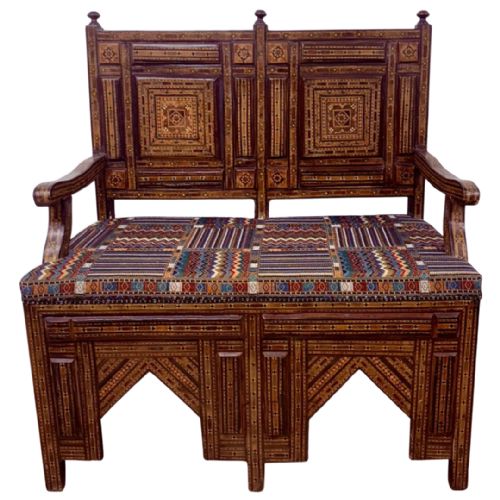
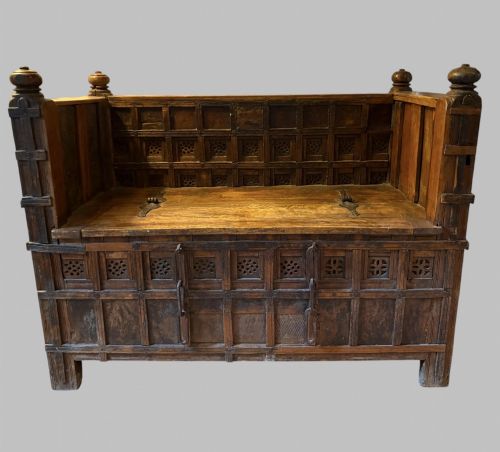
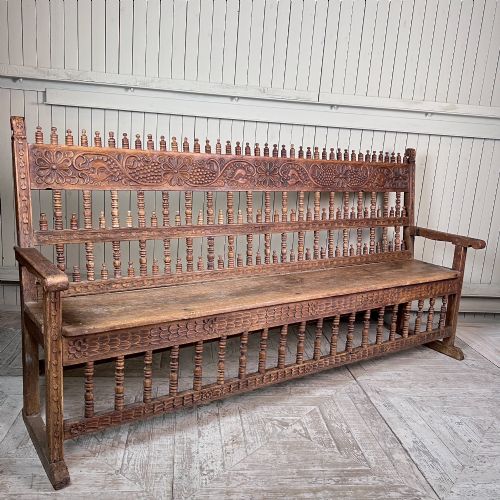
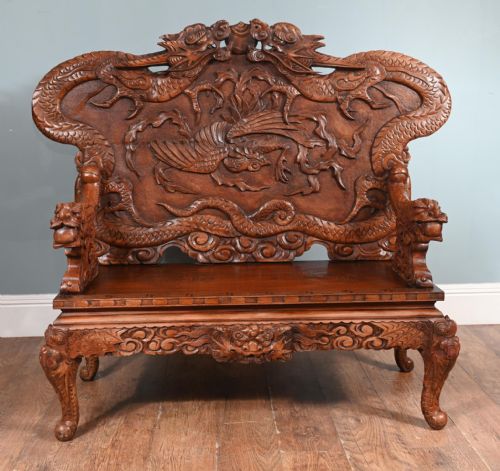
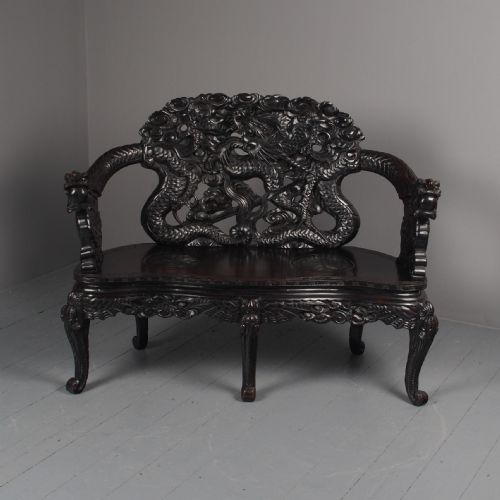
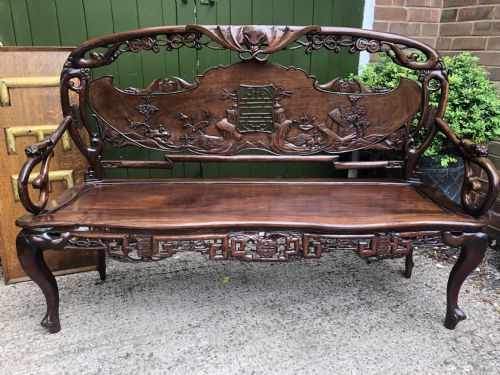
A hardwood hall bench provides substantial seating for a hallway or entryway, often incorporating storage beneath the seat or intricate carved detailing across the back. When searching for a hardwood hall bench, buyers encounter pieces originating from diverse global traditions including Chinese Qing Dynasty workshops, Colonial Indian craft, and Syrian or Ottoman centres.
The specimens seen here span from the eighteenth century through to the early twentieth century, encompassing various forms such as settles, corner benches, and storage benches. Examples range from blonde wood and rosewood construction to lacquered surfaces and inlaid finishes, reflecting distinct regional furniture-making customs.
Materials and construction methods
Construction relies heavily on dense hardwoods, rosewood, and blonde wood, providing the structural integrity required for heavy use in a hallway. Artisans employed traditional joinery combined with surface treatments such as cinnabar lacquer, bone inlay, and brass decoration to ornament the timber.
Carving forms a central technique across many regional styles, yielding deep relief motifs like dragons and horseshoes. Upholstery and textile additions appear on specific Syrian and Ottoman examples, softening the rigid wooden frames.
Hardwood Hall Bench Retail Price Guide 2026
Typical asking prices for hardwood hall bench among the pieces listed under this phrase on Sellingantiques today, from the lower quarter to the upper quarter. They describe what is for sale here now, not the wider market.
Current listings feature hardwood hall bench pieces utilising materials such as bone, iron, textile, and marble alongside traditional timbers.
Assessing quality in regional seating
Quality rests in the crispness and depth of the timber carving, particularly on the backrests and seat edges where artisans invested the most labour. The integrity of the underlying hardwood and the preservation of original lacquer or inlay surfaces dictate the overall standard.
Structural complexity also separates standard seating from superior examples, such as those featuring hinged storage compartments, integrated box settle designs, or coordinated corner configurations.
The Hardwood Hall Bench Glossary
- Settle
- A wooden bench with high backs, solid arms, and often a storage box beneath the seat. This form kept draughts away from people sitting near entryways.
- Cinnabar lacquer
- A technique involving multiple layers of coloured resin applied to a wooden base and carved when dry. It creates a rich, textured surface seen on specific Chinese pieces.
- Box settle
- A heavy seat featuring a enclosed compartment under the hinged lid. It served dual purposes for seating and keeping household goods.
- Qing Dynasty
- The final imperial dynasty of China, lasting from the seventeenth to the early twentieth century. Furniture from this period exhibits characteristic carving and proportion.
- Colonial Indian
- Furniture produced in India during British rule, blending local timber traditions with European or regional forms. These items frequently utilise dense hardwoods.
Hardwood Hall Bench: Frequently Asked Questions
Where should I place a hardwood hall bench?
These benches suit entrance halls, corridors, and large landings where their substantial presence anchors the space. They function effectively as a place to sit while removing footwear.
Ensure adequate clearance around the piece, particularly if the seat hinges open to access a storage compartment underneath.
How do I care for antique hardwood furniture?
Maintain the timber by dusting with a dry cloth and occasionally applying a suitable wax to nourish the surface. Keep the wood away from direct heat sources and strong sunlight to prevent drying.
Lacquéred or inlaid sections require gentle handling to avoid damaging delicate surface decorations and embedded materials.
Can I use a hall bench for storage?
Many historical examples incorporate hinged seats that open to reveal a deep compartment inside the base. This built-in cavity was traditionally used to store boots, textiles, and household items.
Check the mechanism of the hinge and the interior space to ensure it suits your practical storage requirements.