




Hardwood Curio Cabinet
A hardwood curio cabinet is a glazed or open display piece built to hold prized possessions, merging utility with intricate craftsmanship.
Hardwood Curio Cabinet
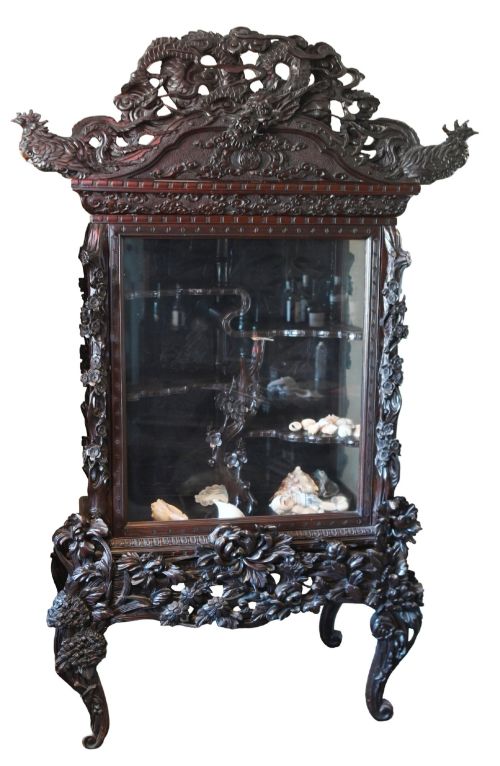
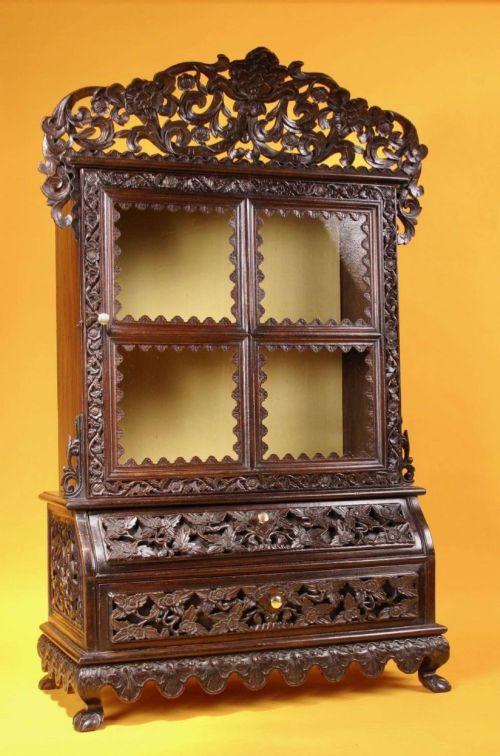
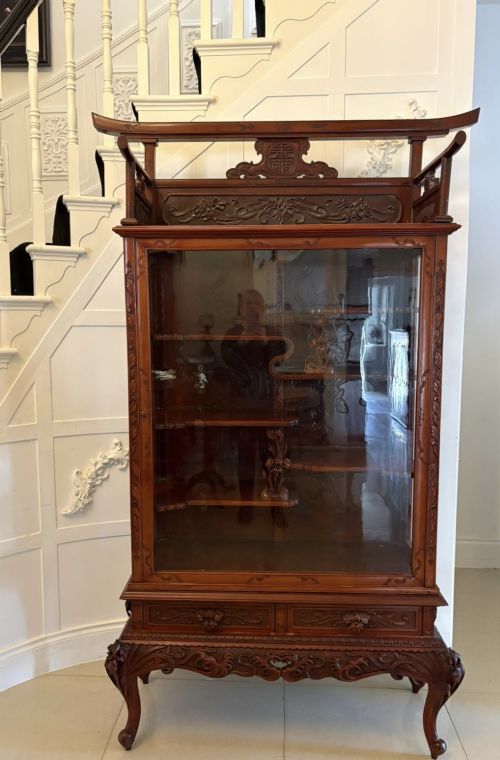
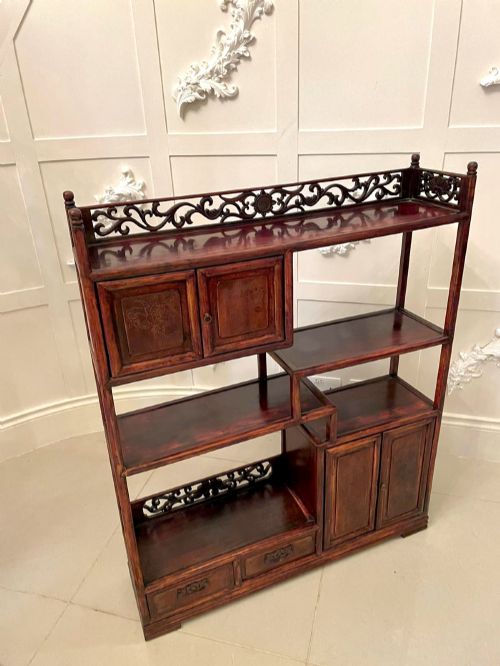
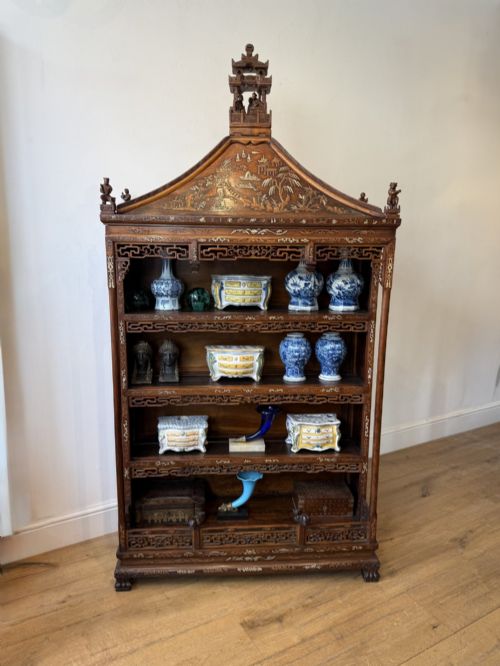
When buyers search for a hardwood curio cabinet, they are looking at a specialised form of furniture designed to exhibit small collections and ornaments. The examples seen on this page span the nineteenth century and the early twentieth century, originating primarily from Chinese and Japanese workshops.
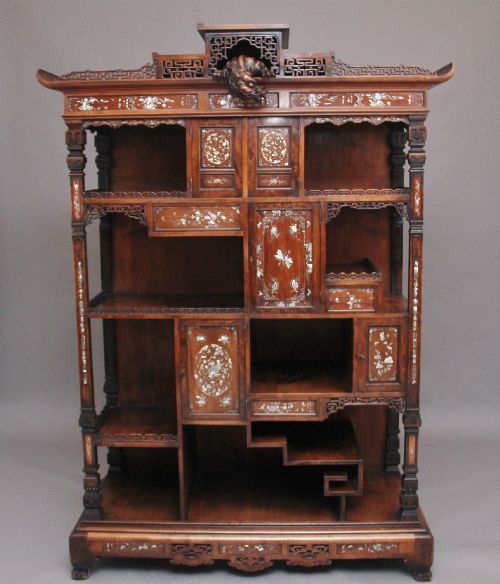
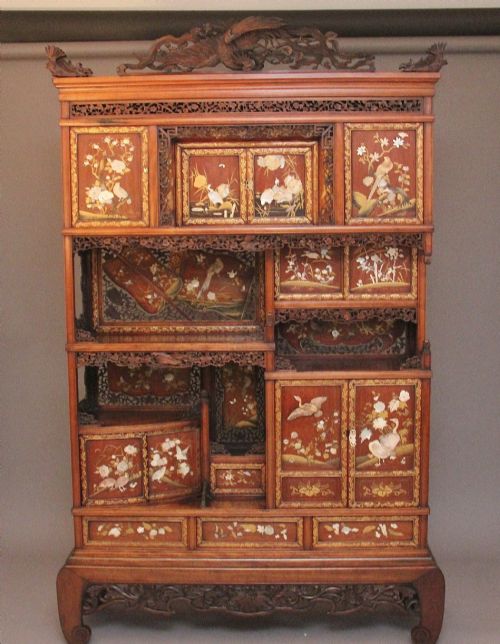
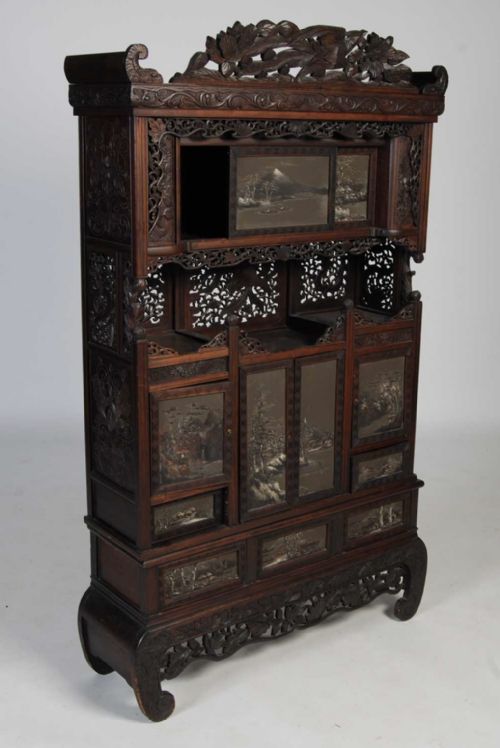
The most common versions met here include the traditional Japanese shodona alongside Chinese display cabinets, stands, and open shelf units. These objects take the form of enclosed glazed cupboards, open shelving frameworks, and multitiered stands designed for tabletop or floor placement.
How they were made
Carpenters utilised dense hardwoods such as hongmu and rosewood to construct the structural frames of these display cabinets. These heavy timbers provided the necessary strength for slender vertical supports and delicate open shelving.
Decoration relied heavily on contrasting inlay and surface treatment, incorporating mother-of-pearl, bone, and red lacquer. Artisans also applied deep carvings to the timber surfaces and fitted brass hardware to doors and drawers.
The site listings feature pieces spanning the 19th Century and the early 20th Century, constructed from hardwood, glass, lacquer, brass, rosewood, mother-of-pearl, and bone.
What varies in quality
The distinction between standard and superior pieces rests upon the precision of the joinery and the depth of the carving. Master craftsmen executed complex framing that accommodated glass panels and structural weight without relying on excessive reinforcement.
Quality also appears in the refinement of decorative inlays and surface finishes. Finely cut mother-of-pearl and meticulously applied lacquer distinguish exceptional cabinets from simpler commercial productions.
The Hardwood Curio Cabinet Glossary
- Hardwood
- Dense timber derived from broad-leaved deciduous trees, prized for its durability and rich grain. It forms the solid structure of these display cabinets.
- Shodona
- A traditional Japanese multi-shelved cabinet or display stand. These pieces feature asymmetrical compartments designed for showing decorative objects.
- Hongmu
- A category of dense, dark Chinese hardwood often translated as red wood. It provides a heavy, stable frame for carved display furniture.
- Chinoiserie
- Western decorative style reflecting Chinese artistic motifs. Artisans applied these designs to European and export furnishings.
- Mother-of-Pearl
- The iridescent inner layer of mollusc shells. Craftsmen cut this material into thin pieces to create floral and geometric inlays.
Hardwood Curio Cabinet: Frequently Asked Questions
What is a hardwood curio cabinet?
A hardwood curio cabinet is a specialised display piece built to exhibit small ornaments and collectables behind glass doors or upon open shelves.
These pieces utilise dense timbers and decorative inlays to frame treasured items within domestic interiors.
How were these cabinets used?
These cabinets served to organise and present precious objects, ceramics, and scholarly items within traditional homes and reception rooms.
Their multi-tiered shelves and glazed compartments allowed owners to rotate displays and protect delicate items from dust.
How do I live with one?
Placing a hardwood cabinet away from direct sunlight protects the timber and any lacquer work from fading or drying out over time.
Ensure the piece sits on a level floor to maintain the alignment of doors and prevent stress on delicate glazed panels.
How do I tell periods apart?
Differentiating periods relies on observing stylistic markers such as Meiji period asymmetry or Qing Dynasty carving conventions.
Materials also offer clues, as specific red lacquer techniques and inlay patterns align with distinct nineteenth and early twentieth-century traditions.