






Hardwood Blanket Chest
A hardwood blanket chest brings sturdy global character and deep grain into a room, offering robust storage built to last.
Hardwood Blanket Chest
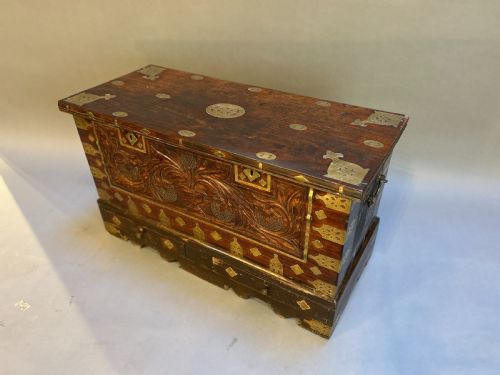
A hardwood blanket chest provides heavy-duty storage with distinct regional character, drawing on traditions from India, China, and the Middle East alongside Victorian colonial interpretations. These pieces function primarily as trunks and coffers, designed historically for travel and secure domestic storage.
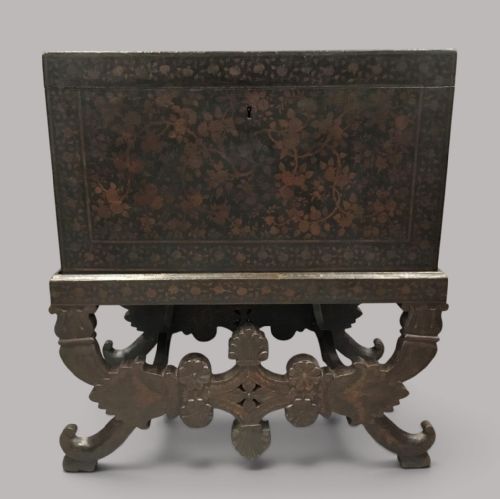
The selection here spans the eighteenth century through the early twentieth century, including Victorian examples and specific forms like Zanzibar chests and lacquered trunks on stands. Buyers encounter varied regional styles such as Anglo-Indian, Ottoman, and Qing Dynasty pieces.
Most items on this page date from the nineteenth century, utilising dense timbers suited to long-distance trade and daily utility. Each trunk reflects the aesthetic and joinery methods of its specific origin, whether heavily studded or intricately inlaid.
Materials and construction
Makers built these chests from durable timbers, predominantly teak, elm, and general hardwoods, selected for structural strength and resistance to wear. These woods provide a heavy, stable carcase capable of enduring heavy usage over centuries.
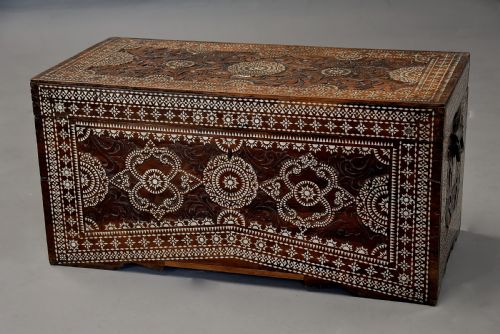
Metalwork plays a central role in the construction, incorporating iron and brass bindings, studs, and corner plates to reinforce joints and protect edges during transit. Inlaid decoration utilising mother of pearl and surface treatments like lacquer add ornamental detail to the primary wooden structure.
Hardwood Blanket Chest Retail Price Guide 2026
Typical asking prices for hardwood blanket chest among the pieces listed under this phrase on Sellingantiques today, from the lower quarter to the upper quarter. They describe what is for sale here now, not the wider market.
Listings feature items dated from the 18th century through 1920, including Victorian and Qing Dynasty periods.
Distinctions in quality
Quality in a hardwood blanket chest rests upon the integration of structural hardware and the precision of decorative inlay or joinery. Stronger examples feature substantial iron or brass mountings that are deeply embedded into the timber rather than merely applied.
The refinement of surface detail distinguishes finer pieces, whether through intricate mother of pearl geometric patterns or smooth, durable lacquer finishes. The choice of primary timber also influences overall weight, grain density, and long-term stability.
The Hardwood Blanket Chest Glossary
- Zanzibar chest
- A heavy wooden storage trunk originating from the East African coast and India, characterised by brass or iron studding and strapwork.
- Coffer
- A large box or chest used for holding valuables, blankets, or documents, typically featuring a hinged lid and a solid timber construction.
- Anglo-Indian
- A style describing items made in India during the British colonial period, combining local craftsmanship with European forms.
- Mother of pearl
- An iridescent inner layer of shells used to create decorative inlaid patterns across the surfaces of furniture and boxes.
- Lacquer
- A durable resin finish applied in multiple layers to wood, creating a smooth, protective, and often decorative surface.
Hardwood Blanket Chest: Frequently Asked Questions
What is a Zanzibar chest?
A Zanzibar chest is a distinct form of trading trunk featuring heavy brass studs and elaborate metal strapwork. These pieces were made for maritime trade and domestic storage across the Indian Ocean.
They are constructed from dense tropical hardwoods and often include internal compartments for smaller valuables.
How were these chests used?
These trunks served primarily as secure containers for textiles, blankets, and personal wealth during travel by sea or land. Their heavy timber frames and metal bindings protected contents from dampness and rough handling.
In domestic settings, they functioned as stationary storage units and occasionally as seating or low tables.
How do I date a hardwood chest?
Dating relies on observing construction methods, wood types, and the style of metal fittings such as brass hinges and iron locks. Eighteenth-century pieces often display hand-cut joinery and simpler forged ironwork.
Nineteenth-century examples frequently incorporate mass-produced brass studs, elaborate mother of pearl inlay, or specific regional colonial characteristics.
Where should I place a chest?
These chests suit living spaces, bedrooms, or hallways where their substantial proportions and decorative hardware can act as a focal point. They provide practical interior storage for blankets and linens while functioning as solid surface furniture.
Placement should avoid direct heat sources to protect the natural timber and prevent warping.