

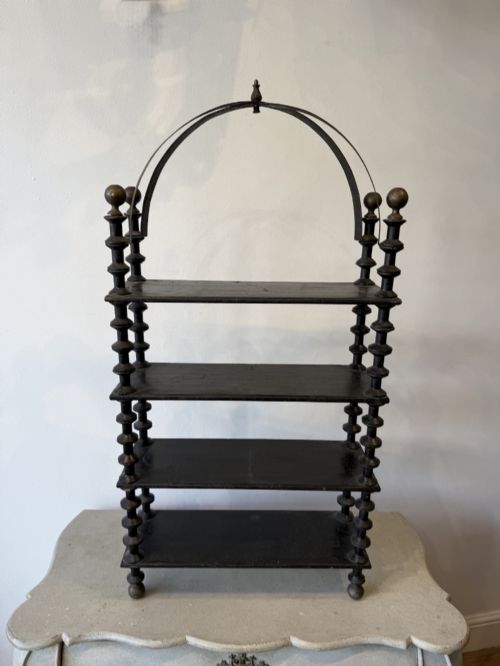
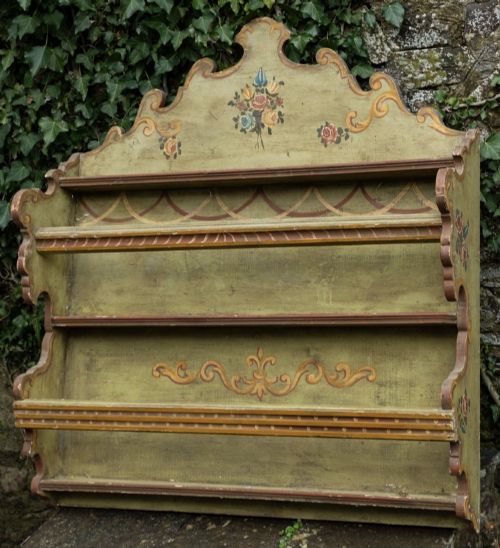
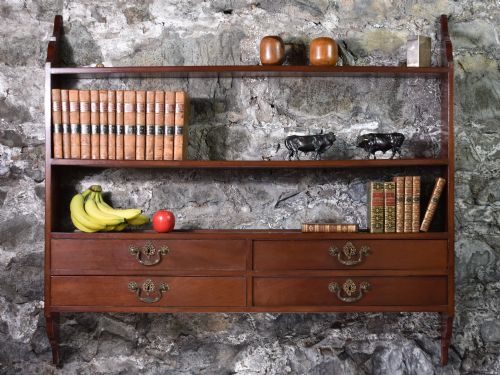
Hanging Wall Display Shelf
A hanging wall display shelf solves floor space shortages while framing ceramics, books and small treasures at eye level.
Hanging Wall Display Shelf
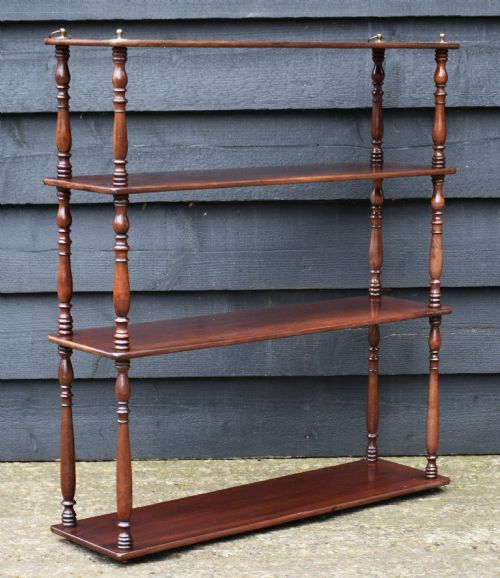
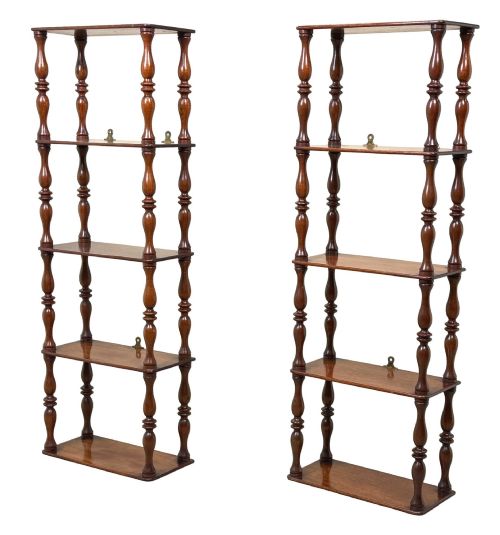
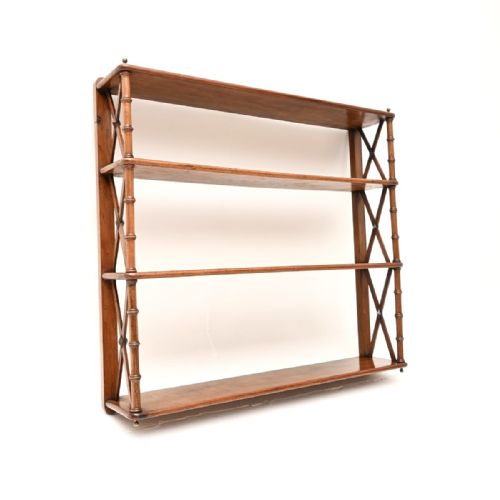
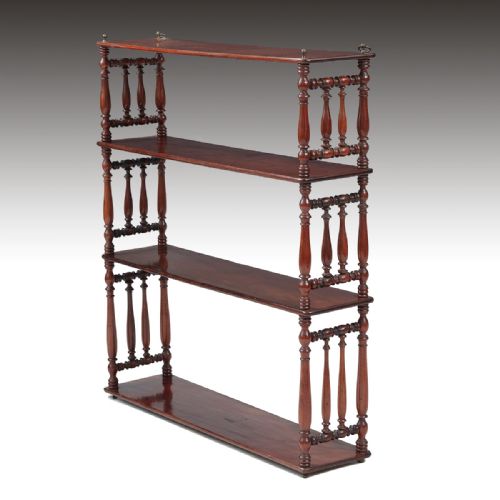
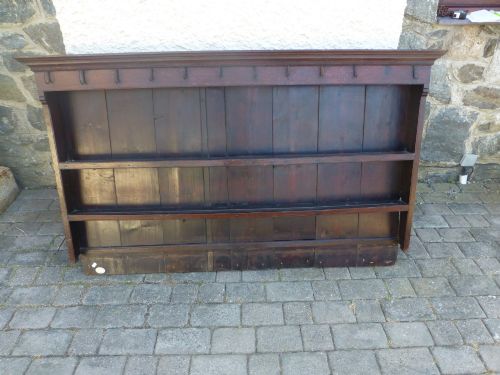
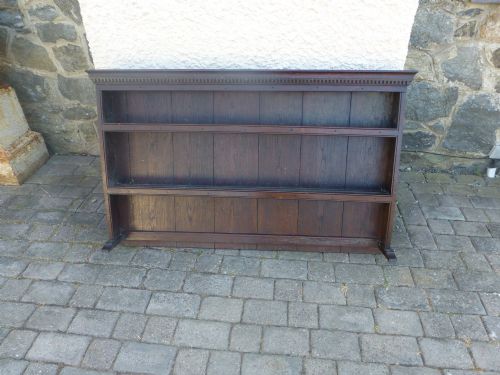
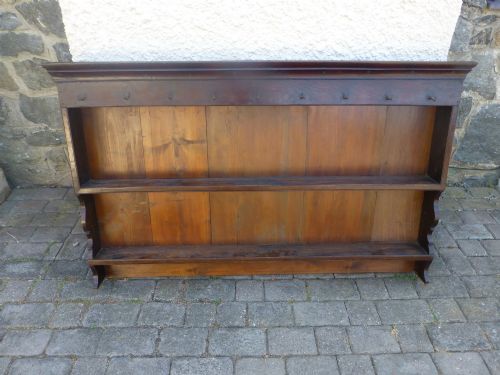
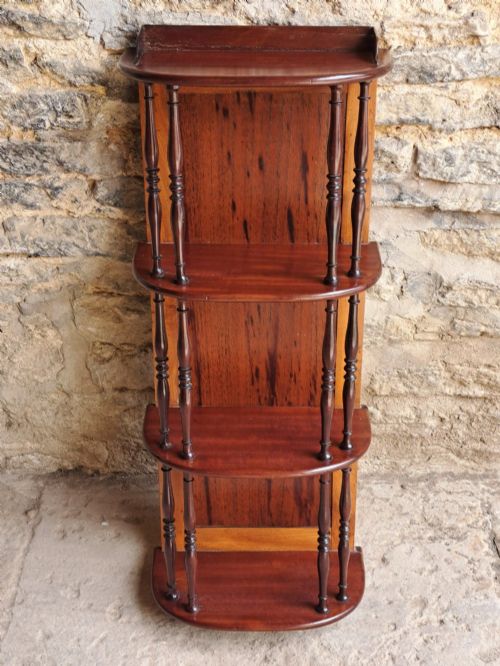
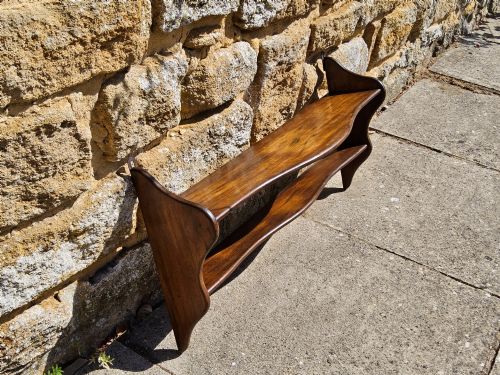
A hanging wall display shelf takes many forms across the centuries, appearing as open tiers, corner cupboards, plate racks and small wall-mounted bookcases. Buyers seeking a hanging wall display shelf most frequently encounter mahogany, walnut and oak examples from the Georgian and Victorian eras.
The selection ranges from simple sets of hanging shelves to elaborately carved Victorian Gothic Revival bookcases and French walnut wall units. Regional variations include Italian walnut pieces and Sorrento inlaid olive wood corner shelves alongside English country oak plate racks.
Makers such as George Edmund Street and John Moyr Smith occasionally emerge among these pieces, linking standard domestic furnishings to notable design movements of the nineteenth century.
Materials and construction methods
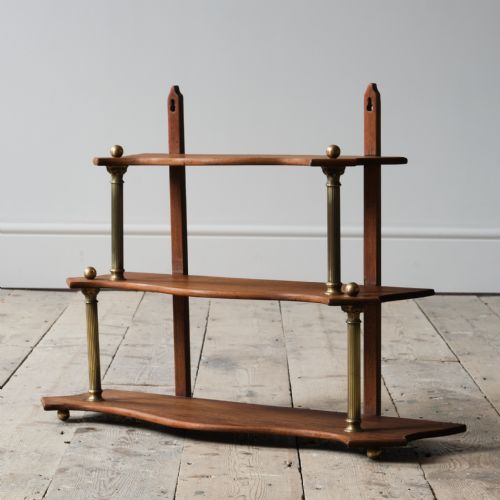
Cabinetmakers constructed these shelves using dense hardwoods including mahogany, walnut and oak, supplemented by softer timbers like beech, satin birch and painted wood. Brass brackets, mounts and hinges frequently provide functional reinforcement and subtle visual contrast against the timber.
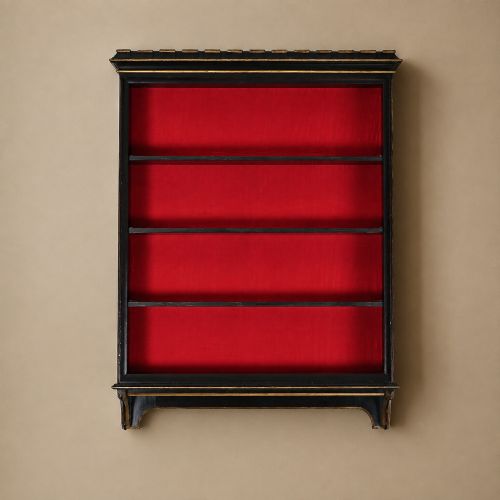
Surface treatments vary widely, encompassing polished mahogany grains, ebonised finishes, hand-painted decoration, and applied gilt. Joinery methods range from pegged joints on seventeenth and eighteenth-century oak pieces to precise dovetailing on nineteenth-century mahogany bookcases.
Some oak shelves doubled as silent witnesses to family meals, holding rows of delft plates long before anyone thought to call them vintage.
Distinctions in craftsmanship and design
Quality in these wall units rests upon the selection of figured timbers and the crispness of carved or turned details, such as bobbin turnings or architectural mouldings. Superior examples demonstrate balanced proportions and integrated hanging fixtures that securely support the weight of books and ceramics.
The finesse of hand-painted decorative schemes or specialised inlays, such as Sorrento olive wood work, distinguishes standard utilitarian shelving from finer artistic commissions. Original backs, glass panels and matching brass hardware elevate the integrity of a piece.
George Edmund Street·John Moyr Smith
The Hanging Wall Display Shelf Glossary
- Étagère
- A set of open shelves for displaying small ornaments, originating in France during the nineteenth century. These tiers often feature delicate upright supports and painted or gilt surfaces.
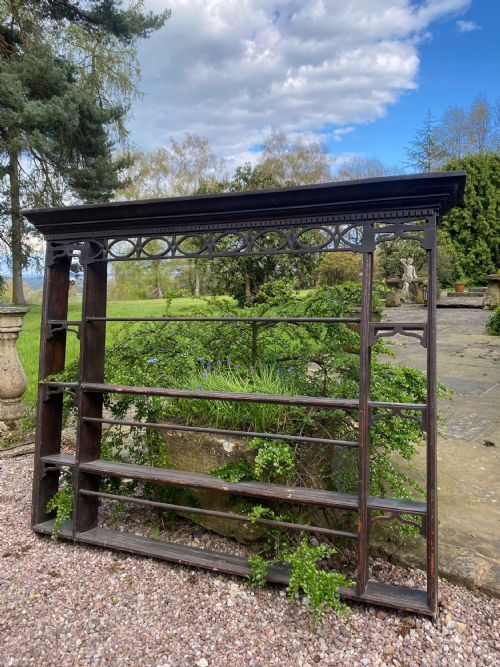
- Delft plate rack
- A wall-mounted wooden rack designed specifically to display ceramic plates upright on slatted shelves. Eighteenth-century versions frequently employ solid oak construction.
- Aesthetic Movement
- A late nineteenth-century design style focusing on artistic visual qualities rather than narrative content. Furniture from this movement often employs ebonised woods and stylised ornamentation.
- Gothic Revival
- An architectural and decorative style drawing inspiration from medieval forms. Pieces display pointed arches, heavy tracery and carved oak or beech timbers.
- Waterfall shelves
- Graduated wall shelves where each lower tier projects further than the one above it. This profile creates a cascading silhouette popular in nineteenth-century French mahogany furniture.
Hanging Wall Display Shelf: Frequently Asked Questions
How do I hang a heavy antique wall shelf safely?
Secure the piece directly into wall studs using appropriate steel screws and brackets matched to the weight of the timber. Avoid relying solely on plasterboard for heavy oak or mahogany cabinets.
Distribute the load evenly across the internal shelves once mounted to prevent structural twisting over time.
What is the difference between a plate rack and a bookcase?
Plate racks feature narrow slatted ledges or plate grooves designed to hold ceramics at an inclined angle safely. Bookcases provide deeper, flat wooden surfaces meant for stacking books vertically.
Many Georgian and Victorian pieces bridge these categories depending on the depth of the hanging frame.
How do I clean antique polished mahogany?
Dust the timber regularly with a soft, dry cloth to prevent dirt accumulation in carved details and joints. Apply a microcrystalline wax periodically to nourish the wood and maintain a gentle sheen.
Keep these shelves away from direct sunlight and heat sources to prevent the mahogany finish from cracking or fading.
How can I tell a Victorian piece from a Georgian one?
Georgian shelves typically utilise solid mahogany or oak with straightforward architectural proportions and minimal ornamentation. Victorian pieces often introduce darker ebonised finishes, satin birch, or elaborate Gothic and Aesthetic Revival carvings.
Inspect the backboards and interior construction for hand-cut marks that indicate earlier eighteenth-century joinery techniques.