



Hanging Corner Unit
A hanging corner unit turns wasted wall junctions into useful storage, offering timber depths and panelled doors across Georgian and Victorian designs.
Hanging Corner Unit
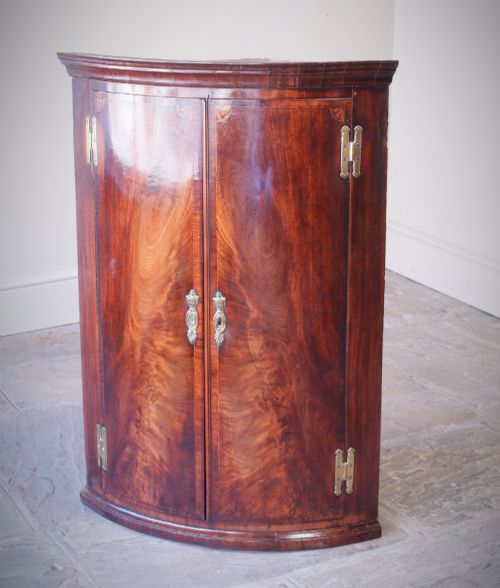
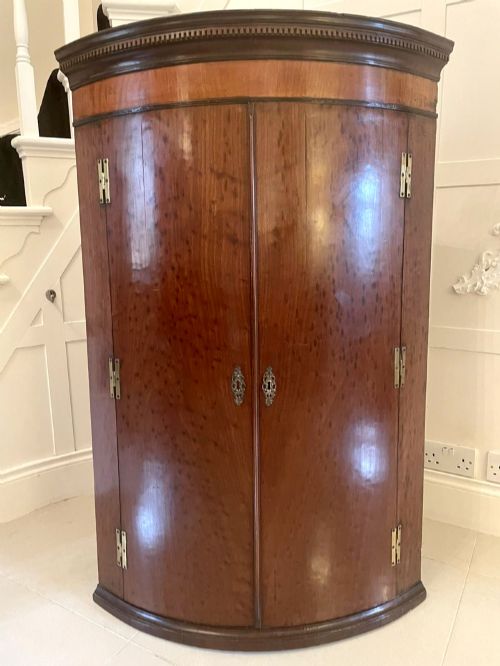
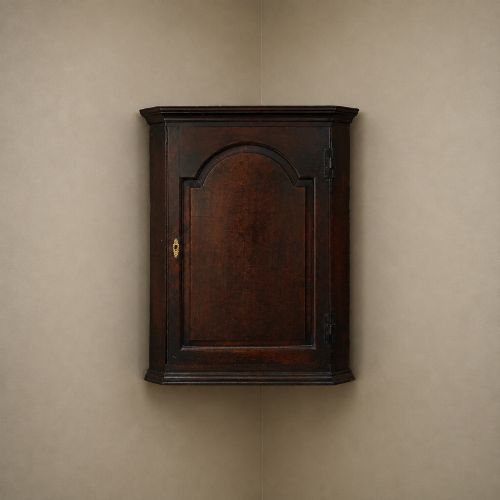
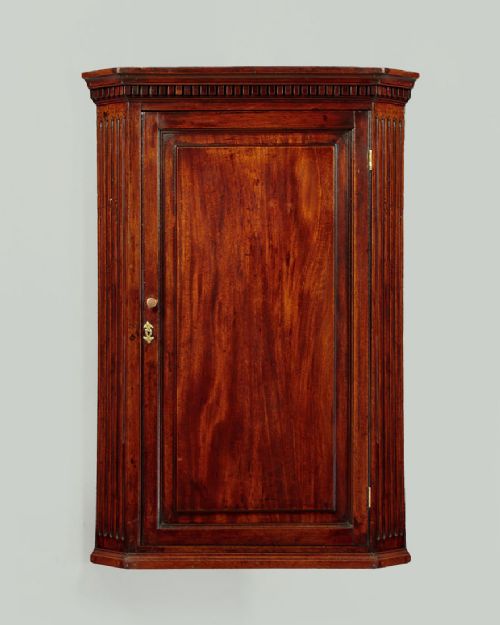
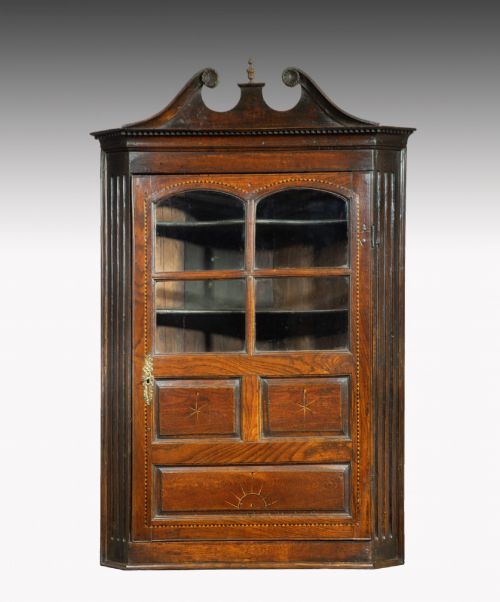
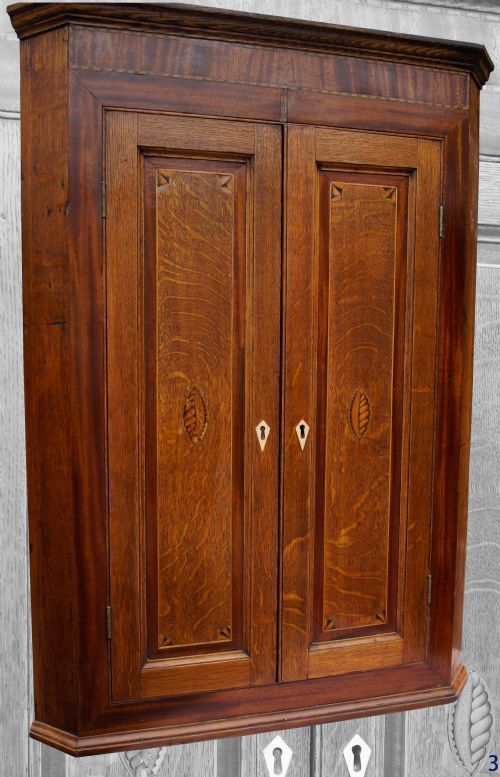
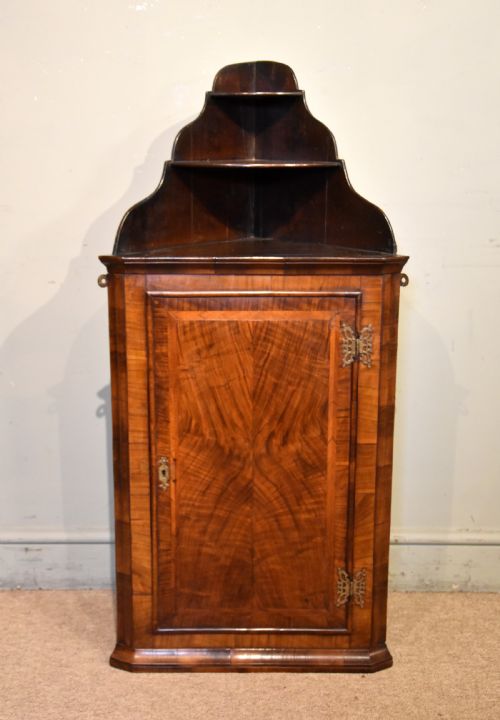
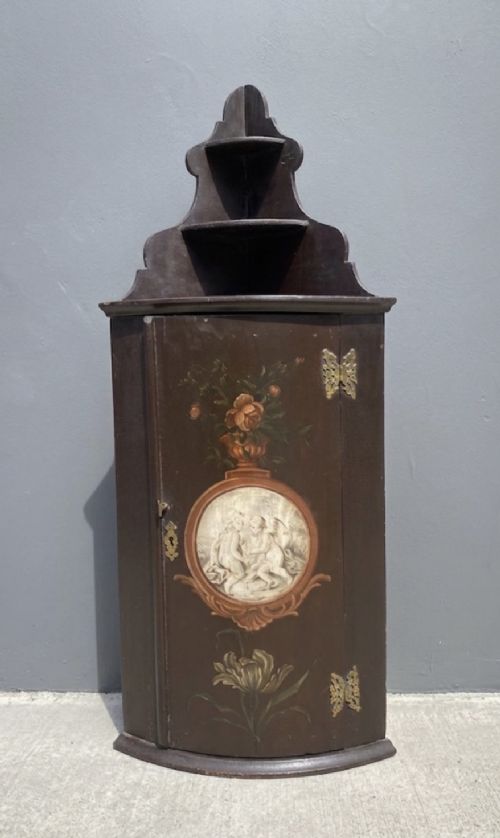
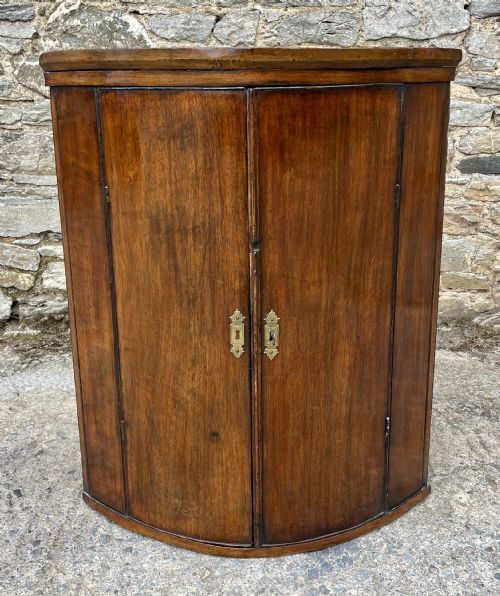
A hanging corner unit is a wall-mounted cabinet or set of shelves designed to fit snugly into the internal corner of a room. The pieces recorded here take the form of corner cupboards, wall display cabinets, and open corner shelves, serving as compact storage where floor space is limited.
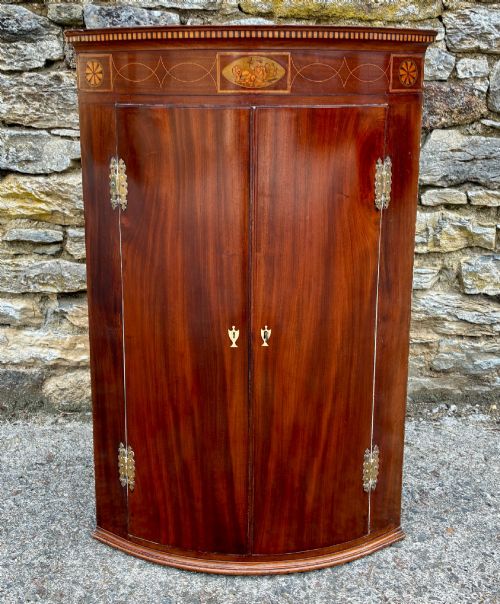
The versions most commonly met on this page span the 18th century, the Georgian period, and the 19th century. They appear frequently in oak and mahogany, often featuring bow fronts, panelled doors, or glazed upper sections designed for display.
How they were made
Carpenters constructed these units primarily using solid timber such as oak, mahogany, walnut, and pine. Construction relied on traditional joinery methods to build sturdy triangular frames capable of supporting weight while hanging securely from a wall.
Surface decoration often included boxwood and satinwood inlay, along with painted finishes, while brass fixtures such as hinges and escutcheons provided functional and visual detail.
Hanging Corner Unit Retail Price Guide 2026
Typical asking prices for hanging corner unit among the pieces listed under this phrase on Sellingantiques today, from the lower quarter to the upper quarter. They describe what is for sale here now, not the wider market.
Listings feature 18th-century, Georgian, and Victorian periods, utilising primary woods such as oak, mahogany, walnut, and pine alongside brass hardware.
What varies in quality
Quality in a hanging corner unit is dictated by the choice of timber and the sophistication of its construction. Pieces featuring figured timbers, such as plum pudding mahogany or burr walnut, sit at the upper end of the range, alongside those with detailed satinwood and boxwood inlay or architectural elements like broken arch pediments.
Simpler pine or plain oak examples from country workshops offer robust utility with less decorative ambition. The finesse of the glazing bars and the weight of the brass hardware further distinguish standard utility cupboards from finer domestic pieces.
The Hanging Corner Unit Glossary
- Bow front
- A convex curved cabinet front that projects outward from the corner. This curved profile requires skilled joinery to shape the timber and doors.
- Pediment
- The decorative structure surmounting the top of a cabinet. Examples on these units sometimes feature broken arch designs.
- Escutcheon
- A protective plate surrounding a keyhole. These are frequently cast from brass on older cabinets.
- Glazing bar
- The wooden strip holding panes of glass within a door. These divide the window space into smaller geometric sections on display cabinets.
- Inlay
- A technique where contrasting woods like boxwood or satinwood are inserted into the primary timber surface to create decorative patterns.
Hanging Corner Unit: Frequently Asked Questions
How do I hang a corner cupboard safely?
These units require solid fixings directly into wall studs or masonry rather than relying solely on standard plasterboard plugs. The triangular weight distribution places outward pulling forces on the top fixings.
Ensure the internal hanging brackets or screw points are thoroughly secured into the timber frame of the cabinet before mounting.
How can I tell a Georgian piece from a Victorian revival?
Georgian pieces generally show construction methods, timber patination, and secondary woods consistent with 18th-century workshop practices. Nail types, drawer linings, and hinge fixings offer clues to the actual age of the timber.
Victorian revival pieces often replicate earlier styles like Chippendale or Queen Anne but utilise 19th-century machine-sawn timber characteristics and standardised hardware.
Were these cabinets meant for food or display?
Corner cupboards served multiple domestic purposes depending on the room they occupied. Solid-door oak and mahogany versions typically stored provisions, glassware, or household goods out of sight.
Glazed Edwardian and Georgian variants functioned as display cabinets to showcase porcelain, books, or ornaments in sitting rooms and parlours.