



Hanging Brass Barometer
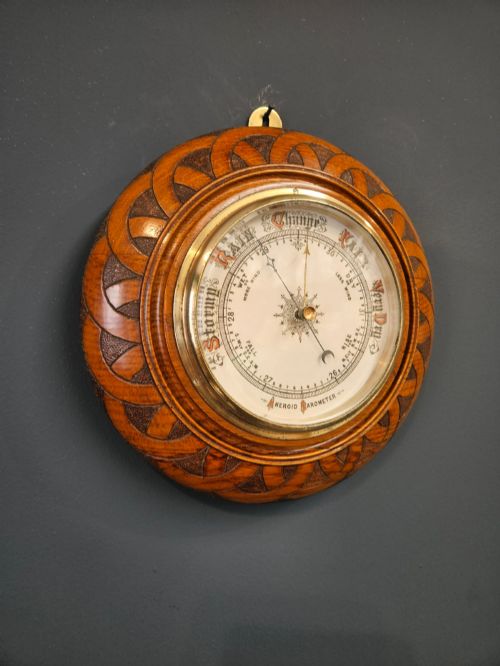
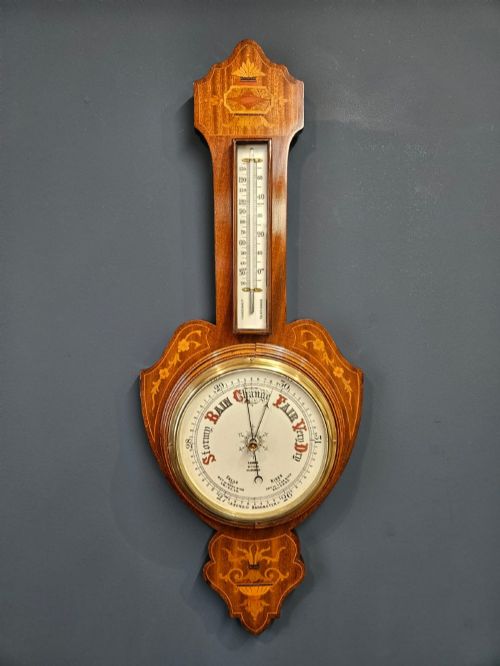
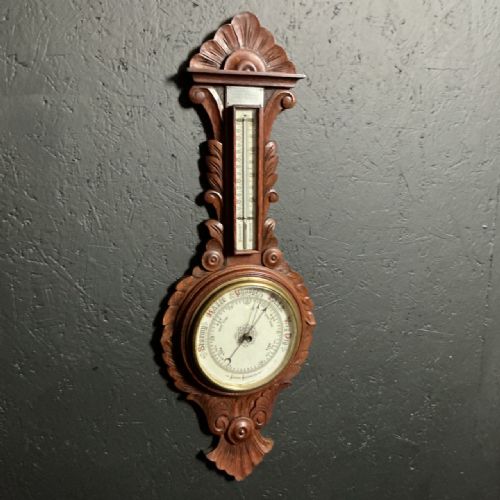
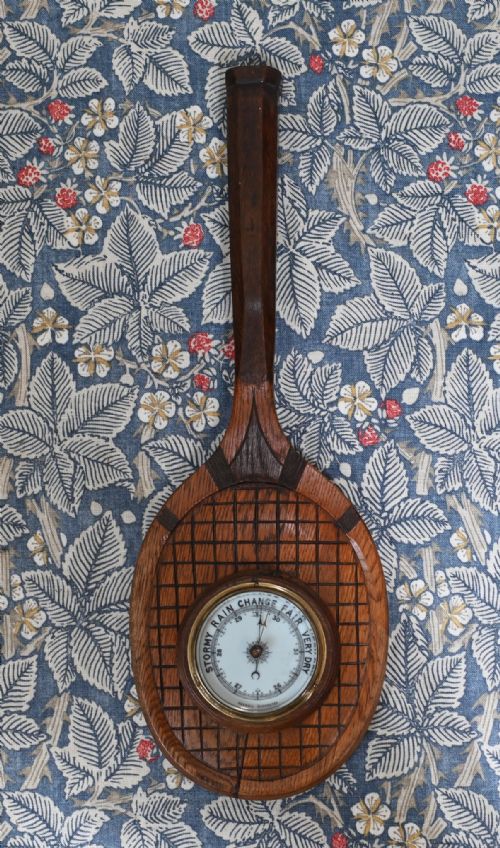
These hanging brass barometer examples bring tactile weather recording into domestic interiors, offering brass dials and frames that anchor a room with period utility.
Hanging Brass Barometer
A hanging brass barometer is a wall-mounted instrument designed to measure atmospheric pressure, featuring prominently in domestic spaces since the eighteenth century. When you search for a hanging brass barometer, you encounter pieces that combine functional science with decorative cabinetwork.
The versions most commonly met on this page include Victorian and Edwardian wall-mounted formats, alongside earlier Georgian stick designs and distinctive Black Forest carved walnut models. These instruments range from domestic banjo and wheel formats to large shop display pieces and maritime ship barometers.
Origins stretch from early eighteenth-century walnut pieces through nineteenth-century Victorian and Edwardian examples into the nineteen-thirties. The cabinetwork varies considerably, encompassing turned oak, inlaid woods, mahogany, beechwood, and satinwood alongside the essential brass and glass components.
How they were made
Makers constructed the housings using cabinet timbers such as oak, mahogany, walnut, and beechwood, often employing intricate woodturning, carving, or contrasting string inlay. These wooden chassis provided a stable housing for the delicate internal mechanics and the external brass bezels.
The visible metallic elements rely on polished brass for bezels, cistern covers, and engraved dials, paired with protective glass viewing faces. Aneroid movements and mercury tube systems within stick barometers required precise calibration by skilled instrument makers.
Hanging Brass Barometer Retail Price Guide 2026
Typical asking prices for hanging brass barometer among the pieces listed under this phrase on Sellingantiques today, from the lower quarter to the upper quarter. They describe what is for sale here now, not the wider market.
Periods represented span from the 18th century through the Victorian, Edwardian, and 1930s Art Deco eras.
What varies in quality
The distinction between standard domestic instruments and exceptional examples lies in the refinement of the cabinetwork and the reputation of the maker. Master instrument makers and skilled cabinetmakers produced pieces with superior dial engraving, dense carved detail, and select timber grains.
Simpler turned oak or beechwood utility pieces contrast with elaborately carved Black Forest walnut frames or signed London stick barometers. The integration of quality brass fittings and legible, finely graduated paper or metal scales dictates the standing of each piece.
Aitchison for Zambrene Weatherproof Clothing·Negretti & Zambra·James Pitkin London·George Dollond of London
The Hanging Brass Barometer Glossary
- Aneroid barometer
- An instrument that measures atmospheric pressure without liquids, using a flexible metal box that expands or contracts.
- Stick barometer
- A tall, vertical barometer containing a column of mercury in a glass tube to indicate barometric pressure changes.
- Banjo barometer
- A household barometer housed in a distinctive curved wooden case resembling a banjo, typically featuring a circular dial at the base.
- Bezel
- The brass ring that holds the protective glass face in position over the barometer dial.
- Cistern
- The sealed reservoir at the base of a mercury stick barometer that holds the liquid metal.
Hanging Brass Barometer: Frequently Asked Questions
What is a hanging brass barometer?
A hanging brass barometer is a wall-mounted meteorological instrument that displays atmospheric pressure using a visible brass dial or bezel.
These pieces combine functional science with decorative woodwork, functioning as both weather indicators and interior ornaments.
Where were these barometers originally placed?
These instruments hung in domestic hallways, libraries, and drawing rooms where residents checked atmospheric conditions before heading outdoors.
Larger versions also served specialised roles in commercial shops, maritime cabins, and gentlemen's clubs.
How do I care for the brass and wood?
The brass components require gentle dusting and occasional cleaning with non-abrasive cloths to maintain their metallic finish without stripping patination.
Wooden cases benefit from standard furniture maintenance using appropriate waxes to preserve the grain of oak, mahogany, or walnut.