





Hanging Aneroid Barometer
A hanging aneroid barometer brings reliable weather tracking and striking period timber into a room.
Hanging Aneroid Barometer
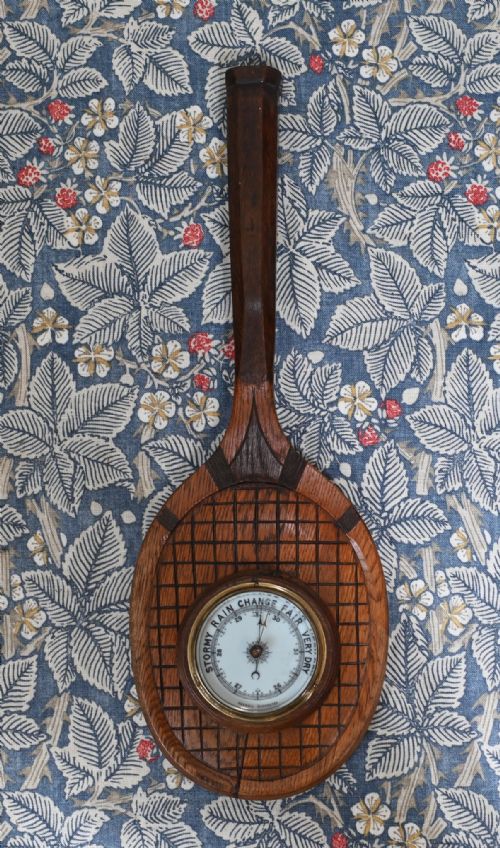
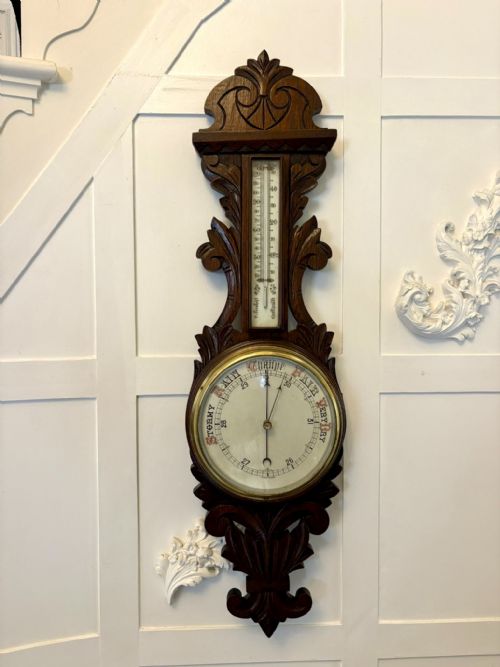
A hanging aneroid barometer provides a mechanical way to gauge atmospheric pressure without relying on messy columns of liquid mercury. These instruments hang securely upon interior walls, combining practical weather forecasting with decorative cabinetry spanning the Victorian and Edwardian eras.
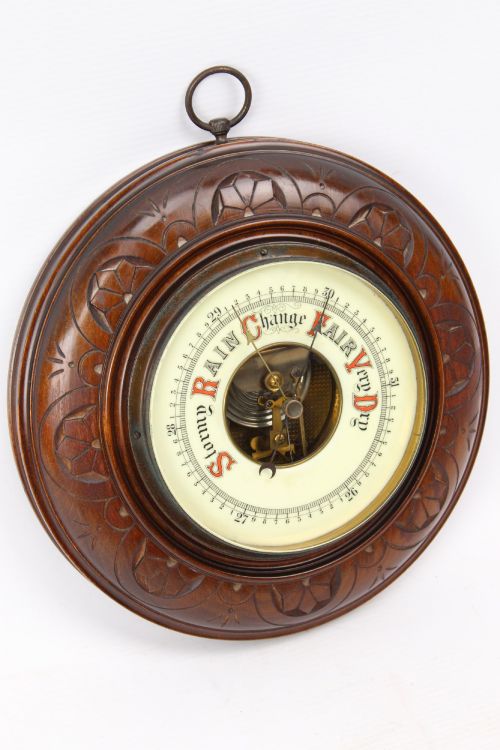
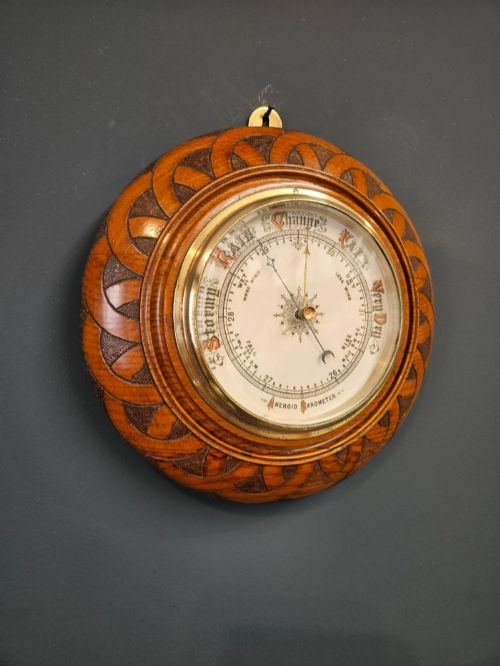
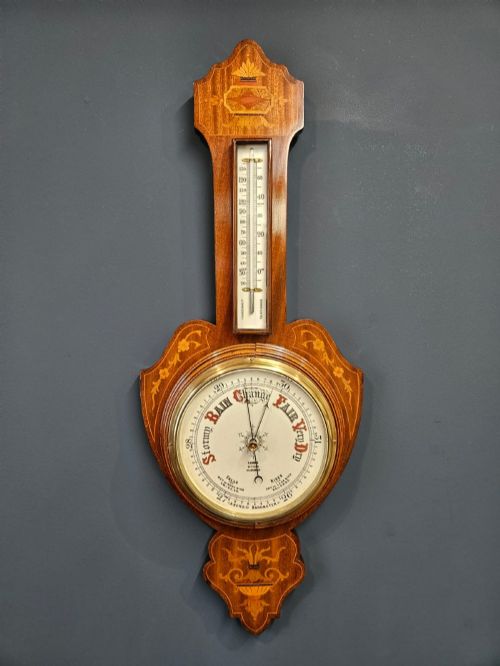
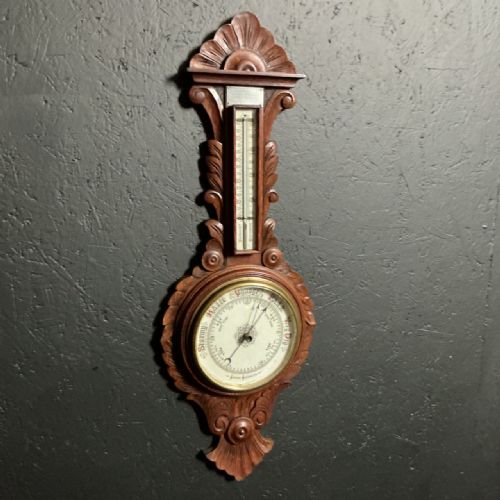
The versions most commonly met on this page take the form of banjo barometers or wall-mounted circular designs carved from rich timbers. Makers housed the sensitive internal metal diaphragms inside sturdy wooden cases, often pairing the dial with an attached thermometer or clock.
Examples range from restrained utilitarian shop displays to heavily carved Black Forest frames and inlaid mahogany showpieces. They date predominantly from the nineteenth and early twentieth centuries, reflecting the domestic utility and craftsmanship of those periods.
How they were made
Cabinetmakers constructed the enclosures using solid and veneered timbers such as oak, mahogany, walnut, beechwood, and satinwood. Woodworkers shaped these materials through turning, joinery, and intricate carving, sometimes incorporating decorative mother-of-pearl or contrasting string inlay.
Glaziers fitted protective circular glass covers over the paper or metal dials to shield the delicate pointer mechanisms. Metalworkers cast and polished the brass bezels and fittings that border the face and secure the internal aneroid movement.
Hanging Aneroid Barometer Retail Price Guide 2026
Typical asking prices for hanging aneroid barometer among the pieces listed under this phrase on Sellingantiques today, from the lower quarter to the upper quarter. They describe what is for sale here now, not the wider market.
Listings feature hanging aneroid barometers constructed from oak, mahogany, walnut, beechwood, and satinwood across the Victorian and Edwardian periods.
What varies in quality
The distinction between standard domestic instruments and exceptional examples lies chiefly in the ambition of the woodwork and the pedigree of the maker. Master carvers produced deep, crisp foliage and figures on Black Forest and Victorian oak frames, whereas lesser pieces rely on plain turned bezels.
Signed dials by established retailers or scientific instrument makers elevate an instrument beyond a standard anonymous production. The choice of timber grain, the precision of the inlay work, and the integration of secondary functions like thermometers or clock movements all define the upper tier.
Maple and Co·Aitchison·Zambrene Weatherproof Clothing·James Pitkin London·Negretti and Zambra
The Hanging Aneroid Barometer Glossary
- Aneroid barometer
- An instrument that measures atmospheric pressure using an expanding and contracting sealed metal capsule, without liquid mercury. This mechanical design allowed barometers to be mounted securely on walls in various orientations.
- Bezel
- The metal ring that holds the protective glass face in position over the barometer dial. It is commonly cast from brass and sometimes hinged for access to the indicator needle.
- Black Forest style
- A distinctive decorative carving tradition originating from the wooded mountain region of Central Europe. Pieces in this style feature deeply carved naturalistic motifs such as leaves, animals, and rustic foliage.
Hanging Aneroid Barometer: Frequently Asked Questions
How do I read a hanging aneroid barometer?
Read the main dial by observing the position of the indicator needle relative to weather descriptions like rain, change, and fair. Tapping the glass gently before reading helps settle the internal mechanism to show the true current pressure.
Changes in pressure over the course of hours indicate whether weather conditions are likely to improve or deteriorate. Many instruments also include a secondary manual pointer that you can set directly over the main needle to track movement.
Can these barometers be adjusted for local altitude?
Most aneroid barometers feature a small adjustment screw accessible on the back or through the dial face. This screw alters the tension on the internal spring to match known barometric readings for your specific location.
Calibration is best performed by comparing the instrument reading with a reliable local meteorological report. Once set correctly, the mechanical linkages maintain accuracy under normal indoor conditions.
Where should I hang a wall barometer?
Hang your barometer on an interior wall that remains free from direct sunlight and severe temperature fluctuations. Exterior walls or spots directly above active radiators can interfere with the internal metal components and wood casing.
Ensure the wall fixing is secure, as antique timber frames carry substantial weight from the brass bezel and glass. A sturdy screw or picture hook anchored properly will keep the instrument hanging level.
How do I date a Victorian barometer?
Dating relies on examining the timber species, the style of the wood carving, and the typography used on the dial face. Victorian pieces frequently feature dark turned oak or mahogany with conservative lettering.
Maker signatures or retailer names stamped on the brass movement or dial backplate provide a more precise reference point. Comparing these details against known working periods of the firm helps narrow down the decade of manufacture.