

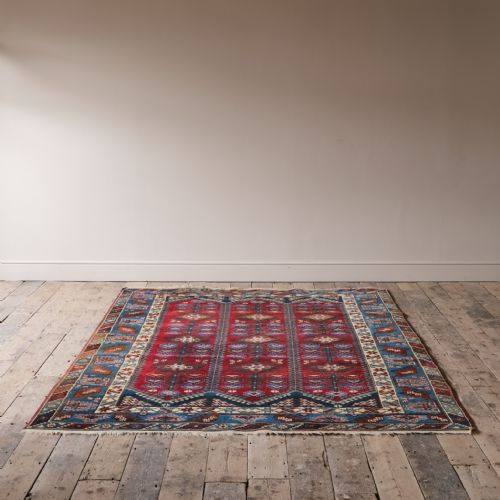
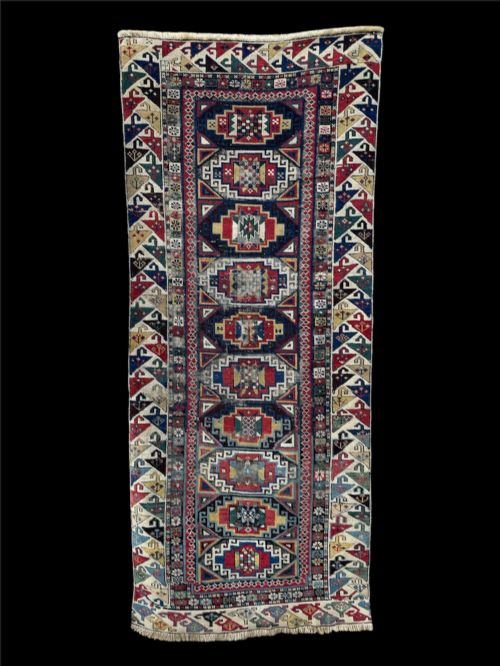


Handwoven Shirvan Rug
A handwoven shirvan rug brings robust Caucasian geometry and soft wool into a room through centuries-old village weaving traditions.
Handwoven Shirvan Rug
A handwoven shirvan rug originates from the eastern Caucasus, spanning forms such as geometric runners, small area rugs, prayer rugs, and flatwoven kilims. The pieces found here date from the nineteenth century into the early twentieth century, including productions from specific regional centres like Surakhani and Seichur.
These textiles display characteristic tribal motifs, ranging from floral lattices and Lesghi star designs to banded compositions. Buyers encounter formats suited for narrow corridors as runners or more compact dimensions for floor placement.
How they were made
The construction relies fundamentally on wool, often specifically hand-spun wool, combined with cotton foundations depending on the exact village or tribal workshop origin. This pairing provides the durable structure necessary for traditional floor coverings.
Weavers employed knotting and flatweaving techniques to build crisp geometric patterns and piled surfaces that hold their design integrity over generations of domestic use.
Handwoven Shirvan Rug Retail Price Guide 2026
Typical asking prices for handwoven shirvan rug among the pieces listed under this phrase on Sellingantiques today, from the lower quarter to the upper quarter. They describe what is for sale here now, not the wider market.
Even a humble nineteenth-century saddle bag makes a surprisingly cheerful bench cushion for anyone fond of nomadic woolwork.
What varies in quality
The distinction between tiers rests upon the precision of the knotting, the crispness of the tribal geometry, and the condition of the wool pile. Finer examples display intricate rendering of star and lattice motifs without distortion.
Material preparation also dictates standard, as wool handled with traditional spinning methods retains a tactile depth and structural resilience superior to ordinary commercial stock.
The Handwoven Shirvan Rug Glossary
- Shirvan rug
- A tribal floor covering woven in the eastern Caucasus featuring geometric motifs and wool pile. These pieces often incorporate traditional village designs passed down through generations.
- Kilim
- A flatwoven textile lacking a piled surface, utilised both for floor coverings and utilitarian items. Shirvan examples frequently showcase distinctive banded patterns.
- Prayer rug
- A textile featuring a distinct architectural niche or mihrab design, traditionally laid on the floor for devotional use. The ivory ground variants from Shirvan display delicate floral lattice work.
- Runner
- A long, narrow carpet format designed specifically for corridors and hallways. Surviving nineteenth-century Caucasian examples demonstrate elongated tribal medallions.
- Lesghi star
- A characteristic octagonal geometric emblem found in eastern Caucasian weaving. This motif anchors the field composition of specific village rugs.
Handwoven Shirvan Rug: Frequently Asked Questions
How do I clean an antique rug?
Professional specialist cleaning is essential for these fragile nineteenth and early twentieth-century textiles to preserve the hand-spun wool fibres.
Domestic washing methods risk damaging the historical structure and causing colour bleeding in older dyes.
Where were these pieces made?
These textiles originate from the eastern Caucasus region, produced by village and tribal weavers across traditional settlements.
Specific regional styles include pieces attributed to Surakhani and Seichur alongside general Shirvan outputs.
Can I place these on heated floors?
Natural wool and cotton materials tolerate moderate ambient warmth, provided the rug rests on a breathable, high-quality underlay.
Excessive direct heat can dry out historic fibres, so monitoring the temperature beneath the textile remains sensible.
How do I identify a Shirvan rug?
Look for crisp Caucasian geometric layouts, characteristic star motifs, and dense hand-spun wool construction typical of eastern Caucasian work.
Regional palette choices and specific structural markers help differentiate these from Persian tribal equivalents.