





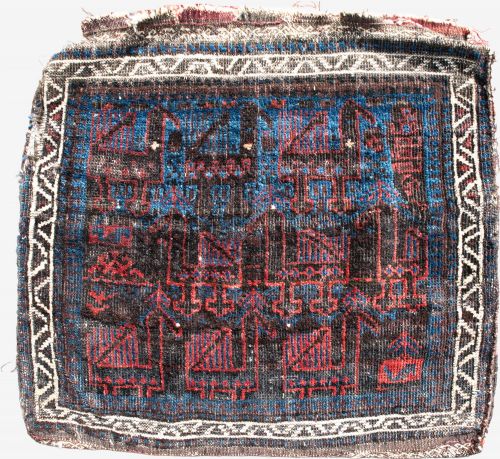


Handwoven Pouch Bag
These handwoven pouch bag examples are tribal and nomadic textiles crafted for practical storage, offering rich historical character for daily interiors.
Handwoven Pouch Bag
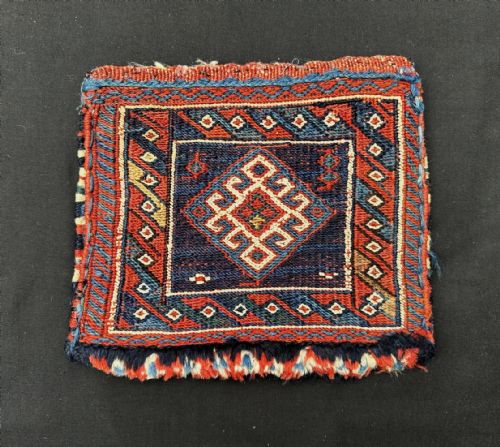
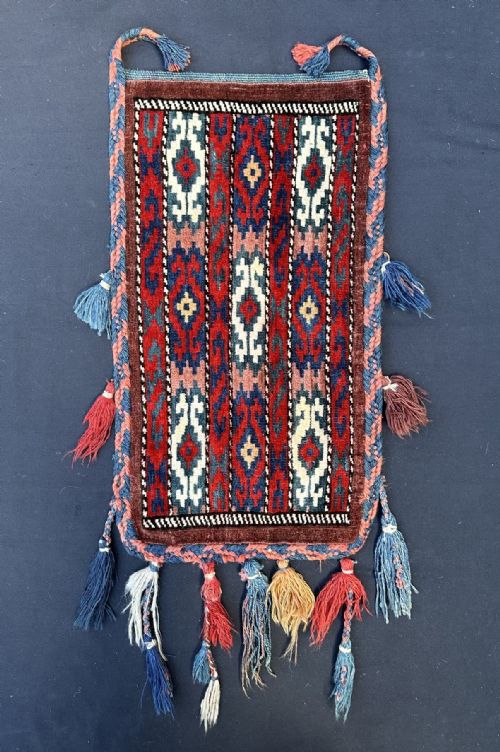
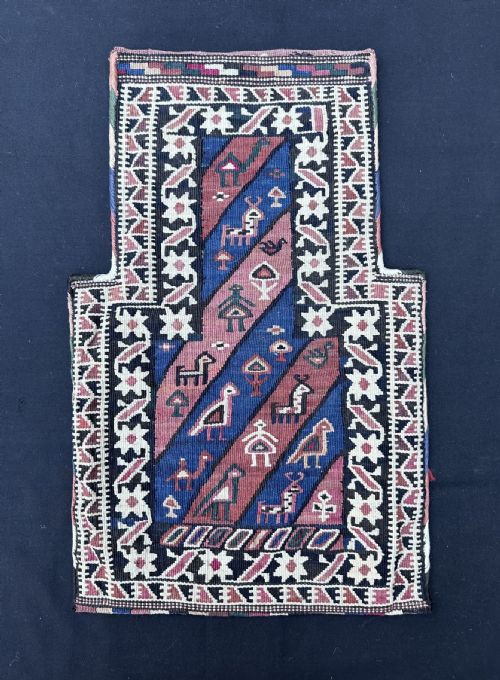
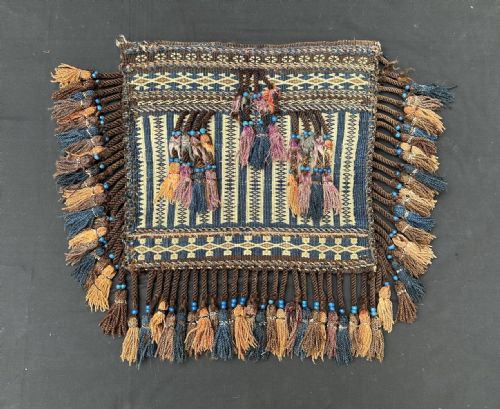
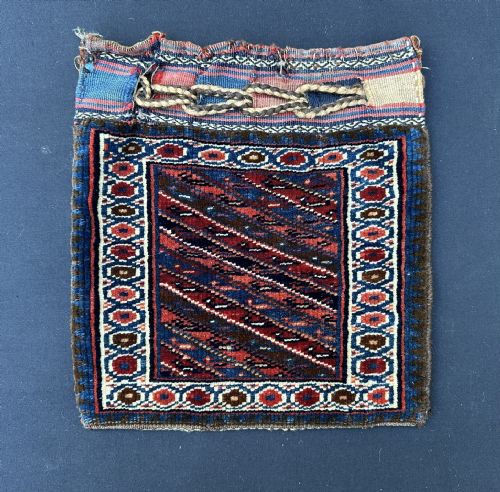
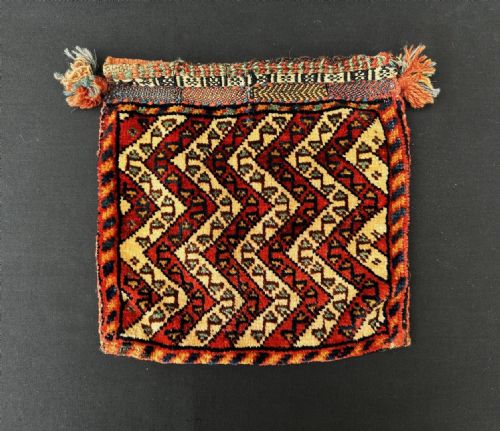
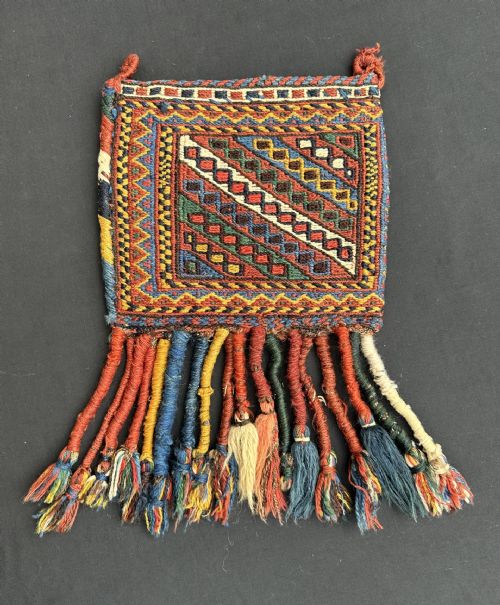
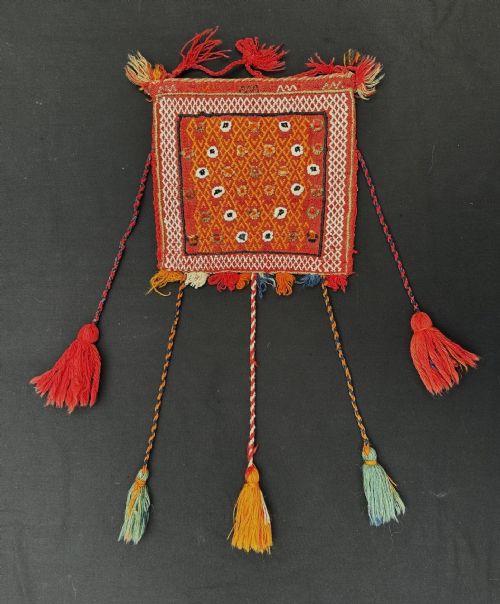
A handwoven pouch bag represents utilitarian tribal artistry from Persia, Central Asia, and Afghanistan, created by nomadic confederacies for daily domestic use. When exploring these pieces, a buyer most frequently encounters vanity bags, salt bags, and spindle bags originating from regions such as Fars, Kerman, and the Trans-Caspian steppes. These textiles served specific storage functions within tribal life, ranging from holding salt to containing personal vanity items.
The objects span late nineteenth- and early twentieth-century production, dating from eighteen-eighty to nineteen-twenty, and reflect distinct tribal identities. Pieces from the Qashqa'i Confederacy, Baluch nomads, Yomut Turkmen, and Afshar tribes dominate the available selections. Each region employed specific weaving structures suited to nomadic existence, resulting in highly portable and durable textile forms.
Makers utilised traditional formats such as single pouches, half saddle-bags, and complete pairs of kilim bags. The construction incorporates flatweave backs and pile-woven faces designed for heavy handling in camp environments. Collectors appreciate these works for their surviving structural integrity and direct connection to nineteenth-century tribal weaving traditions.
Markers of Quality
Quality rests upon the fineness of the weave, the saturation and complexity of the natural dye palette, and the preservation of original elements like plain-weave backs and hanging loops. Pieces exhibiting tightly packed knots and intricate tribal motifs demonstrate superior craftsmanship from master weavers within the confederacy.
The condition of the wool, the clarity of secondary ornamentation such as glass beads or cowrie shells, and structural completeness separate finer examples from heavily worn or repaired specimens. Greater precision in geometric layout and untouched original edges indicate a higher standard of nomadic production.
Handwoven Pouch Bag Retail Price Guide 2026
Typical asking prices for handwoven pouch bag among the pieces listed under this phrase on Sellingantiques today, from the lower quarter to the upper quarter. They describe what is for sale here now, not the wider market.
The inventory records specialised tribal forms including salt bags, spindle bags, vanity bags, and complete pairs of Shahsavan kilim bags.
The Handwoven Pouch Bag Glossary
- Torba
- A small Turkmen storage bag, frequently woven with guls and a plain-weave back. These items functioned as tent storage containers.
- Namakdan
- A traditional Persian salt bag characterised by a narrow neck and bottle-like silhouette. Nomads used these specifically for storing rock salt.
- Ikat
- A dyeing technique where yarns are tied and dyed prior to weaving to create blurred pattern edges. This method appears on Central Asian silk purses.
- Mafrash
- A rectangular storage container or travel bag produced by tribal groups. These were often made in pairs for loading onto pack animals.
- Gul
- A medallion motif repeated across Turkmen textile designs. Each pattern identifies specific tribal groups and sub-tribes.
Handwoven Pouch Bag: Frequently Asked Questions
What were handwoven pouch bags used for?
Nomadic tribes utilised these small containers for storing personal vanity items, salt, spindles, and household goods within tents. Their portable construction made them practical for camp life and transport during seasonal migrations.
Over time, these utilitarian objects became expressions of tribal identity and skill, incorporating specific motifs unique to weaver confederacies across Persia and Central Asia.
How do I care for an antique textile bag?
Keep textiles away from direct sunlight to prevent natural dye fading and preserve wool fibres. Gentle surface cleaning by a specialist familiar with antique rugs is recommended when maintenance is required.
Avoid hanging heavy objects from original loops, as nineteenth-century wool and cotton foundations can weaken under sustained tension.
How can I tell different tribal styles apart?
Tribal attribution relies on specific colour palettes, structural weaves, and recurring geometric motifs associated with groups like the Qashqa'i, Baluch, or Yomut Turkmen. Regional wool qualities and dye sources also provide distinct clues to geographic origin.
Consulting structural details such as the presence of flatweave backs or specific side-cord finishes helps clarify whether a piece originates from South Persia or the Trans-Caspian steppes.
What is the difference between a salt bag and a vanity bag?
Salt bags typically feature a characteristic narrow neck designed to keep contents secure during transport and daily camp handling. Vanity bags often take a rectangular or envelope form intended for personal possessions.
Both types utilise durable pile-woven faces combined with flatweave backs, though their overall proportions reflect their distinct storage purposes.