

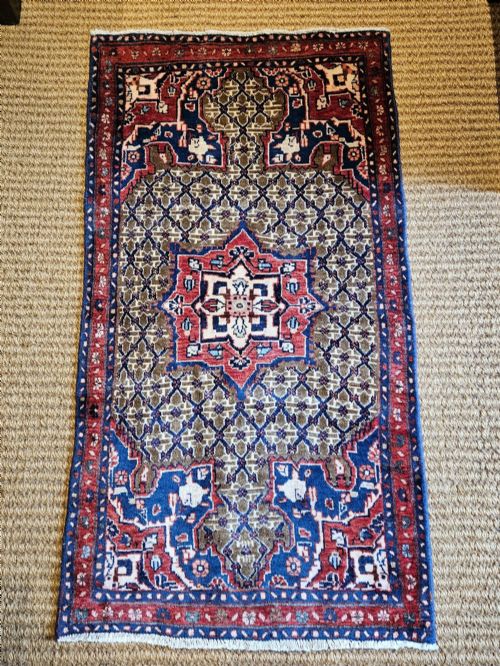


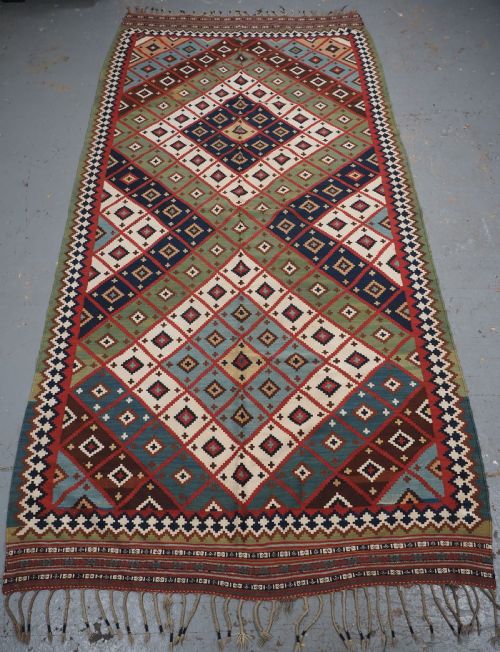

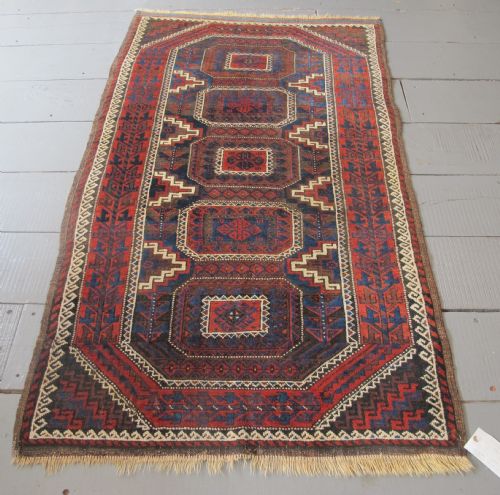
Handmade Oriental Runner
These handmade oriental runner pieces bring enduring tribal character to narrow spaces through centuries-old weaving traditions.
Handmade Oriental Runner
A handmade oriental runner represents floor coverings woven by tribal and village makers across Persia, Turkey, and Central Asia. These textiles span the nineteenth and early twentieth centuries, encompassing periods from eighteen-fifty to nineteen-twenty.
The selection on this page centres on tribal rugs and village pieces, including Baluch tribal works, Tekke Turkmen examples, and Qashqai tribal kilims. Forms range from hearth sized rugs and dining sofreh to traditional prayer rugs and area rugs.
Buyers seeking a handmade oriental runner will encounter formats shaped by nomadic and village production methods. These formats emphasise elongated dimensions suited for hallways and narrow rooms.
How they were made
Weavers constructed these textiles using wool, cotton, and hand-spun wool for the pile, foundation, and structural elements. Natural fibres provided the durable base necessary for daily floor use.
Traditional looms supported the creation of diverse regional styles such as Persian tribal, Anatolian traditional, and Turkmen designs. Artisans tied knots and wove flatweave structures by hand, incorporating local motifs like the Mina Khani pattern.
Handmade Oriental Runner Retail Price Guide 2026
Typical asking prices for handmade oriental runner among the pieces listed under this phrase on Sellingantiques today, from the lower quarter to the upper quarter. They describe what is for sale here now, not the wider market.
Some nineteenth-century weavers secretly added intentional minor errors in their geometric symmetry to ward off the evil eye.
What varies in quality
Quality in these textiles depends upon the fineness of the knotting and the consistency of the hand-spun wool. Tighter structures yield greater durability over decades of use.
The precision of the regional design, from Baluch tribal motifs to Anatolian traditional layouts, dictates the visual harmony of the piece. Superior dyes and balanced proportions elevate the status of individual examples.
The Handmade Oriental Runner Glossary
- Sofreh
- A flatwoven or piled cloth utilised for sharing meals or processing dough in tribal households. These textile pieces often display geometric village designs.
- Kilim
- A flatwoven textile produced without a raised pile by tightly interweaving warp and weft strands. Qashqai examples demonstrate this technique.
- Prayer rug
- A small format textile featuring a mihrab or niche design intended to direct the worshipper. The Milas village pieces exemplify this tradition.
- Warp
- The stationary lengthwise threads stretched on a loom that form the structural foundation of the rug. Weft threads are interlaced across these parallel lines.
- Pile
- The vertical or diagonal yarn surface created by knotted loops that stands above the foundation. Hand-spun wool forms this tactile layer.
Handmade Oriental Runner: Frequently Asked Questions
Where were these tribal rugs made?
The pieces originate from regions across Persia, Anatolia, and Central Asia, encompassing historical areas such as Khorassan and Kurdish districts. Local tribal groups produced them for domestic use or community trade.
Specific workshops and nomadic confederations, including the Baluch, Tekke Turkmen, and Qashqai, developed distinct palettes and geometric repertoires that identify their geographic roots.
How do I care for an antique rug?
Protect the natural wool fibres by using a breathable underlay and limiting direct, harsh sunlight exposure. Regular gentle vacuuming without a rotating brush roll prevents dust accumulation.
Professional cleaning tailored for antique vegetable-dyed textiles is recommended every few years. Avoid chemical spot treatments to preserve the integrity of the hand-spun wool.
What is a Baluch Salar Khani piece?
This designation refers to a specific tribal sub-group within the wider Baluch tradition of Khorassan province. Their weaving often incorporates deep colour saturation and distinctive field patterns.
Collectors value these regional attributions for their adherence to nineteenth-century nomadic aesthetics and traditional dyeing methods.
How do I distinguish village rugs from tribal works?
Village rugs typically originate from settled communities with permanent looms, resulting in slightly more structured geometric layouts. Tribal pieces often reflect nomadic influences with flexible, spontaneous design placements.
Both categories utilise hand-spun wool and traditional motifs, but the structural density and border arrangements often point toward settled or mobile production.