


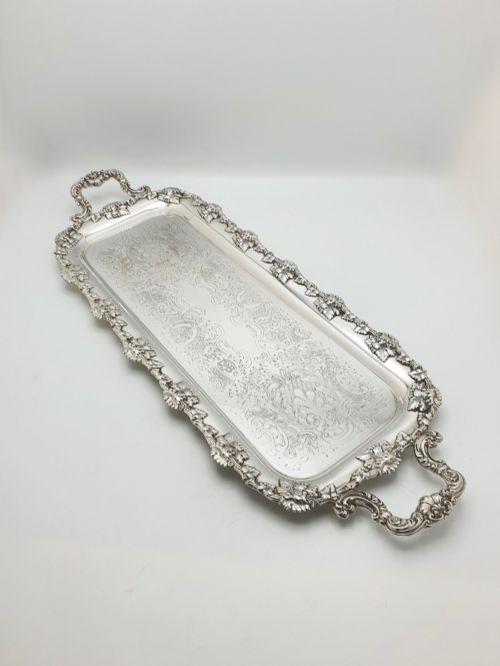
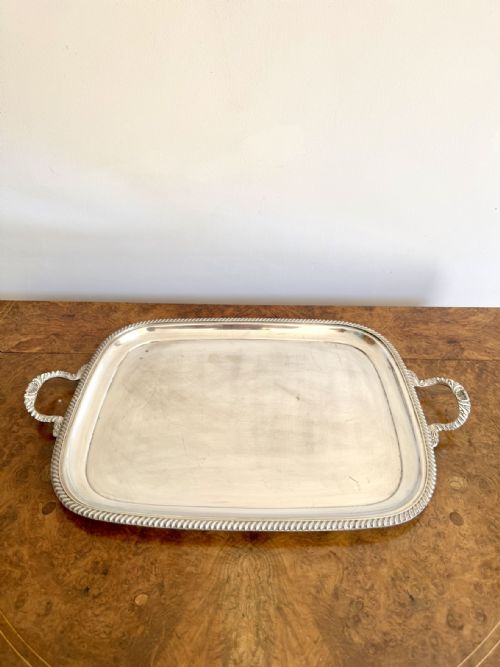
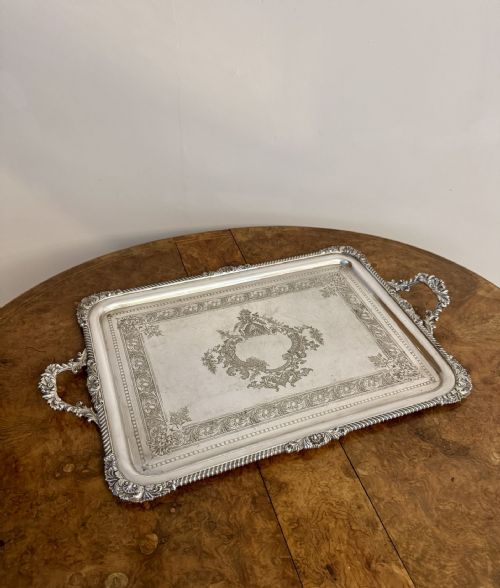
Handles Silver Serving Tray
These handles silver serving tray options bring formal hospitality home, offering practical utility and polished surface gleam for drinks and afternoon tea.
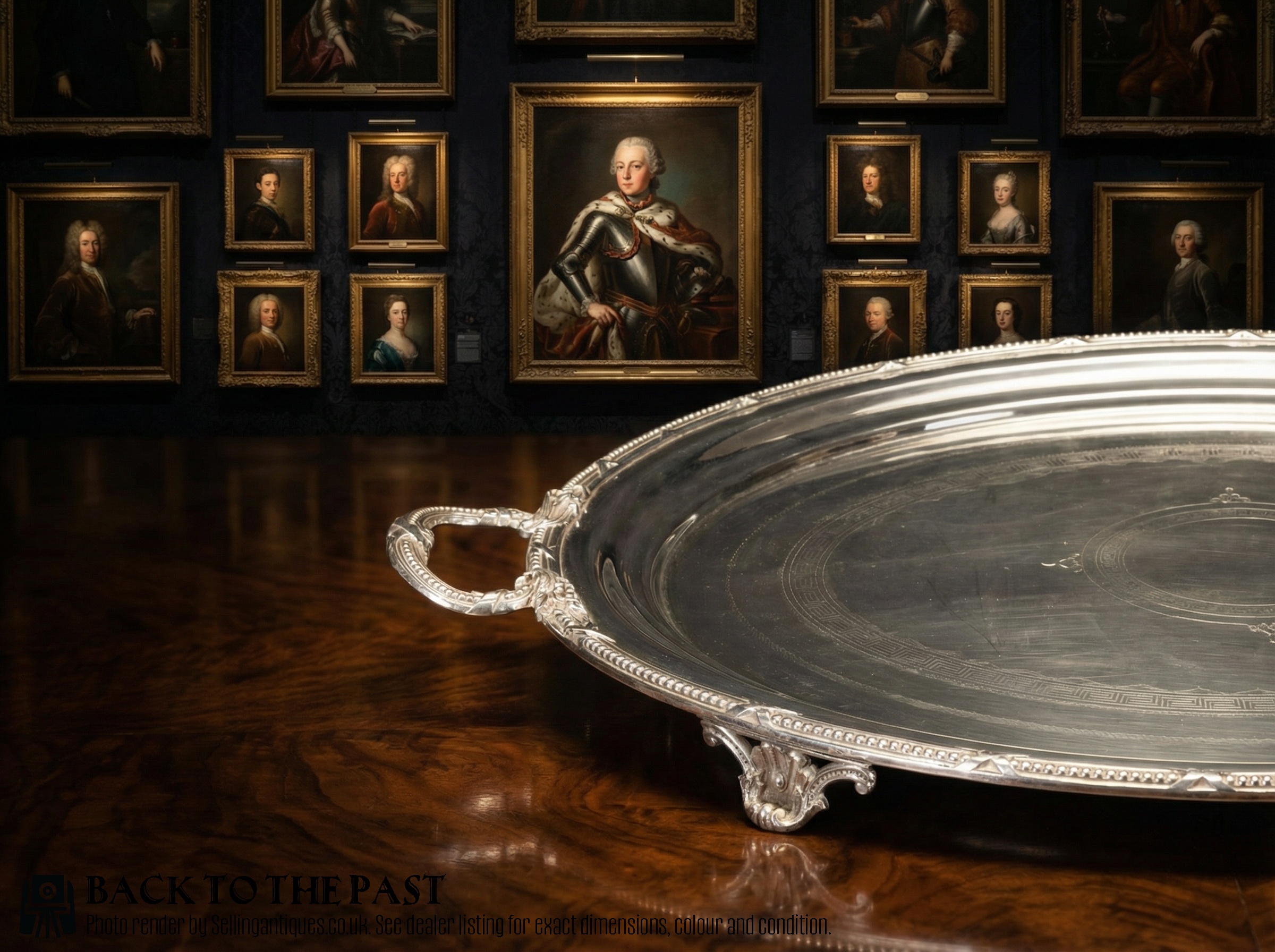
Handles Silver Serving Tray
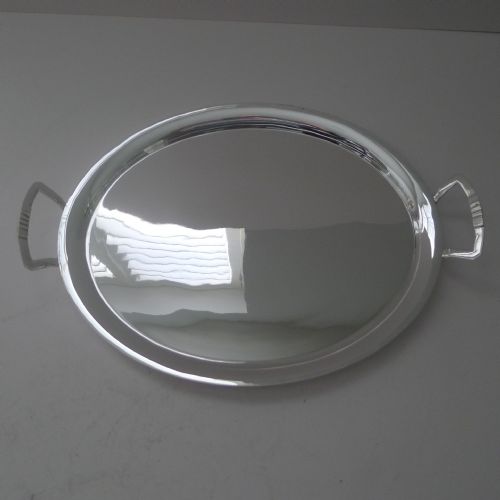
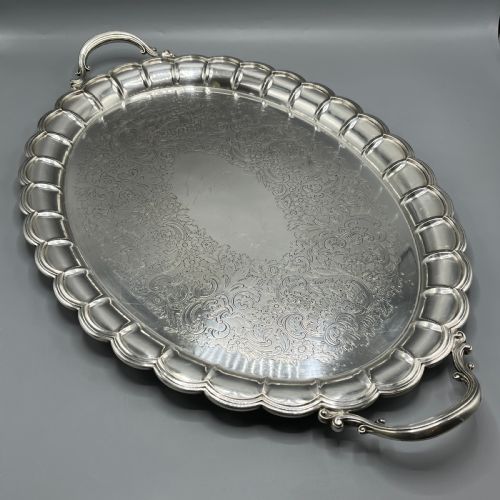
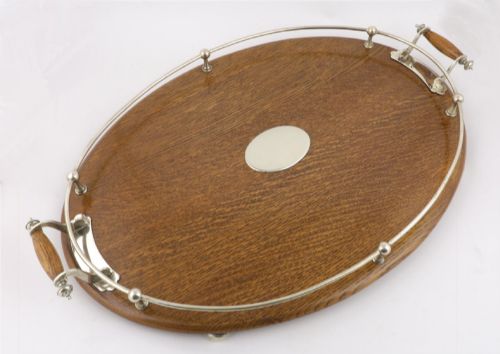
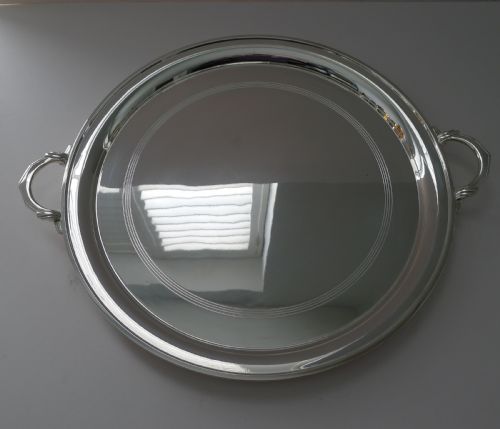
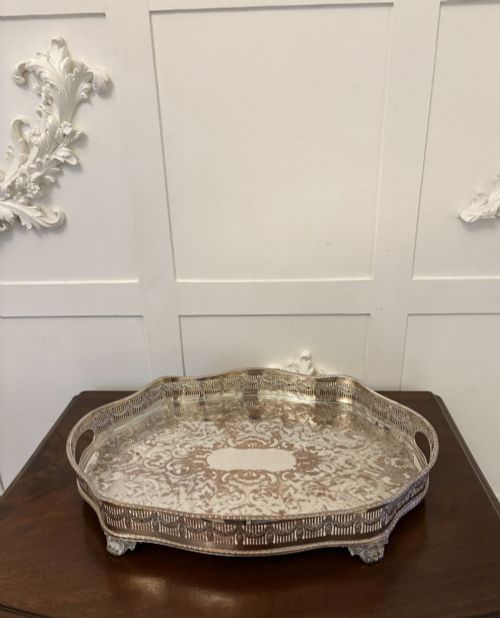
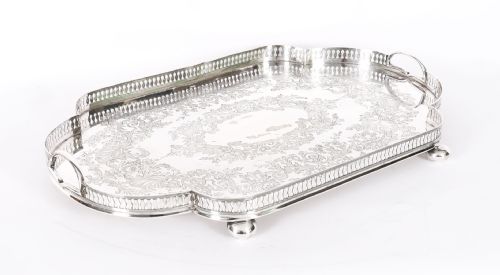
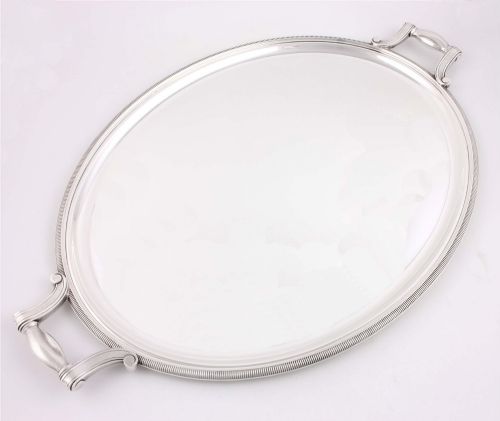
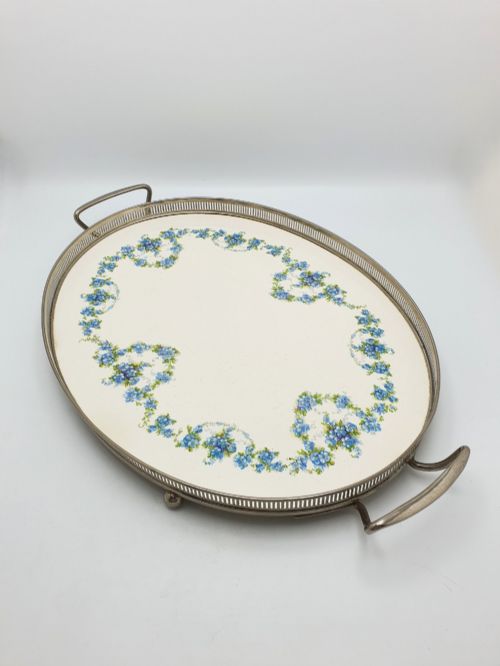
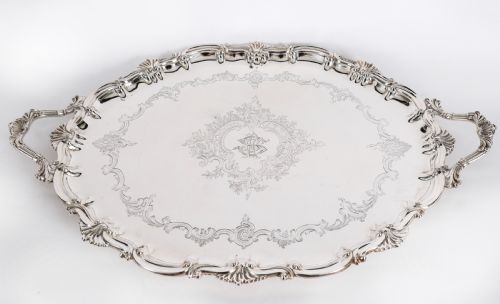
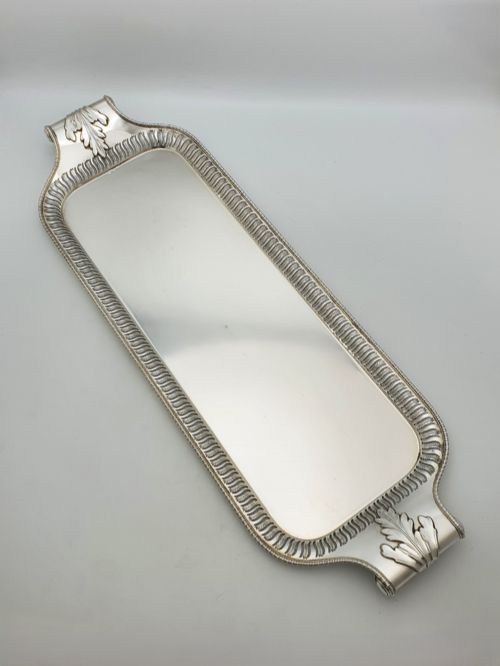
A handles silver serving tray appears primarily in Victorian and Edwardian iterations, spanning large oval presentation pieces, gallery trays with pierced or solid borders, and cocktail styles. These domestic metal objects accommodate afternoon tea service, decanter display, and drinks hosting across dining rooms and drawing rooms.
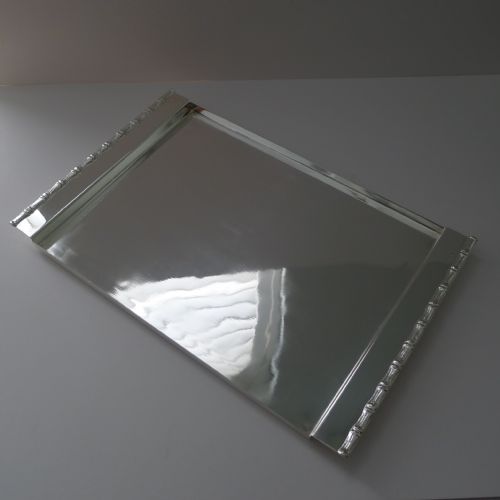
The selections on this page draw from nineteenth-century production through the Art Deco movement and mid-century modern periods. Makers utilise forms ranging from simple oval platters with integrated handles to substantial gallery designs with raised rims and ebonised or mirrored bases.
Materials and Construction
Manufacturers construct these pieces using sterling silver, silver plate, electroplated nickel silver, copper, and base metal foundations. Sheffield plating techniques overlay thin sheets of silver onto copper bases in older examples, while later production adopts electroplating methods to bond silver coatings onto nickel silver or base metal cores.
Artisans finish surfaces through hand engraving, etching, and piercing to create decorative borders, floral centres, and geometric motifs. Handles are cast separately and attached firmly to the main body to support the weight of heavy tea services and glassware.
Handles Silver Serving Tray Retail Price Guide 2026
Typical asking prices for handles silver serving tray among the pieces listed under this phrase on Sellingantiques today, from the lower quarter to the upper quarter. They describe what is for sale here now, not the wider market.
Several trays include integrated warming dishes designed to keep meat warm through long Victorian dinners.
Craftsmanship and Weight
Substantial gauge metal provides the foundation for superior examples, preventing flex and distortion under the weight of heavy decanters. Thin plating wears down over decades of use, exposing the base metal underneath, whereas thick silver layers retain their integrity through repeated polishing.
Design execution distinguishes standard production from notable maker output, visible in the crispness of chased engraving, the symmetry of pierced galleries, and the secure attachment of cast handles.
Mappin & Webb·James Deakin·Thomas Bradbury & Sons·John Hunt·Harrison Bros·Elkington & Co·Hukin & Heath·J B Chatterley & Sons·Keith Murray·Christofle·Ralph Lauren
The Handles Silver Serving Tray Glossary
- Gallery tray
- A tray featuring a raised railing or pierced border around its perimeter designed to keep items secure during transit. This style appears frequently in Edwardian and Victorian serving pieces.
- Sheffield plate
- An early composite material produced by fusing a sheet of silver to a copper core under heat and pressure. It predates standard electroplating methods.
- EPNS
- Electroplated nickel silver, a common base material coated with a thin layer of silver using an electrical current. It offers the appearance of solid silver at a lower production cost.
- Salver
- A flat serving tray, usually round and supported by small feet, traditionally utilised for presenting letters, calling cards, or drinks. It often shares functional categories with handled trays.
- Chasing
- A metalworking technique where the artisan depresses the front surface with punches and hammers to create raised ornamental designs without removing material.
Handles Silver Serving Tray: Frequently Asked Questions
How do I clean a silver plated tray safely?
Use a soft microfibre cloth and a mild cream polish specifically formulated for silver plate to remove tarnish gently.
Avoid abrasive scouring pads or harsh chemical dips that strip the thin silver layer permanently from the base metal.
Can I use these trays for daily drinks service?
These metal serving pieces suit regular cocktail and tea hosting when handled with standard care.
Place coasters or linen mats underneath heavy glassware to prevent surface scratches on the polished silver or mirrored bases.
How do I distinguish Sheffield plate from later electroplate?
Examine the edges and undersides for subtle copper bleed-through where the thin silver layer has worn away from the fused copper base.
Electroplated items typically reveal a grey nickel silver or base metal underneath worn spots rather than warm copper tones.
What distinguishes a gallery tray from a standard platter?
Gallery trays incorporate an upright pierced or solid metal railing around the perimeter to contain decanters and glasses securely.
Standard platters maintain flat or slightly sloping rims without vertical barriers, prioritising ease of passing over containment.