

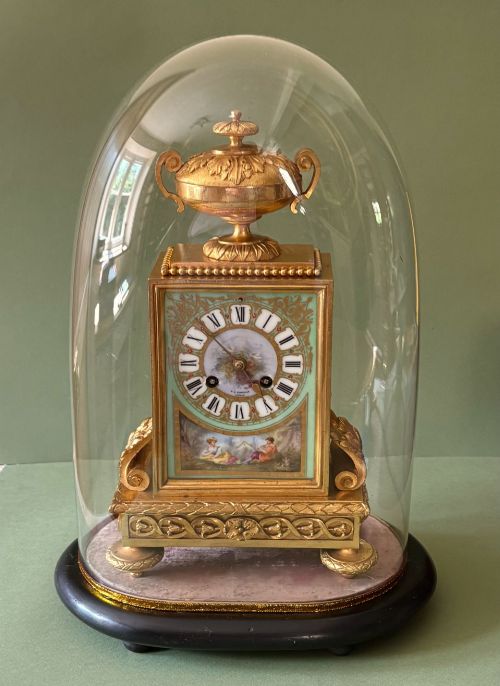


Hand Painted Timepiece
A hand painted timepiece unites precise horology with delicate brushwork, offering a decorative focal point for any mantel or table.
Hand Painted Timepiece
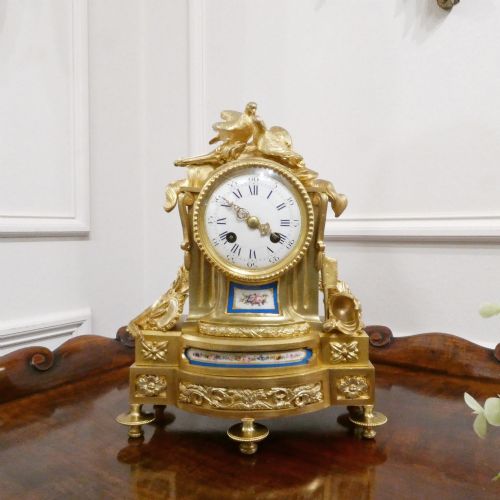
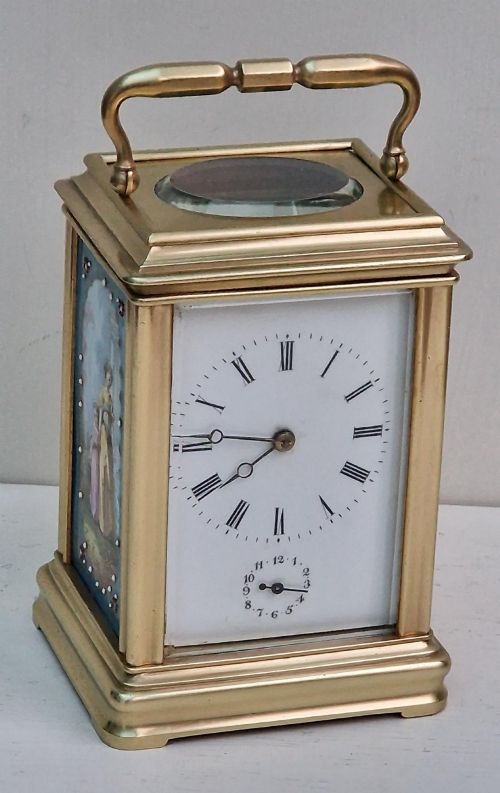
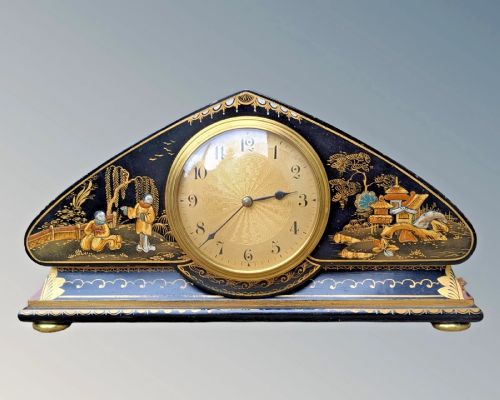
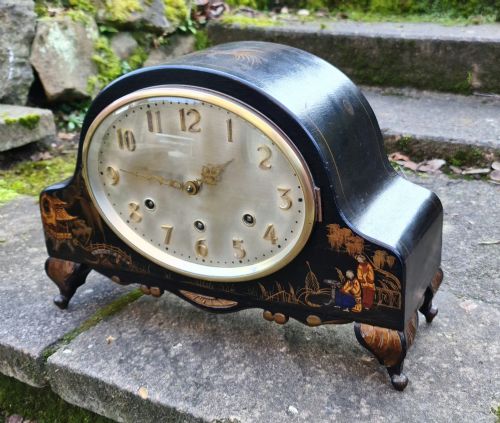
A hand painted timepiece is typically found as a mantel clock, carriage clock, or table clock originating from the nineteenth and early twentieth centuries. These horological items integrate hand-painted porcelain panels, enamel dials, and lacquered surfaces into domestic decor.
The selections available here lean heavily towards French carriage clocks and mantel clocks featuring Chinoiserie, Rococo Revival, and Louis XVI Revival styles. Brass, ormolu, and gilt bronze frequently frame the painted ceramic elements.
Grandmother clocks and smaller boudoir timepieces also appear, demonstrating the range of domestic scales produced during the Victorian and Edwardian eras. Each piece combines timekeeping utility with miniature artistic scenes.
How they were made
Metalwork involved casting brass, ormolu, and gilt bronze to form structural cases, stands, and bezels, often complemented by wood or ebonised bases. These metallic components were frequently chased and gilded to provide an ornate border for the painted surfaces.
Porcelain panels and enamel dials received hand-painted decoration, utilising ceramic pigments that required high-temperature firing to achieve permanence. Miniature paintings on porcelain or Limoges enamel were set directly into the clock housing.
Hand Painted Timepiece Retail Price Guide 2026
Typical asking prices for hand painted timepiece among the pieces listed under this phrase on Sellingantiques today, from the lower quarter to the upper quarter. They describe what is for sale here now, not the wider market.
Periods represented span from the Victorian era and the 1870s through to the 1930s.
What varies in quality
The refinement of the hand painting dictates much of the visual hierarchy, distinguishing hurried factory decoration from delicate artistic execution on porcelain panels and dials. Crispness in the casting of the ormolu and brass mounts further separates standard production from finer workshop output.
Movement sophistication impacts the standing of a clock, particularly the inclusion of repeater mechanisms in carriage clocks or fully restored escapements. The harmony between the painted aesthetic and the architectural style of the bronze or wood case determines overall execution.
Marti
The Hand Painted Timepiece Glossary
- Carriage clock
- A small, portable spring-driven clock originally designed for travel by carriage during the eighteenth and nineteenth centuries. These pieces typically feature glass panels and a swinging handle.
- Ormolu
- Gilt bronze produced by applying a finely ground high-carat gold-mercury amalgam to a bronze object, which is then heated to vaporise the mercury. This technique creates a rich golden finish on clock mounts.
- Chinoiserie
- A European artistic style reflecting Chinese motifs and techniques, popular in lacquerwork and painted clock cases. It manifests through whimsical figures, pagodas, and botanical scenes.
- Repeater
- A complication in a mechanical clock that strikes the hours and quarters upon demand when a lever or pendant is activated. This mechanism requires intricate gearing within the movement.
- Limoges enamel
- Enamel work created in the French city of Limoges, known for painted miniature scenes on copper or metal bases. It frequently appears on small carriage clock dials and panels.
Hand Painted Timepiece: Frequently Asked Questions
What is a hand painted timepiece?
A hand painted timepiece is a mechanical clock that incorporates hand-decorated porcelain panels, enamel dials, or lacquered surfaces into its design. These objects combine functional clockwork with decorative miniature art.
They emerged strongly during the nineteenth century across French and English workshops, serving as both timekeepers and decorative ornaments for domestic interiors.
How do I wind a carriage clock?
Winding a carriage clock requires a specialised key inserted into the winding arbors located on the underside or back plate of the movement. Care must be taken not to overwind the mainspring.
Most antique models require weekly winding, and moving the hands should be done gently in accordance with the specific escapement type.
How do I identify French revival styles?
French revival styles such as Rococo and Louis XVI borrow decorative vocabulary from earlier monarchical periods, exhibiting asymmetrical scrolls or classical symmetry respectively. Examining the mountings and bronze casting helps date the revival.
Many nineteenth-century pieces emulate these earlier aesthetics while housing contemporary mechanical movements and hand-painted porcelain panels.
Where should I place a mantel clock?
A mantel clock suits a stable, level surface away from direct sunlight, moisture, and extreme temperature fluctuations that can affect delicate painted finishes and clock oils. Wooden mantelpieces or sturdy tabletops provide ideal support.
Ensuring the clock sits plumb is essential for the pendulum or balance wheel to maintain an even beat and accurate timekeeping.