
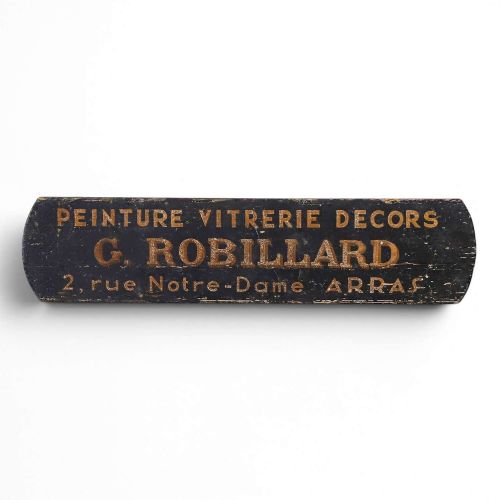
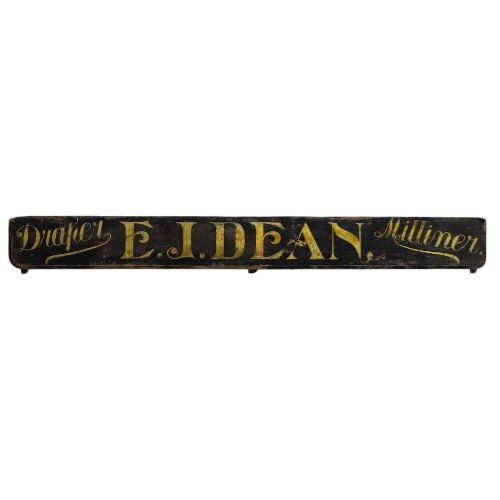
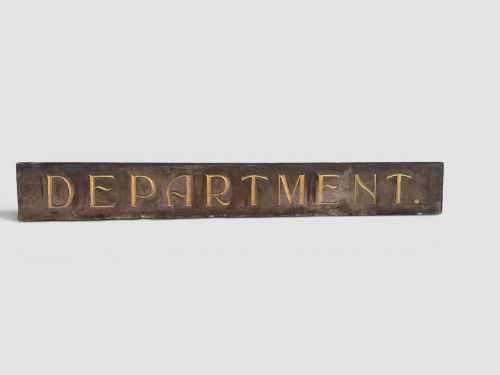
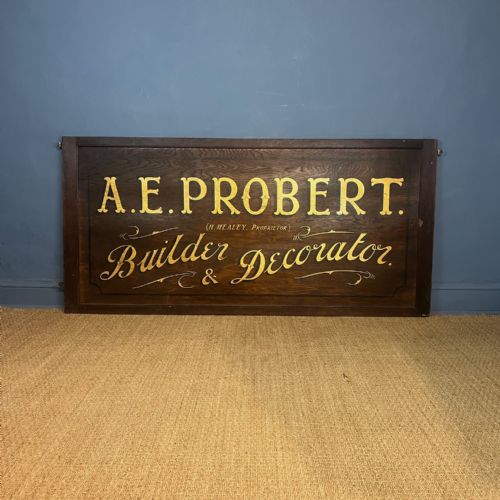

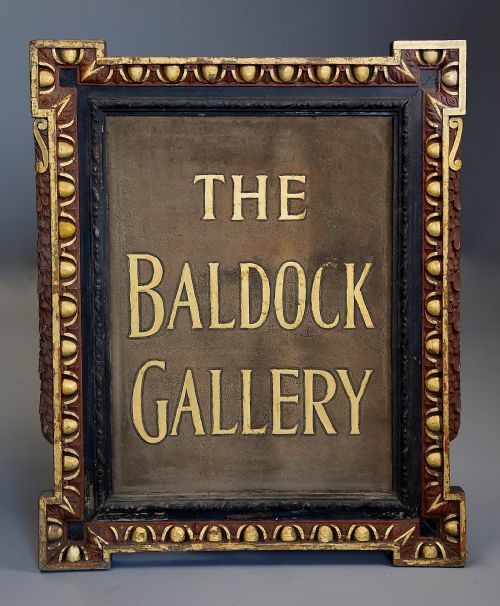


Hand Painted Shop Sign
A hand painted shop sign brings century-old commerce directly into a modern room through bold lettering and surviving trade graphics.
Hand Painted Shop Sign
A hand painted shop sign serves as a primary survivor of commercial history, emerging from eras spanning the nineteenth century through the interwar years of the 1930s.
Collectors encounter diverse formats ranging from large department store boards and milliner displays to specialised trade signage for locksmiths, dentists, and tobacconists.
The aesthetic bridges several distinct movements, encompassing Victorian and Edwardian commercial output alongside folk art interpretations and early industrial pieces.
Materials and construction
Makers relied on durable native substrates such as timber, pine, oak, and various metals to withstand outdoor elements or heavy interior placement.
Surface decoration utilised traditional paint alongside applied gold leaf, while finer display panels integrated reverse painting on glass.
Certain trade signs feature humorous inscriptions or carved cigar store figures that brought a grin to Victorian shoppers.
Judging quality and preservation
Evaluation rests upon the integrity of the original paint surface and the clarity of the sign writing rather than any later restoration attempts.
Stronger examples retain their authentic structural framing and display character that reflects genuine period commercial use.
The Hand Painted Shop Sign Glossary
- Trade Sign
- A board or sculptural object commissioned by a merchant to advertise a specific trade or service from the street. These items formed the visual language of the high street before modern plastic illumination.
- Reverse Glass Painted
- A technique where lettering and imagery are applied to the back of a glass panel so the polished front protects the pigment. This method creates a glossy, reflective finish typical of high-end interior window signage.
- Folk Art
- Objects created by self-taught or provincial makers outside academic traditions, often displaying charming proportions and direct execution. In shop signage, this manifests as idiosyncratic lettering and unpretentious pictorial elements.
- Architectural Salvage
- Building elements and fixtures rescued from structures slated for demolition or remodeling. Many large trade signs and window panels enter the market through this preservation route.
Hand Painted Shop Sign: Frequently Asked Questions
How were these signs mounted?
Most commercial boards hung directly above shopfronts on iron brackets or attached flat to exterior brickwork to catch pedestrian traffic. Interior versions often stood in windows or mounted inside display cabinets.
Heavier timber panels utilised robust framing to support the weight of the wood and paint layers against wind and weather.
Can I hang these outdoors now?
Exposing antique painted surfaces to modern weather will rapidly degrade the historic pigments and rot the underlying timber or metal. These pieces are best preserved in stable indoor environments.
Interior wall mounting keeps the fragile paint layers safe from moisture and direct sunlight.
What trades are most common?
Surviving boards frequently represent traditional high street services such as drapers, milliners, locksmiths, and apothecaries. Specialised goods like tobacco and spirits also generated striking pictorial signage.
Everyday service providers utilised clear lettering so illiterate customers could identify the shop instantly.
How do I date a painted sign?
Lettering styles, the type of wood used as a substrate, and the method of preparation provide the clearest clues to age. Victorian and Edwardian examples often feature hand-mixed oil paints that age with a characteristic fine craze.
Construction details like machine-cut nails or original wooden frames also help anchor the piece to a specific decade.