


Hand Painted Floral Cupboard
A hand painted floral cupboard brings colour and character to a room, offering practical storage finished with botanical detail.
Hand Painted Floral Cupboard
When searching for a hand painted floral cupboard, buyers encounter a diverse range of storage pieces spanning multiple centuries and regional traditions. These items function as functional furniture while serving as decorative focal points through their painted surfaces.
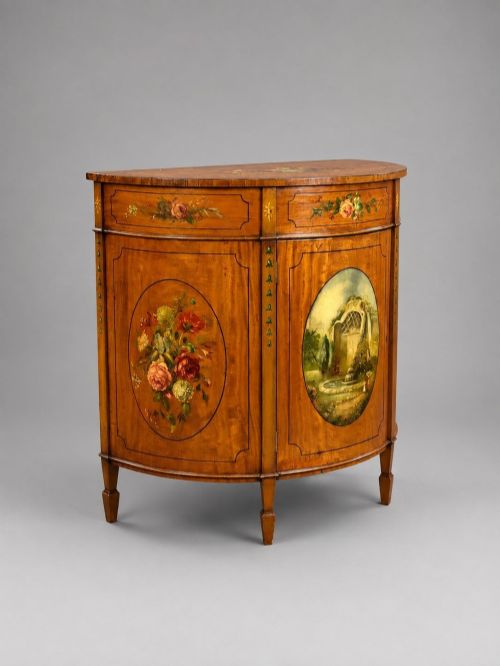
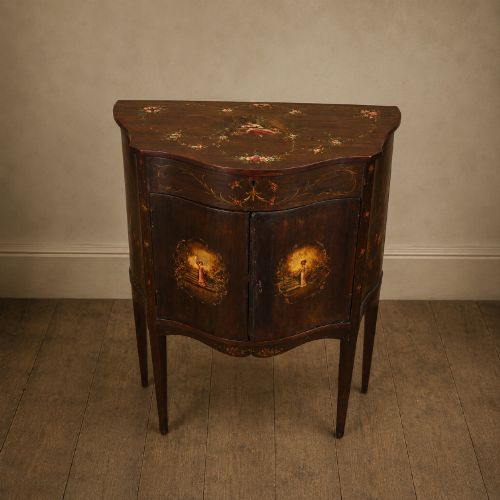
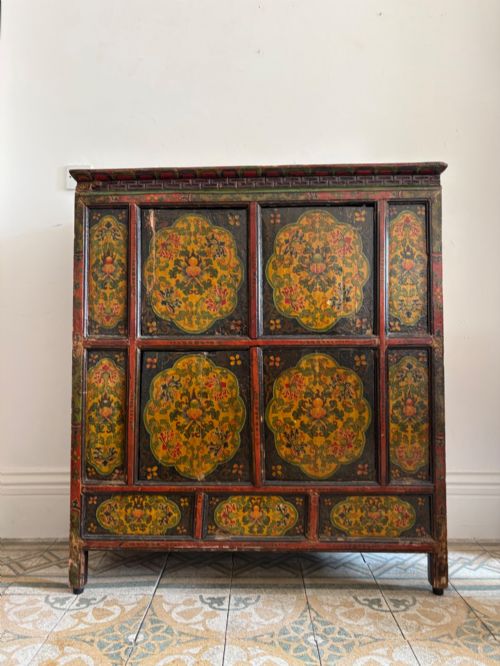
The selection on this page includes compact bedside cupboards, serpentine side cabinets, tall wardrobes, and cabinets on stands. Pieces draw from 18th century Georgian, Edwardian, and Victorian aesthetics alongside continental styles.
The most prevalent examples on this page date from the Edwardian period, often constructed from satinwood or mahogany with delicate floral motifs. Alongside these, buyers find rustic pine cupboards, Venetian cocktail cabinets, and Northern European armoires.
How they were made
Makers utilised primary timber foundations such as pine, satinwood, and mahogany to build the structural carcase of each cupboard. Brass and iron hardware, including hinges and handles, secured doors and drawers.
Surface decoration relies on paint applied over prepared wood, sometimes enhanced with inlaid wood details or glass panels in display sections. Artisans executed botanical and floral motifs by hand directly onto the timber or painted ground.
Materials represented across the selection include pine, satinwood, mahogany, brass, iron, lacquer, and glass.
What varies in quality
The refinement of the painted floral decoration distinguishes simpler utility pieces from more ambitious cabinet work. Detailed brushwork and cohesive composition elevate the visual impact of the cabinet.
Choice of underlying timber and the precision of joinery define the structural grade of the piece. Sustainably sourced cabinet woods like satinwood and mahogany represent a higher tier of construction compared to basic pine carcases.
Melissa White
The Hand Painted Floral Cupboard Glossary
- Satinwood
- A hard, yellow-brown timber used extensively in fine cabinet making during the Sheraton Revival and Edwardian periods. It provides a smooth, light ground for painted decoration and inlay.
- Serpentine
- A furniture shape featuring a curved front with a convex centre flanked by concave ends. This contour requires skilled carpentry to execute.
- Demi-lune
- A half-moon shape used for the footprint of tables and cabinets. It allows pieces to sit flush against a wall while offering curved visual lines.
- Polychrome
- Painted or decorated in multiple colours. This term describes the vibrant palette found on continental European wardrobes and cupboards.
- Armoire
- A large freestanding wardrobe or cupboard used for clothing storage. These tall pieces often feature double doors and prominent cornices.
Hand Painted Floral Cupboard: Frequently Asked Questions
What is a hand painted floral cupboard?
A hand painted floral cupboard is a piece of storage furniture adorned with hand-executed botanical or floral artwork. These items range from small bedside cabinets to large wardrobes.
They combine utility with decorative surface design, reflecting the artistic styles of their respective periods of origin.
How do I date an antique painted cupboard?
Dating relies on examining the timber construction, hardware, and stylistic indicators such as the shape and proportions. Edwardian pieces often use light satinwood, whereas 18th-century examples typically feature heavier pine or oak.
Comparing the floral painting style to known period motifs also helps establish the age of the piece.
Where were these cupboards made?
These cupboards originate from various regions across Britain and continental Europe. Examples hail from England, Italy, France, Austria-Hungary, and Northern Europe.
Each region developed distinct regional cabinetry forms and painting traditions, such as Venetian serpentine buffets or Dutch pine cupboards.
How do I care for painted wooden furniture?
Care involves keeping the furniture away from direct sunlight and maintaining stable room humidity to protect the paint and timber. Dusting with a soft, dry cloth preserves the painted surface without abrasion.
Avoid chemical polishes that can damage historic paint layers or varnishes.