


Hand Painted Faience Jar
A hand painted faience jar brings centuries of tin-glazed ceramic tradition and blue-and-white motifs directly into your home.
Hand Painted Faience Jar
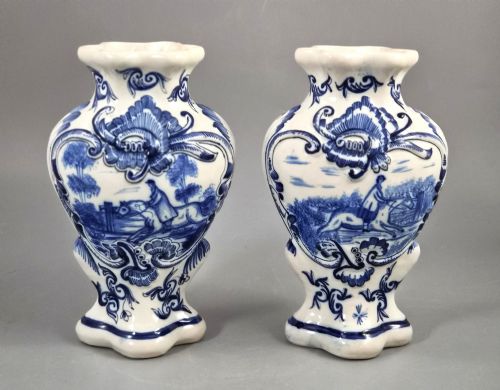
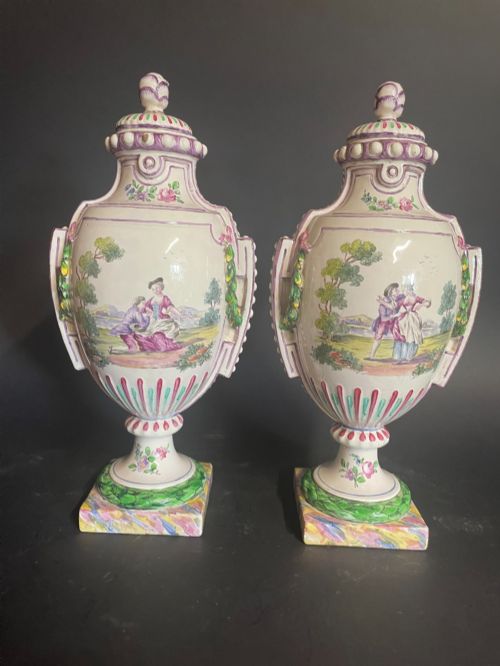
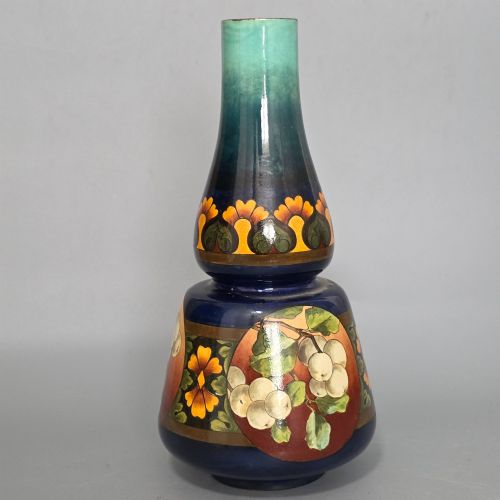
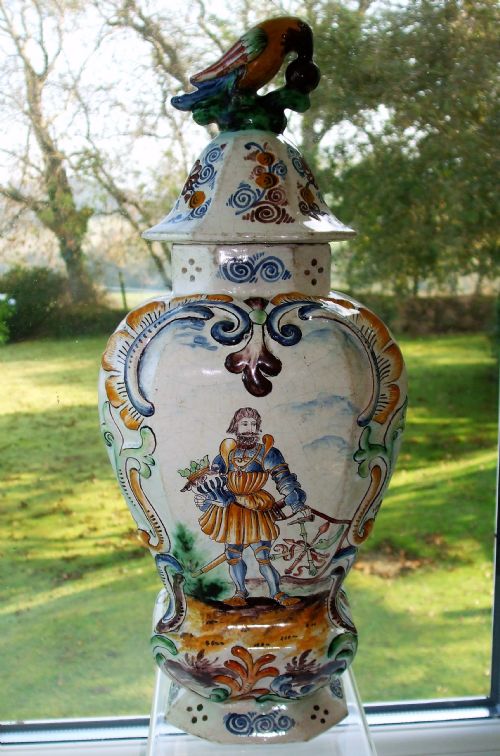
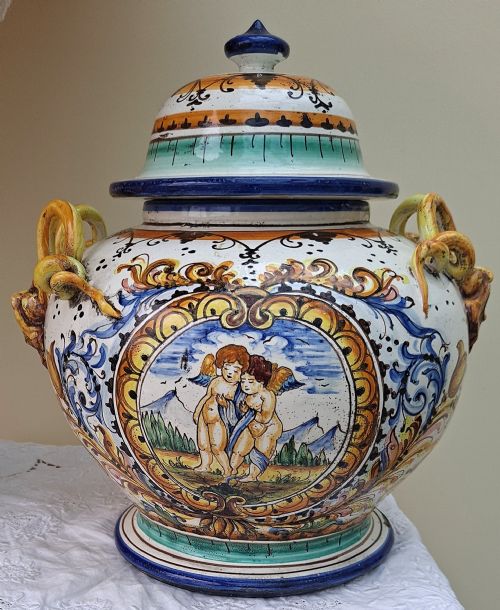
A hand painted faience jar encompasses tin-glazed earthenware vessels ranging from pharmacy albarellos to decorative lidded urns. These pieces span from the seventeenth century through the nineteenth century, drawing on Dutch, French, and Italian origins.
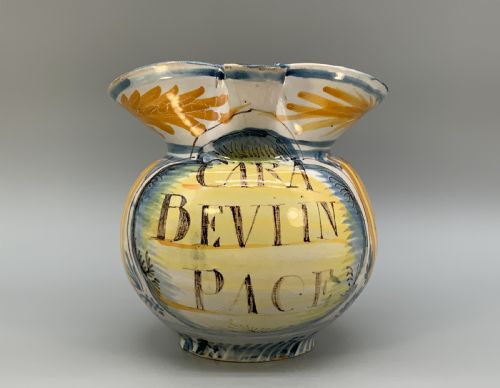
The version most commonly encountered on this page is the apothecary jar or pharmacy jug, frequently decorated with cobalt pigment or polychrome schemes. Collectors also find pairs of vases and covered urns reflecting styles such as Dutch Baroque, French Rococo, and Italian Maiolica.
What Varies in Quality
The precision and fluidity of the hand painting distinguish finer examples from standard production, particularly in botanical details or Chinoiserie bird motifs. The complexity of the palette, whether simple blue and white or rich polychrome with mangonese and yellow, also shapes the visual hierarchy.
The crispness of the tin glaze and the survival of matching covers on albarellos and urns heavily influence the integrity of the piece. Earlier seventeenth-century and eighteenth-century specimens display distinct potting characteristics compared to nineteenth-century revivals.
An apothecary jar once held crushed pearls and dried vipers, preserved behind a decorative tin glaze.
Fourmaintraux-Courquin·Alice Euphemia Thatcher
The Hand Painted Faience Jar Glossary
- Faience
- Tin-glazed earthenware produced in Europe, particularly France and other regions outside Italy. The technique creates an opaque white background suitable for detailed painted decoration.
- Albarello
- A cylindrical apothecary jar designed to store dry drugs, spices, or ointments. Its waisted shape allowed pharmacists to grip the vessel securely on crowded shelves.
- Tin Glaze
- A ceramic glaze made opaque by the addition of tin oxide. It turns white during firing and forms the canvas for painted pigments.
- Cobalt Pigment
- A metallic colorant used to achieve deep blue tones in ceramic decoration. It withstands high kiln temperatures without losing its intensity.
- Polychrome
- Multi-coloured decoration utilising several pigments rather than a single hue. Seventeenth-century and later makers employed various oxides to achieve vibrant palettes.
Hand Painted Faience Jar: Frequently Asked Questions
How were apothecary jars used?
Apothecary jars stored dry drugs, medicinal herbs, syrups, and ointments in pharmacies and dispensaries. Pharmacists kept them on shelves with Latin inscriptions to identify the contents.
Over time, these utilitarian vessels transitioned into decorative objects prized for their hand-painted surfaces and historical associations.
How do I distinguish between periods?
Seventeenth-century and eighteenth-century pieces often show simpler potting techniques and traditional motifs such as Chinoiserie birds or floral panels. Nineteenth-century examples frequently revive earlier French, Dutch, or Italian styles with distinct factory marks.
Examining the wear on the base and the composition of the tin glaze helps clarify the age of the ceramic.
What is the difference between faience and majolica?
Faience generally refers to tin-glazed earthenware made in France, the Netherlands, and England. Majolica typically describes the equivalent tin-glazed pottery produced in Italy.
Both share the fundamental technique of painting on an opaque white tin glaze before firing.
How do I care for a tin-glazed jar?
Keep these earthenware vessels away from moisture and direct sunlight to protect the fragile tin glaze and painted pigments. Dust them gently with a dry cloth rather than using liquid cleaners.
Display them on stable surfaces where they will not be bumped or subjected to temperature fluctuations.