

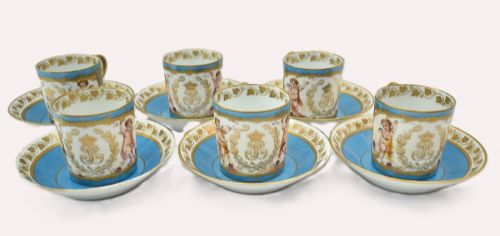


Hand Painted Coffee Set
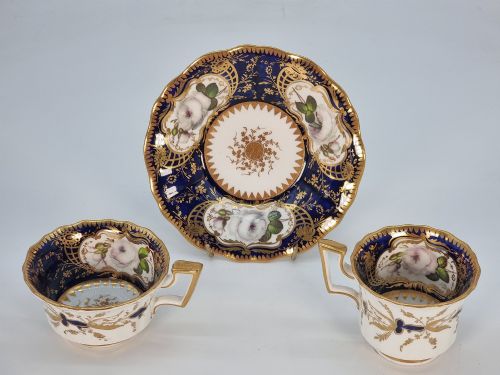
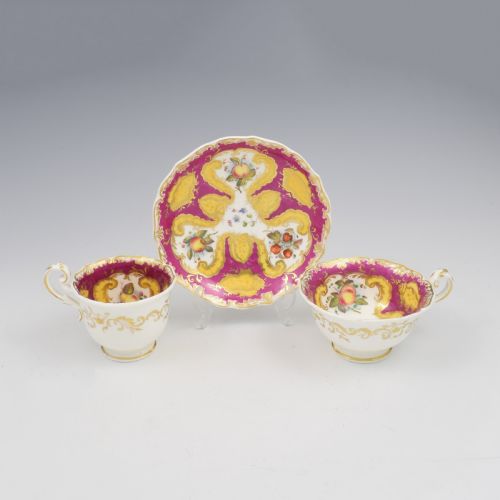
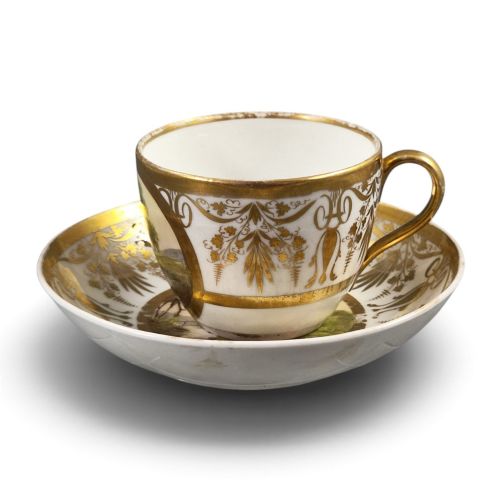
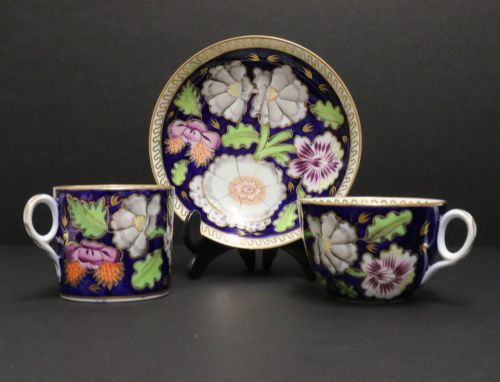
A hand painted coffee set brings delicate brushwork and rich gilding straight from the breakfast table into the display cabinet.
Hand Painted Coffee Set
A hand painted coffee set typically comprises matched groupings of demitasse cups, saucers, and larger service pieces intended for after-dinner service. Buyers will find everything from single cabinet trios dating to the Regency period through to complete porcelain services produced during the Art Deco era.
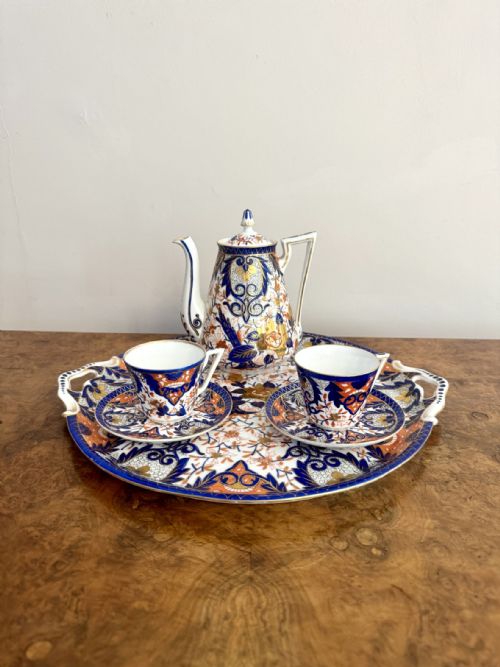
The selection ranges across European manufactories, featuring English makers alongside continental works from Berlin, Meissen, and St. Petersburg. Formats vary from individual cup and saucer pairings to comprehensive tête-à-tête services and cased sets designed for preservation.
Materials and decoration
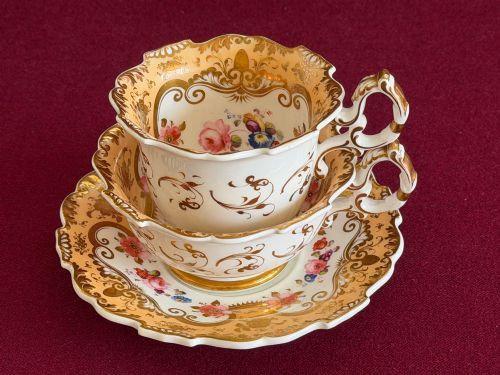
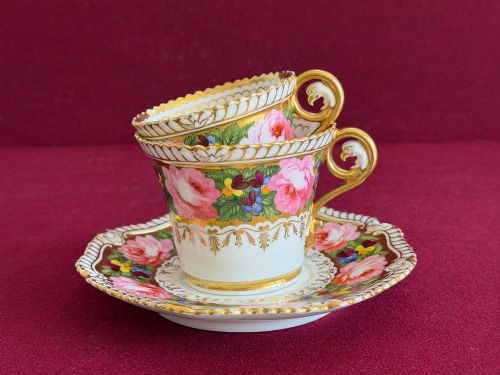
Hard-paste porcelain and bone china form the durable white bodies of these services, providing a smooth canvas for intricate polychrome enamel work. Artisans applied pigments by hand before firing, frequently finishing the rims and handles with raised gold leaf and heavy gilding.
Specialised techniques include transfer printing enhanced with hand painting, alongside rich lacquering found on related household pieces. The integration of gold leaf with cobalt blue and vibrant enamel palettes defines the visual output of the period.
Hand Painted Coffee Set Retail Price Guide 2026
Typical asking prices for hand painted coffee set among the pieces listed under this phrase on Sellingantiques today, from the lower quarter to the upper quarter. They describe what is for sale here now, not the wider market.
Early porcelain painters occasionally hid tiny insects inside cup handles to surprise whoever finished the coffee.
Evaluating the work
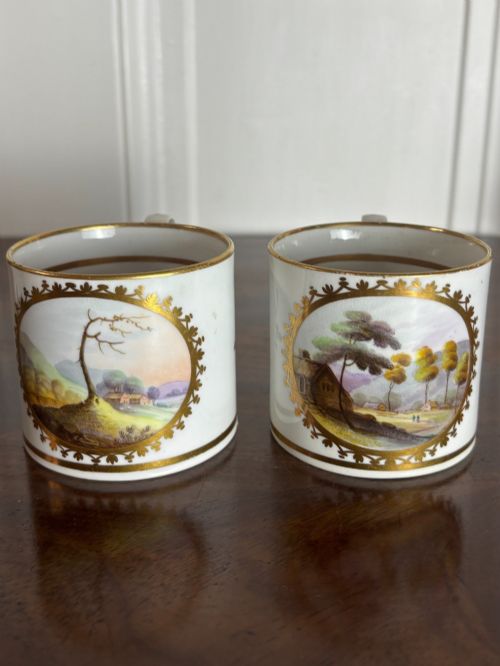
The distinction between standard production wares and exceptional cabinet pieces rests upon the precision and complexity of the hand-painted motifs. Superior examples display finely rendered landscapes, botanical studies, or figurative scenes executed by skilled porcelain painters rather than repetitive factory stencils.
Preservation of the original gilding and enamel vibrancy heavily influences the standing of a set. Pieces that retain crisp, untracked gold leaf and unrubbed polychrome colours represent the upper tier of surviving ceramic artistry.
H & R Daniel·Chamberlain Worcester·Newhall Porcelain·Coalport John Rose·KPM Berlin·Sevres Porcelain·Clarice Cliff·Royal Worcester·Meissen Porcelain·Russian Imperial Porcelain Manufactory·Davenport·Spode·Hutschenreuter
The Hand Painted Coffee Set Glossary
- Trio
- A matched set consisting of a teacup, a coffee cup, and a saucer designed for versatile morning service.
- Demitasse
- A small cup used specifically for serving strong black coffee or espresso, typically paired with a matching saucer.
- Hard-paste porcelain
- A durable ceramic composition fired at very high temperatures, made from kaolin and petuntse.
- Gilding
- The application of gold leaf or gold powder to the surface of porcelain for decorative accentuation.
- Enamel
- Opaque glass-based pigment applied over the glazed ceramic body and fired to achieve vibrant permanent colours.
Hand Painted Coffee Set: Frequently Asked Questions
What is the difference between a teacup and a demitasse cup?
Demitasse cups are noticeably smaller and taller, built specifically to hold concentrated coffee after a meal. Teacups feature a wider, shallower bowl suited for lighter infusions.
Historically, makers produced trios to give households both options in a unified pattern.
Can I use these antique cups for daily coffee?
Most surviving porcelain sets from the Regency and Victorian periods are treated as cabinet pieces rather than functional tableware. The delicate enamel work and thin porcelain bodies require careful handling.
Hand washing is essential to protect the historic gilding from modern detergents.
How do I identify a true trio from a mixed set?
A true trio shares identical paste consistency, matching pattern numbers, and consistent hand-painted detailing across all three components. Manufacturers often stamped or painted pattern codes directly onto the base of the porcelain.
Minor variations in the gilding can sometimes indicate studio hand-finishing rather than a mismatch.
Why are some sets called cabinet cups?
Cabinet pieces were created primarily for display in glass-fronted furniture rather than active dining use. They often feature exceptionally detailed landscape paintings or elaborate gilt work.
These items prioritized artistic demonstration over functional durability.