




Hand Painted Coffee Can
These hand painted coffee can examples are slender ceramic vessels for drinking strong morning brews, prized for their delicate hand-applied decoration.
Hand Painted Coffee Can
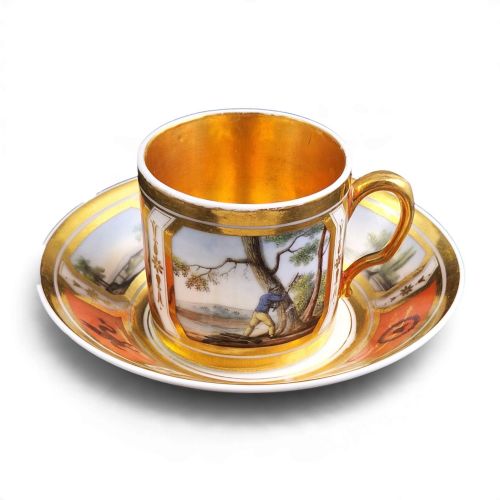
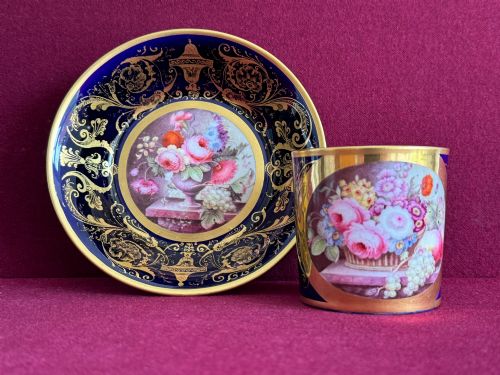
A hand painted coffee can is a cylindrical ceramic vessel made for serving strong brews during the Georgian and Regency periods. The forms seen here include standalone cans alongside matched saucers, often forming part of larger breakfast services.
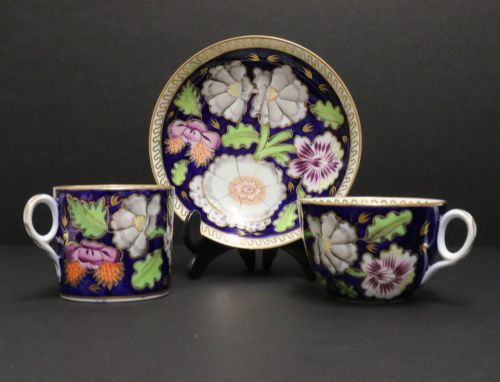
Most examples date from the eighteenth and nineteenth centuries, spanning Georgian, Regency, and later twentieth-century revivals. The pieces vary from First Period Worcester decorated with Chinese figures to later Minton and Newhall cabinet trios.
How they were made
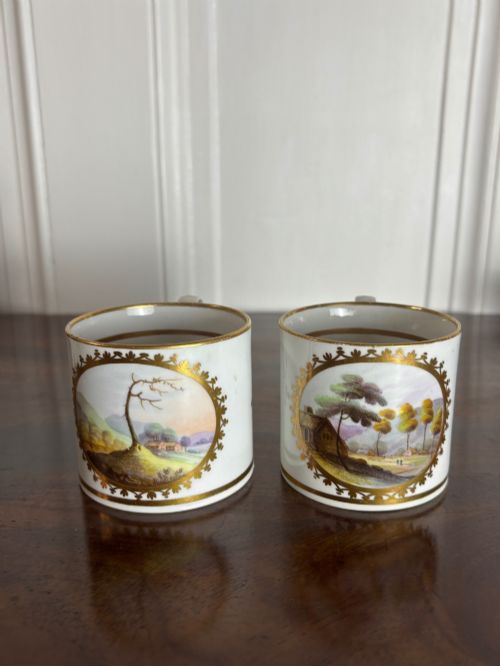
These vessels are thrown or cast from porcelain, soft-paste porcelain, or bone china before receiving hand-applied enamel paint and gold leaf. Potters utilised wet blue grounds and intricate overglaze enamels to create landscape paintings, birds, and Chinoiserie scenes.
Master decorators applied gilding by hand, firing the pieces multiple times to set the metallic leaf and vibrant pigments permanently into the glaze. Many cans feature specialised patterns such as the Mandarin design or dragon motifs in compartments.
Hand Painted Coffee Can Retail Price Guide 2026
Typical asking prices for hand painted coffee can among the pieces listed under this phrase on Sellingantiques today, from the lower quarter to the upper quarter. They describe what is for sale here now, not the wider market.
Listings feature porcelain, soft-paste porcelain, and bone china enhanced with gold leaf, enamel paint, and gilding.
What varies in quality
Quality rests upon the precision and complexity of the hand painting, distinguishing standard factory output from master-decorated cabinet pieces. Pieces attributed to specific artists like Thomas Steel or notable manufactories command greater attention.
The crispness of the gilding and the fineness of the porcelain body define the upper tier of the range. Earlier eighteenth-century soft-paste bodies show subtle variations in translucency compared to later nineteenth-century bone china.
Newhall·Flight And Barr Worcester·Minton·Worcester Porcelain·Royal Worcester·Spode Copeland·Thomas Steel
The Hand Painted Coffee Can Glossary
- Coffee can
- A straight-sided cylindrical ceramic cup lacking a handle, designed for drinking strong coffee in the eighteenth and nineteenth centuries.
- Soft-paste porcelain
- An artificial porcelain mixture fired at lower temperatures than hard-paste, common in eighteenth-century English manufactories.
- Wet blue
- A rich cobalt blue ground colour applied underglaze to ceramics, often associated with eighteenth-century Worcester production.
- Chinoiserie
- A European artistic style reflecting Chinese motifs and landscapes, frequently hand-painted on Georgian porcelain.
- Gilding
- The application of gold leaf or gold paint to ceramic surfaces, used to highlight rims, handles, and painted panels.
Hand Painted Coffee Can: Frequently Asked Questions
What is a coffee can?
A coffee can is a small, straight-sided cylindrical cup without a handle, made to hold strong roasted coffee during the Georgian and Regency periods. They were frequently paired with matching saucers as part of elite teaware services.
Unlike traditional tea bowls with curved walls, these upright vessels kept the beverage warm and were held securely by the adult drinker using thumb and fingers.
How do I date an antique coffee can?
Dating relies on identifying the porcelain paste, shape, and painted pattern styles characteristic of different centuries. Eighteenth-century examples often feature soft-paste bodies and hand-painted Chinoiserie or landscape scenes.
Nineteenth-century pieces transition toward harder bone china bodies with refined Regency gilding, while twentieth-century sets display cleaner twentieth-century cabinet aesthetics.
Did people actually drink from them?
Yes, these vessels were designed for daily use among affluent households who enjoyed strong coffee after morning meals. The tall, narrow shape helped retain heat for the concentrated brew before handleless cups fell out of fashion.
Over time, many surviving examples transitioned into cabinet displays due to the delicate nature of their hand-painted enamel and gold leaf decoration.
How do I care for hand painted porcelain?
Hand-painted porcelain requires gentle hand washing in lukewarm water using mild soap, avoiding abrasive sponges or modern dishwashers. The historic enamel paints and gold leaf can wear away if subjected to harsh chemicals or scrubbing.
Display the pieces away from direct sunlight to protect the vibrant pigments from fading over the decades.