




Hand Painted Candle Holders
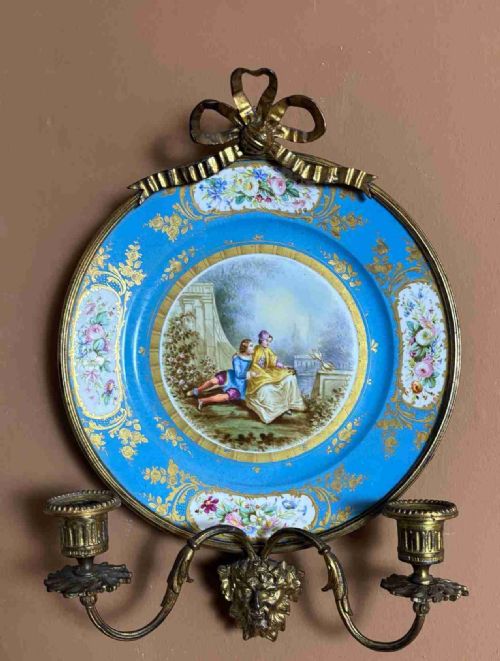
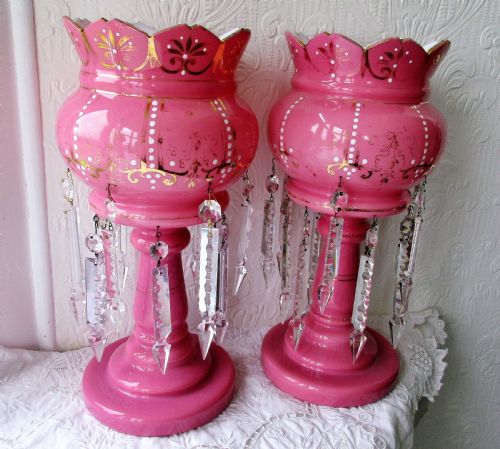
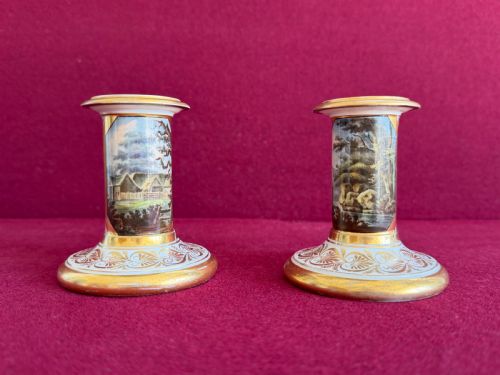
Hand painted candle holders bring brilliant colour and decorative charm to a room, ranging from delicate porcelain figures to striking glass lustres.
Hand Painted Candle Holders
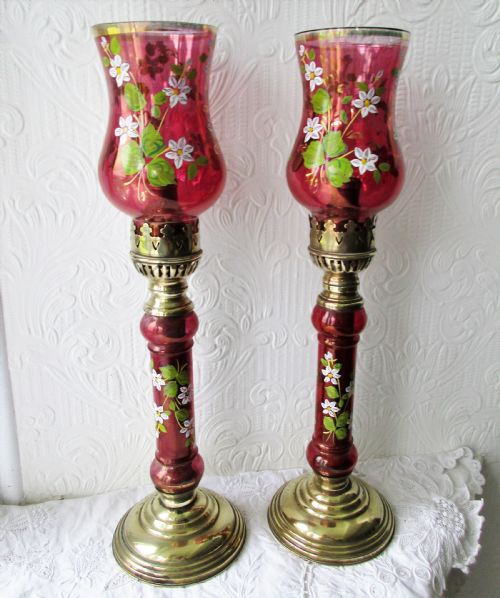
When you search for hand painted candle holders, you encounter a diverse selection of lighting forms spanning the eighteenth, nineteenth and early twentieth centuries. The offerings on this page encompass porcelain candlesticks, multi-arm candelabra, and glass mantel lustres adorned with painted details.
Porcelain examples frequently take the form of figural groups or classical stems originating from English and continental factories. Glass varieties include ruby, green, pink and cranberry glass, often enhanced with enamel and gilding.
Makers from Derby, Worcester, Spode, Minton, Dresden and Sitzendorf dominate the porcelain selection, while brass and glass combinations represent the broader nineteenth-century domestic lighting market.
How they were made
The creation of these pieces involved skilled moulding of porcelain clay or blowing and casing of glass, followed by meticulous hand decoration. Enamel paints and gold leaf were applied to the surfaces before firing or setting, securing the rich palette.
Glass lustres incorporate suspended crystal prisms attached to a painted or overlaid body, requiring precise metalwork for the sconces and frames. Porcelain figures utilise intricate bocage and hand-modelled floral elements alongside detailed facial painting.
Hand Painted Candle Holders Retail Price Guide 2026
Typical asking prices for hand painted candle holders among the pieces listed under this phrase on Sellingantiques today, from the lower quarter to the upper quarter. They describe what is for sale here now, not the wider market.
Listings feature eighteenth and nineteenth century periods, utilising porcelain, brass, cranberry glass, and gold leaf.
What varies in quality
The refinement of the painted brushwork dictates much of the distinction across the range, separating hurried factory output from master painter execution. Precision in facial expressions, crispness of polychrome enamel, and the completeness of gilt highlights signal superior execution.
The integrity of the material also governs standard, particularly the clarity of crystal prisms, the weight of cast brass components, and the crispness of porcelain moulding without warping or firing cracks.
Barr Flight And Barr·Spode·Derby·Sitzendorf·Dresden·Minton·Sevres·Helena Wolfsohn
The Hand Painted Candle Holders Glossary
- Lustre
- A decorative table ornament featuring a central vase or stem fitted with hanging glass prisms. They were designed to catch the flickering light of candles.
- Bocage
- An intricate background of applied porcelain foliage and flowers. It frequently frames figural groups on eighteenth and nineteenth-century candlesticks.
- Candelabra
- A branched candlestick holding multiple lights on separate arms. These large pieces served as central garnitures on mantelpieces.
- Enamel
- Opaque vitreous paint fused to glass or porcelain surfaces through firing. It provides vibrant, durable colour to floral and figural motifs.
- Overlay glass
- A technique involving layers of different coloured glass where portions are cut away to reveal the contrasting hue beneath.
Hand Painted Candle Holders: Frequently Asked Questions
What are mantle lustres?
Mantle lustres are ornamental glass pieces placed on mantelpieces, featuring hanging crystal pendants that refract candlelight.
They combine a decorative vase form with functional candle sockets on the rim.
How do I date porcelain candlesticks?
Dating relies on factory marks, paste composition, style of decoration, and secondary elements like patch-marks on early Derby.
Comparing the painting style to known factory periods helps narrow the decade of manufacture.
How were figural candelabra used?
Figural candelabra served as grand decorative table centrepieces and mantel ornaments in wealthy homes.
Their multiple arms allowed them to provide substantial illumination during evening gatherings.
What is cranberry glass?
Cranberry glass is a rich pinkish-red transparent glass created by adding gold chloride to the molten batch.
It became highly popular in Victorian lighting and mantle ornaments.