



Hand Painted Armorial China
Hand painted armorial china carries aristocratic family crests in rich enamel and gold leaf, offering a tangible link to historical lineage for any collector.
Hand Painted Armorial China
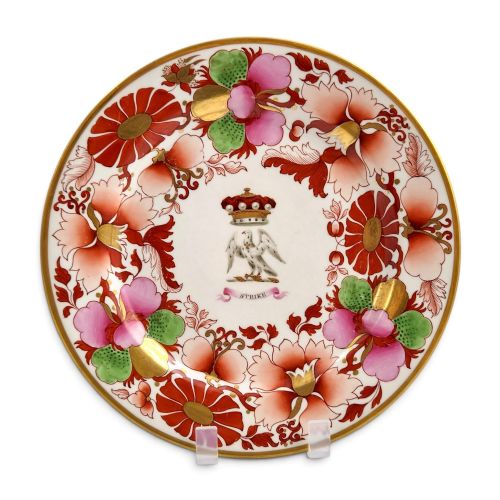
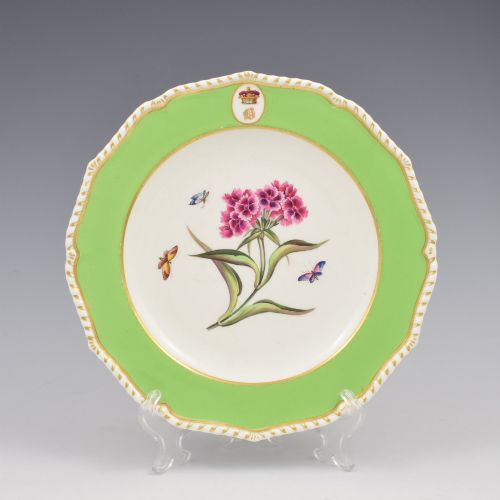
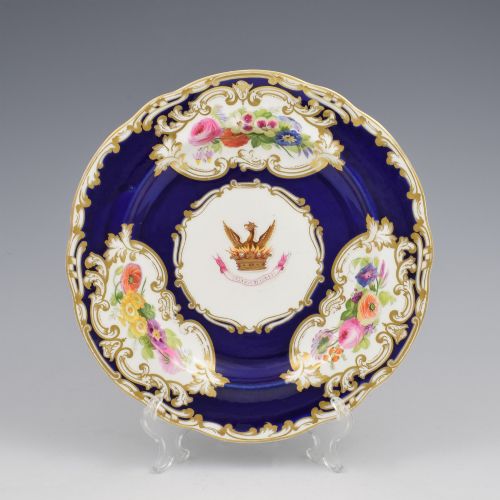
Hand painted armorial china comprises decorative plates, dessert plates, serveware, and cabinet plates bearing bespoke heraldic crests and coats of arms. These ceramics span Georgian, Regency, and Victorian periods alongside Chinese Export wares produced for European markets. Buyers find formal service dishes and cabinet plates created to display family identity and social standing.
How they were made
Potters shaped porcelain, bone china, and glazed pottery before applying initial kiln-fired glazes. Artisans then painted intricate heraldic crests, botanical motifs, and decorative borders by hand using polychrome enamel pigments. Gilt, gold leaf, and heavy gilding were added in final low-temperature firings to highlight borders and crest details.
Chinese Export pieces were manufactured in kilns abroad to specific European armorial orders, combining traditional oriental porcelain bodies with Western heraldic designs. English factories such as Worcester and Derby utilised refined soft-paste or hard-paste porcelain bodies suited to detailed botanical painting and complex armorial shields.
Hand Painted Armorial China Retail Price Guide 2026
Typical asking prices for hand painted armorial china among the pieces listed under this phrase on Sellingantiques today, from the lower quarter to the upper quarter. They describe what is for sale here now, not the wider market.
What varies in quality
Quality rests upon the precision of the hand-painted heraldry and the crispness of the enamel work. Superior pieces display meticulously rendered crests with fine shading, whereas simpler examples show broader brushwork and standard floral borders.
The application of gold leaf and gilding dictates visual richness across the surface. Intact, unrubbed gilding and deeply saturated polychrome enamels elevate cabinet plates and dessert services above standard utilitarian wares.
Bloor Derby·Chamberlain Worcester·Barr Flight and Barr·Copeland·Minton·Samson Of Paris
The Hand Painted Armorial China Glossary
- Armorial
- Bearing a coat of arms or heraldic device. These symbols identify specific families and lineages.
- Cabinet plate
- A decorative plate intended for display in a cabinet rather than for table use. They often feature elaborate painting and extensive gilding.
- Enamel
- Opaque vitreous paint fused to the ceramic surface during firing. This technique provides durable, vibrant colours for heraldic crests.
- Gilding
- The application of gold or gold leaf to ceramic surfaces. It frames the central armorial design and enhances decorative borders.
- Famille rose
- A palette of Chinese porcelain enamels dominated by pink or rose opaque colours. This style appeared frequently on eighteenth-century export wares.
Hand Painted Armorial China: Frequently Asked Questions
How do I identify the family crest?
Heraldic crests correspond to specific noble or gentry families recorded in historical armorial registers. Specialists match the charges, shields, and mottoes to trace the original commissioning owner.
Makers frequently painted the family name or title on the reverse of English cabinet plates. Consulting genealogical records helps connect the armorial bearings to a particular historical household.
Are these plates meant for dining?
Most surviving armorial plates function as decorative cabinet pieces or dessert plates rather than everyday tableware. Their delicate enamels and gold leaf require gentle handling to preserve the painted heraldry.
While historic dessert services were used for formal dining, modern collectors typically display them on plate stands or within vitrines to protect the glazed surfaces.
Why are some pieces Chinese Export?
European families commissioned porcelain services directly from Chinese kilns during the eighteenth century. Chinese artists painted European coats of arms onto porcelain blanks from detailed sketches sent from abroad.
These export pieces combine Eastern ceramic bodies with Western heraldic conventions. They reflect global trade routes and the high status of porcelain ownership in historic households.
What is the difference between porcelain and pottery?
Porcelain is fired at much higher temperatures, producing a vitrified, translucent body that is non-porous. Glazed pottery uses coarser clay bodies that require an opaque glaze for water resistance.
Fine armorial dessert plates are almost exclusively porcelain or bone china, while heavier utilitarian wares utilise glazed pottery bases.