





Hand Hammered Copper Pitcher
These hand hammered copper pitcher examples range from Georgian service vessels to Arts and Crafts flagons, prized for their warmth and utility.
Hand Hammered Copper Pitcher
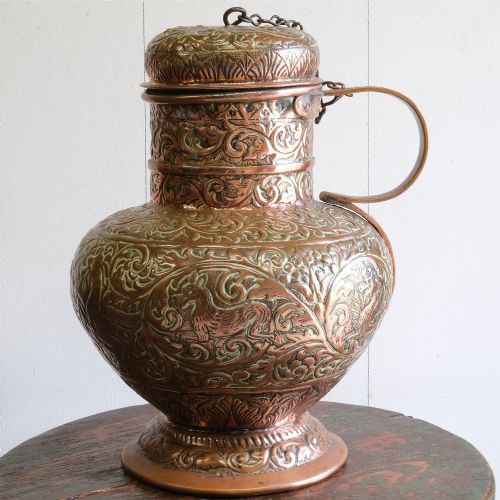
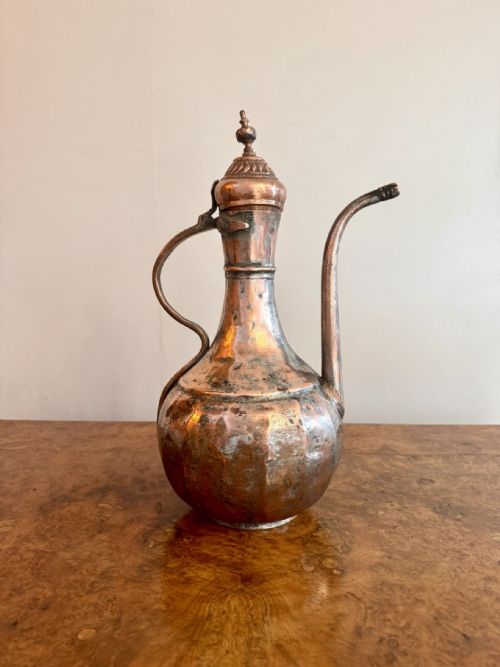
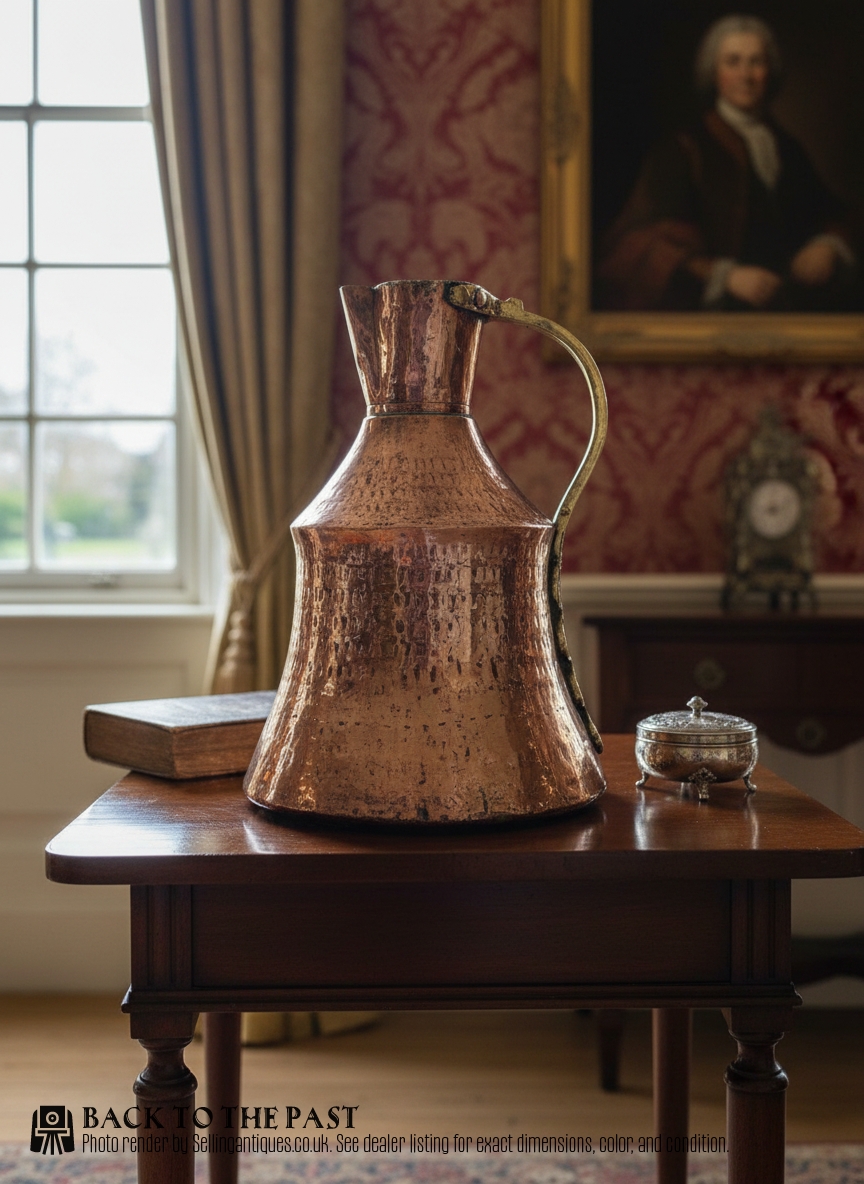
A hand hammered copper pitcher is a utilitarian metal vessel shaped by hand, appearing in forms such as flagons, milk jugs, and coffee pots across this selection. Buyers find pieces spanning the Georgian, Victorian, and Arts and Crafts periods, alongside Middle Eastern and Indo-Persian examples.
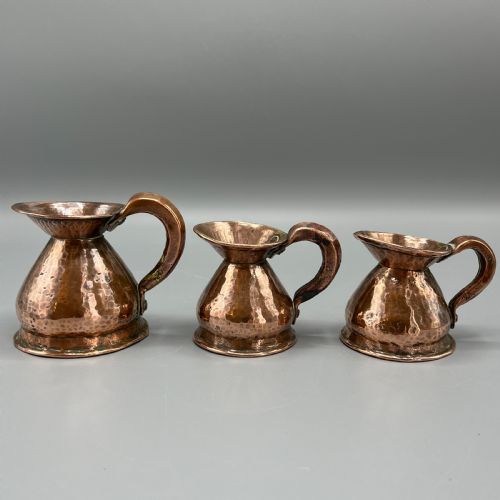
The most common items on this page are sturdy serving vessels and decorative metalware jugs made from copper, often complemented by brass elements. These range from large two-gallon service containers down to miniature apprentice pieces and nineteenth-century Middle Eastern coffee pots.
How they were made
Makers shaped these items primarily from copper sheets, utilising hand-hammering techniques to build structural rigidity and distinctive surface texture. Many pieces integrate brass handles, rims, or fittings to provide contrast and mechanical strength.
Vessels from the Arts and Crafts tradition display visible hammer marks that celebrate manual fabrication, whereas Georgian and Victorian utility pieces often exhibit smoother finishes tailored to service use.
Listings span the 1860s through the 1910s, encompassing Georgian, Victorian, and Arts and Crafts design movements.
What varies in quality
Quality rests in the heaviness of the metal gauge and the precision of the hand-formed joints, distinguishing robust serving vessels from lighter decorative items. Superior examples display balanced proportions, clean hammering discipline, and well-integrated brass components.
The integrity of the construction and the crispness of period-specific styling set the finer pieces apart from standard utilitarian work.
The Hand Hammered Copper Pitcher Glossary
- Flagon
- A large drinking vessel with a handle and often a lid, used primarily for serving liquids. These metal examples often date to the Arts and Crafts period.
- Apprentice piece
- A miniature or scaled-down item created by a trainee craftsman to demonstrate mastery of a trade. In this selection, these appear as graduated copper jugs.
- Arts and Crafts
- A design movement valuing manual skill and traditional materials over industrial mass production. Objects from this style show clear surface work and honest construction.
- Indo-Persian
- A stylistic classification denoting decorative metalware influenced by Indian and Persian artistic traditions. These items frequently feature distinct chased or hammered surface ornamentation.
Hand Hammered Copper Pitcher: Frequently Asked Questions
What were these pitchers used for?
These metal vessels served practical roles carrying water, milk, or beer in domestic and tavern settings.
Larger versions held multi-gallon quantities for service, while smaller flagons and coffee pots functioned at table.
How do I date a copper pitcher?
Dating relies on stylistic markers, construction methods, and period-specific handle attachments. Arts and Crafts pieces show distinct hammered textures, whereas Georgian and Victorian examples follow formal utility shapes.
Matching the material combinations, such as copper bodies with brass mounts, also helps place an item within its era.
Are brass and copper combined?
Yes, many items integrate both metals, using brass for handles, rims, or spouts to add durability and visual contrast.
This combination appears frequently in Arts and Crafts milk jugs and flagons.
What is an apprentice piece?
An apprentice piece is a small-scale model made by a learner to prove their skill to a guild or master craftsman.
Graduated sets of miniature copper jugs on this page represent this tradition.