



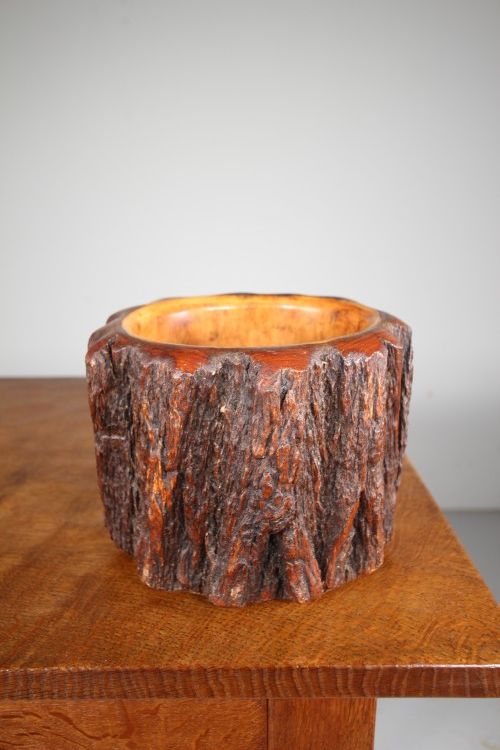
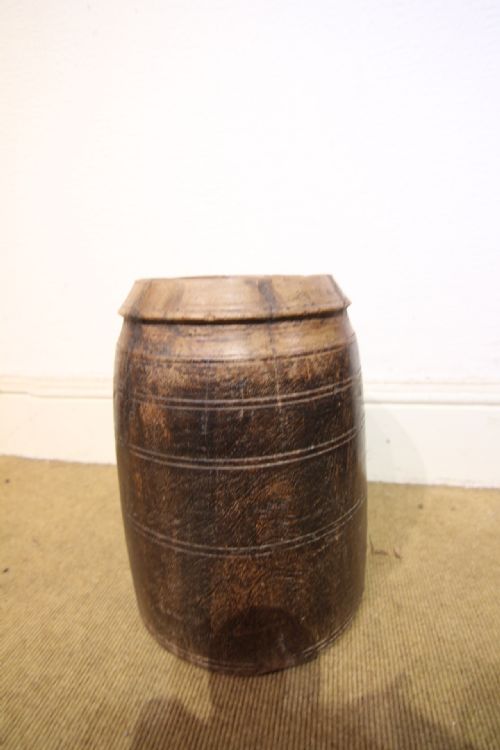


Hand Carved Wooden Vessel
A hand carved wooden vessel brings genuine tactile warmth into a room, shaped directly from timber by historic hands.
Hand Carved Wooden Vessel
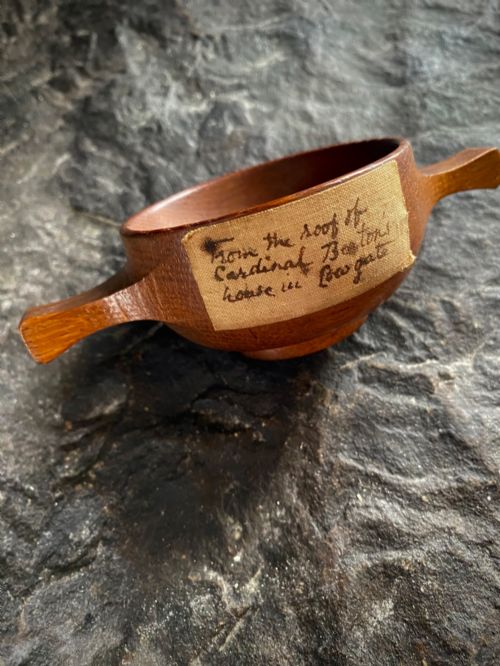
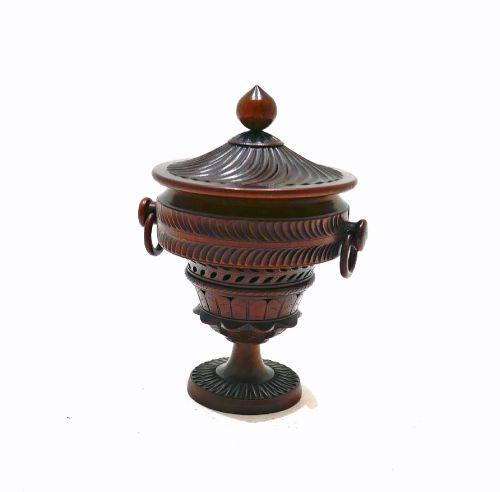
A hand carved wooden vessel is a functional or decorative object shaped directly from timber, ranging from utility bowls and dairy vessels to lidded cups and spice boxes. When searching for a hand carved wooden vessel, collectors frequently encounter items made from diverse regional timbers such as fruitwood, sycamore, and elm, spanning eras from the eighteenth century through to the early twentieth century.
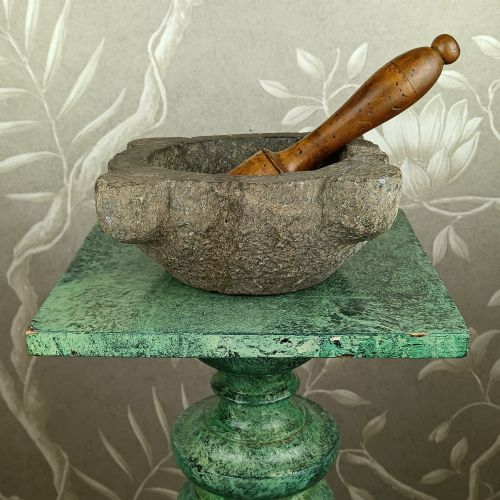
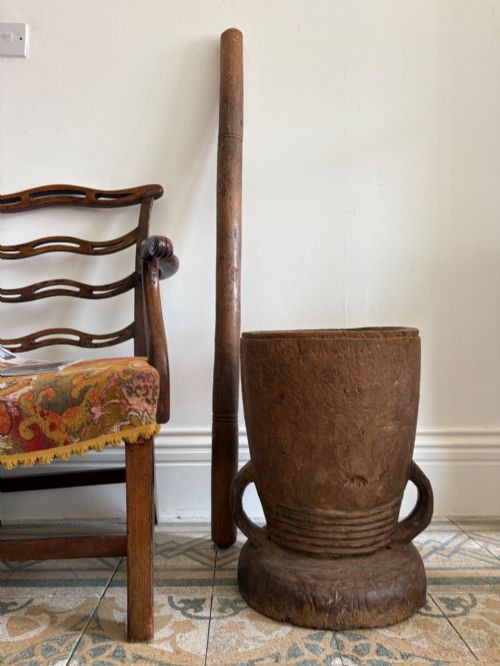
The selection here encompasses various utilitarian and decorative forms, including mortar and pestles, turned churns, bamboo brush pots, and rustic country bowls. Pieces originate from diverse traditions such as Black Forest, Scandinavian country, Indian vernacular, and African primitive workshops.
Most examples date from the nineteenth and early twentieth centuries, reflecting the enduring utility of carved wood across European, Asian, and African domestic life. Buyers will find both utilitarian dairy and grain vessels alongside more decorative sculptural models and lidded pomanders.
How they were made
These items are shaped from solid timbers like hardwood, fruitwood, lindenwood, and sycamore, utilising manual carving and turning techniques. Craftsmen hacked, hollowed, and turned raw logs and tree trunks using hand tools to create vessels designed for daily domestic or agricultural labour.
Surfaces frequently show the direct marks of chisels and gouges, while selected pieces retain historic paint applications or develop a rich, deep natural patina through long handling. Iron fittings occasionally appear on utility containers such as churns, complementing the primary wooden structures.
Hand Carved Wooden Vessel Retail Price Guide 2026
Typical asking prices for hand carved wooden vessel among the pieces listed under this phrase on Sellingantiques today, from the lower quarter to the upper quarter. They describe what is for sale here now, not the wider market.
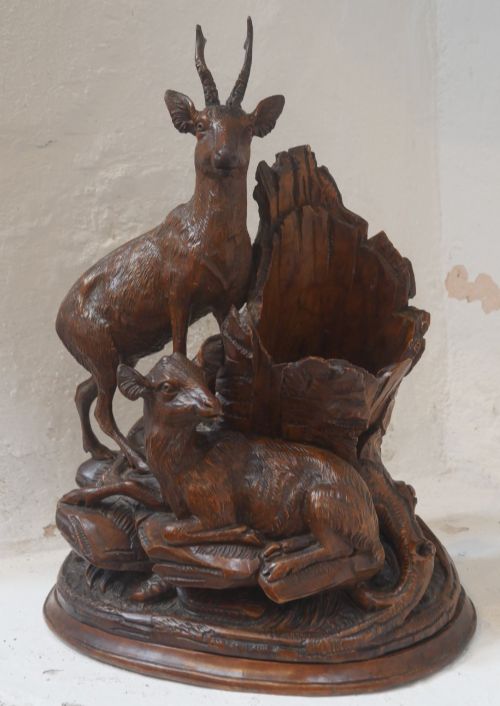
Mountain goats peer out from a Black Forest carving, keeping eternal watch over a collection otherwise dominated by heavy domestic utility bowls.
What varies in quality
Quality in these objects rests upon the honesty of the carving, the selection of the timber, and the depth of the resulting surface patina. Stronger examples display confident tool work and balanced proportions that respect the natural grain of the wood rather than forcing an overly uniform finish.
The desirability of a piece also depends on its surviving condition and the clarity of its regional style, whether it is a crisp Black Forest animal carving or an unpretentious Scandinavian dairy bowl. Retaining original historic paint surfaces or an undisturbed, deep handling patina elevates an item considerably.
The Hand Carved Wooden Vessel Glossary
- Treen
- Small wooden domestic objects made by turning or carving. This encompasses items ranging from lidded cups to small treen tree stem bowls.
- Dairy bowl
- A large shallow wooden vessel used historically for setting milk and skimming cream. Sycamore was frequently chosen for these due to its clean grain.
- Patina
- The deep surface sheen and coloration developed by wood over decades of handling, exposure, and waxing. A rich patina indicates age and regular use.
- Mortar and pestle
- A heavy bowl paired with a club-shaped tool used for grinding spices, grains, or powders. Hardwoods and olive wood were utilised for durability.
Hand Carved Wooden Vessel: Frequently Asked Questions
What were wooden vessels used for?
These wooden vessels served practical daily functions in domestic and agricultural settings, from storing grain and grinding spices to setting dairy and holding snuff.
Over time, many utility items transitioned into decorative display pieces as mechanisation replaced handmade wooden kitchenware in homes.
How do I care for antique wood?
Keep antique wooden vessels away from direct sunlight, central heating sources, and sudden humidity fluctuations to prevent timber from splitting or warping.
Apply a minimal amount of appropriate natural wax occasionally if the wood appears dry, avoiding harsh cleaning agents entirely.
How can I tell the age of a carved bowl?
Age is judged by tool marks left behind by hand chisels, the type of timber used, and the natural wear patterns accumulated around the rim and base.
Examine the depth of the patina and the shrinkage of the wood over the grain, which develop slowly through decades of environmental exposure and handling.
Are these pieces food safe?
Most antique wooden vessels retain historic surface treatments, accumulated oils, or dry timber that make them unsuitable for serving modern food.
Enjoy these items primarily as decorative display objects, sculptural forms, or dry storage containers rather than active kitchen utensils.