
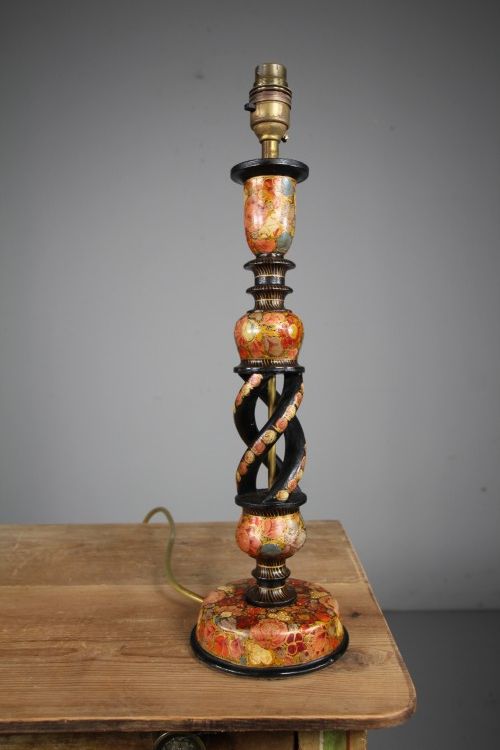


Hand Carved Wood Lamps
These hand carved wood lamps span regional traditions from the nineteenth century into the mid-twentieth, offering sculptural presence and carved detail for any interior.
Hand Carved Wood Lamps
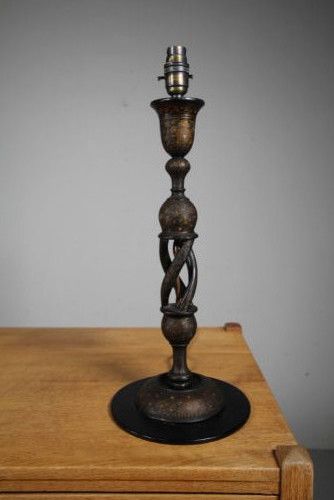
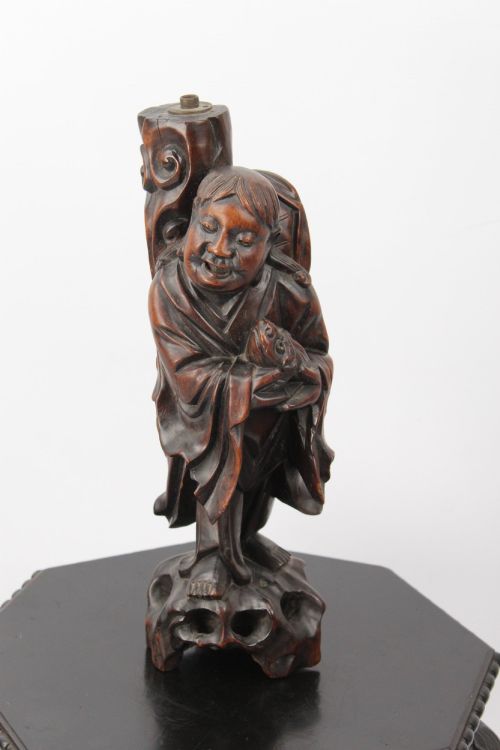
When searching for hand carved wood lamps, buyers encounter diverse regional traditions ranging from Black Forest linden wood carvings to Kashmiri twist forms and Japanese root wood creations. These pieces emerge primarily from the nineteenth century, the Edwardian decades, and the early twentieth century.
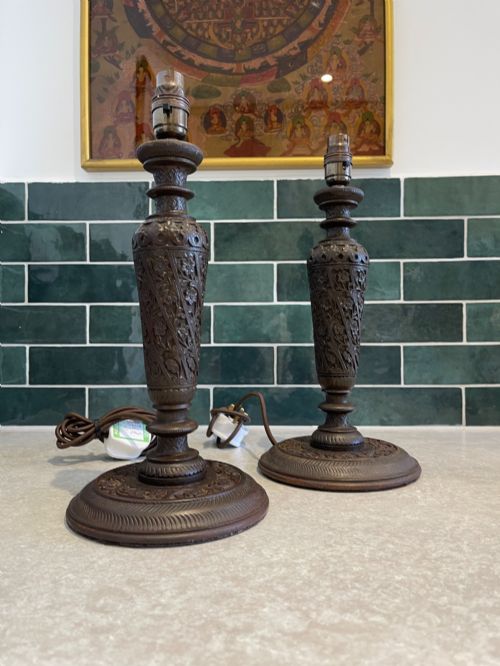
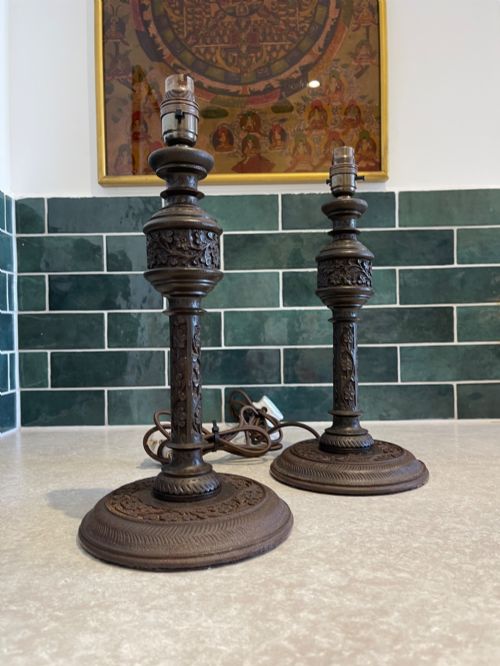
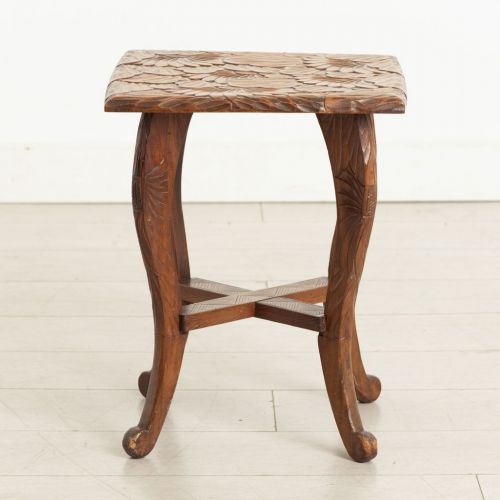
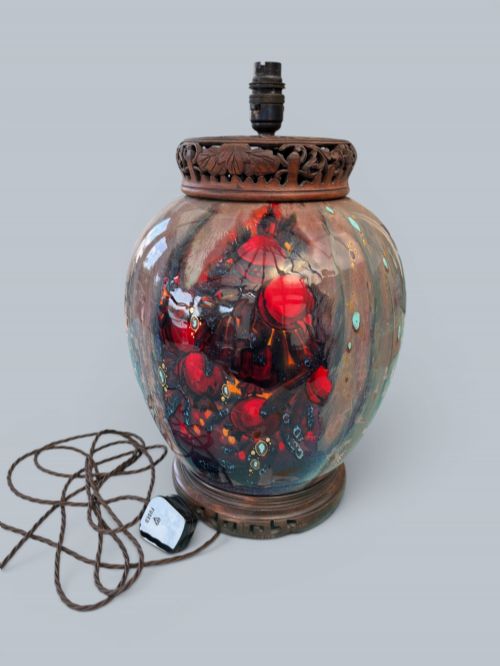
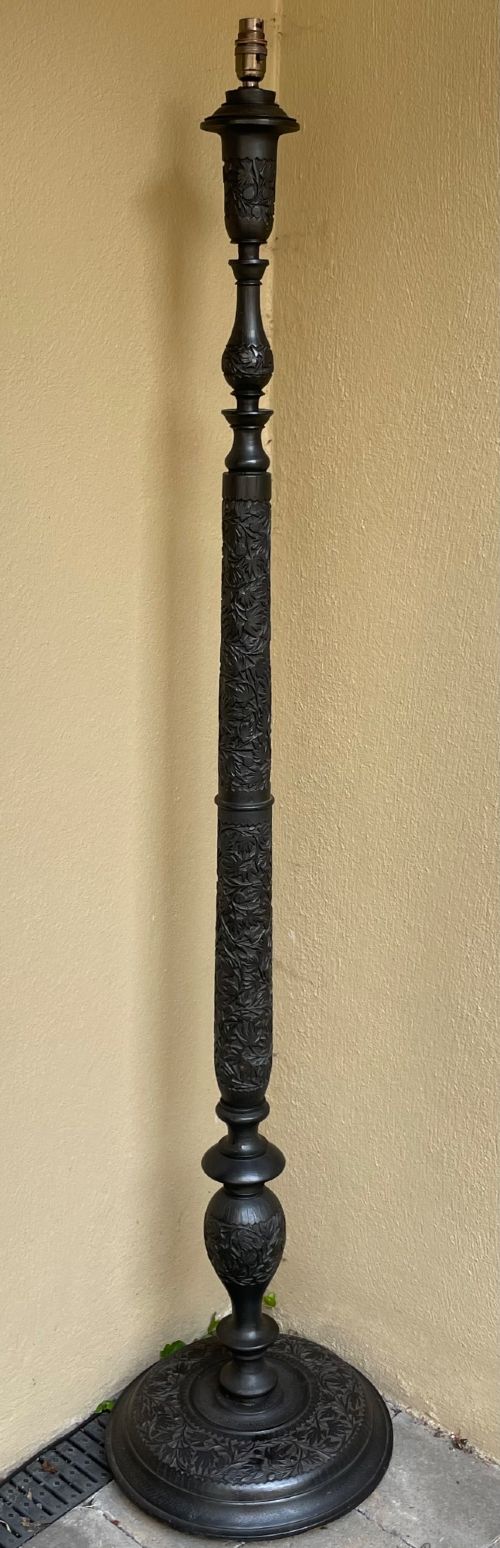
The selection includes standard lamps, floor models, and table lamps fashioned from hardwoods like teak and padauk. Many pieces incorporate distinct cultural styles such as Anglo-Indian, Arts and Crafts, and Chinese Qing Dynasty aesthetics.
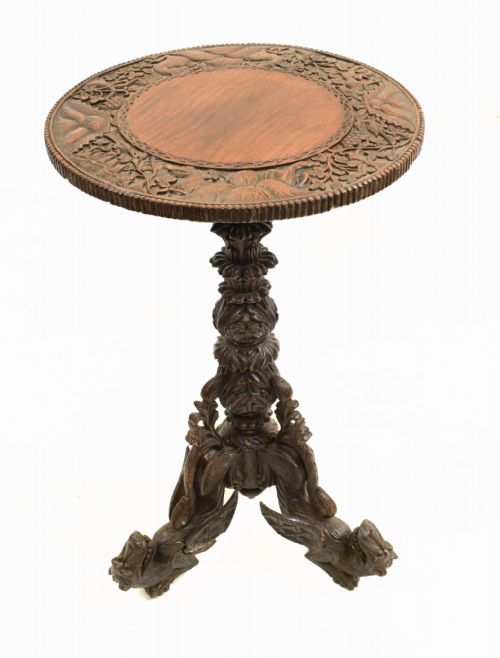
Makers and workshops across different continents applied deep relief carving and twist turning to domestic lighting and furniture fixtures. The inventory reflects a mix of figural animal lamps, tall torchiere forms, and sculptural standards.
How they were made
Craftsmen utilised regional timbers including teak, padauk, linden, and general hardwoods, selected for their grain and stability under intricate chisel work. Wood carvers employed hand tools to execute deep relief, twist turning, and figural representations.
Surface treatments involved natural wax, silver leaf application, and red lacquer finishes to highlight the carved motifs. Metal components such as brass fittings were integrated for wiring and structural support during later rewiring or original assembly.
Listings feature pieces spanning from the mid-nineteenth century through the 1940s, utilising brass, teak, fabric, and hand-carved hardwoods.
What varies in quality
The depth and crispness of the hand carving separate standard production from superior artistic execution, particularly in figural subjects like Black Forest bears or Chinese dragons. Finer examples maintain structural integrity in the timber without excessive shrinkage cracks or replaced limb sections.
The integration of original surface finishes, such as intact silver leaf or undisturbed red lacquer, dictates the desirability of the piece. Proportion and the natural movement of root wood or twist designs also influence the visual balance of the standard lamp.
Liberty of London·Moorcroft Art Pottery
The Hand Carved Wood Lamps Glossary
- Standard Lamp
- A tall floor-standing lamp designed to illuminate a room from a vertical timber shaft. These pieces often feature heavy carved pedestals or tripod bases for stability.
- Root Wood
- Timber sourced from the root system of a tree, prized by carvers for its gnarled, twisting natural contours. It appears frequently in Japanese and Chinese table lamps.
- Twist Table Lamp
- A lamp featuring a spiralling column carved directly into the solid wood shaft. This form is particularly common in Kashmiri lighting of the early twentieth century.
- Torchiere
- A tall ornamental stand or torch-holder adapted to hold a light source. In this collection, these pieces take the form of large carved wooden dragon standards.
- Black Forest
- A style of wood carving originating from the mountainous region of central Europe. Pieces from this tradition often depict realistic animals such as bears.
Hand Carved Wood Lamps: Frequently Asked Questions
How do I date an old carved lamp?
Dating relies on stylistic clues, timber species, and historical construction methods seen across nineteenth and early twentieth-century examples. The presence of hand-turned elements or specific regional motifs helps narrow the decade of production.
Wiring updates are common, but original lamp holders and switches provide additional chronological markers. Comparing the carving depth with documented pieces from periods like the Arts and Crafts movement aids verification.
Are these lamps safe for modern wiring?
Many older lamps require rewiring to comply with contemporary safety standards before everyday use. Professional rewiring preserves the wooden standard while updating internal cables and lamp holders.
Buyers should consult a qualified electrician to inspect vintage fittings prior to plugging them in. The original timber body remains intact during this modern technical update.
How do I clean a carved wooden lamp?
Dusting with a soft, dry cloth prevents the accumulation of dirt within deep crevices and carved relief details. Avoid liquid polishes or harsh chemical cleaners that might strip wax or lacquer finishes.
Maintaining a stable indoor humidity prevents the hardwood from splitting or warping over time. Gentle care preserves the original patina developed over a century or more.
What styles are available in these lamps?
The inventory encompasses Anglo-Indian, Black Forest, Arts and Crafts, and Chinese Qing Dynasty aesthetics. Each regional style utilises distinct carving techniques and native timbers suited to local craftsmanship.
Forms range from figural animal sculptures to tall twisted columns and root wood configurations. This variety reflects international trade and cross-cultural design influences of the Victorian and Edwardian eras.