



Hand Carved Jade Ornament
These hand carved jade ornament examples span multiple centuries of Chinese artistry, offering collectors tactile pieces of nephrite and jadeite shaped into traditional motifs.
Hand Carved Jade Ornament
A hand carved jade ornament brings together centuries of lapidary tradition, ranging from desk accessories and pendants to large mountain landscape sculptures. When you search for a hand carved jade ornament, you encounter pieces that span the Qing Dynasty, the Chinese Republic Period, and later decades up to nineteen-thirty.
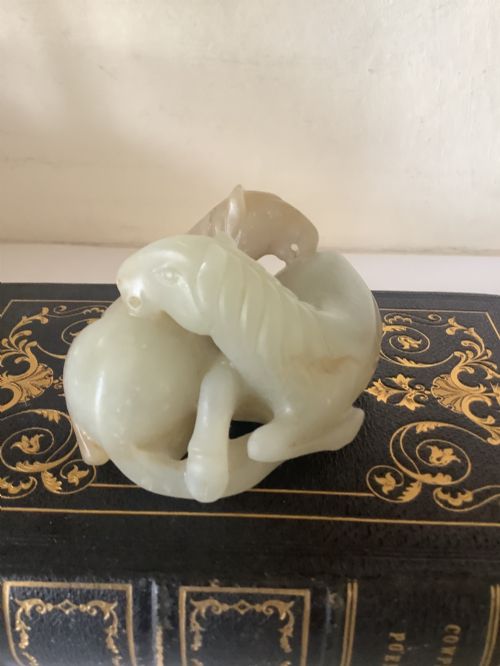
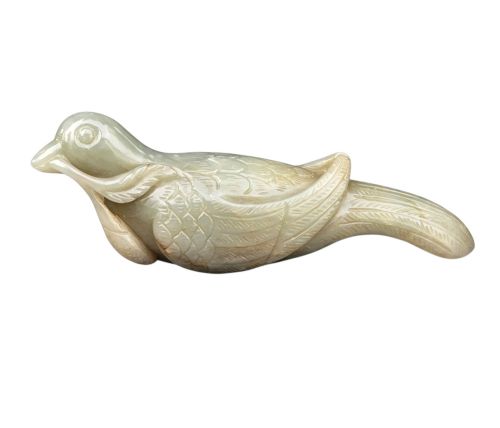
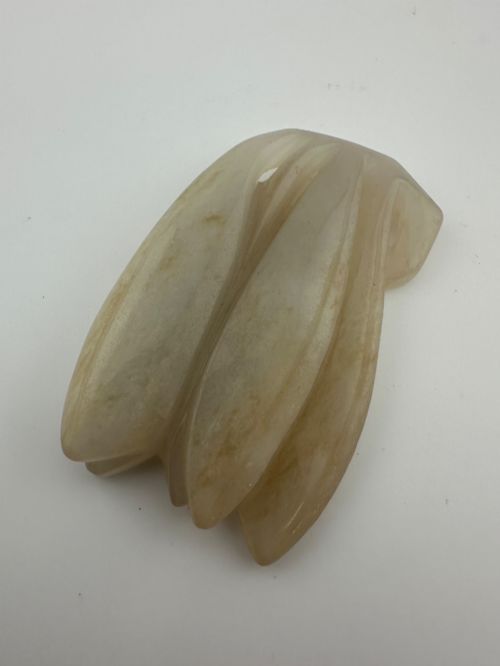
The most common forms you meet on this page are figural and animal carvings, such as cicadas, water birds, horses, roosters, pixiu dragons, and small boys holding birds' nests. These objects often incorporate specific cultural iconography rooted in traditional Chinese design.
Originating predominantly from Chinese workshops across the eighteenth, nineteenth, and early twentieth centuries, these works utilise durable hardstones shaped into plaques, pendants, and freestanding decorative objects. Some pieces are mounted on fitted hardwood stands or combined with silver mounts like magnifying glasses.
How they were made
Carvers shaped these pieces from tough mineral aggregates, primarily nephrite and jadeite, which resist conventional steel tools and require abrasive grit and rotary abrasion to cut and polish. The natural variations in the mineral dictate the final form, with pale celadon tones and deeper green hues guiding the subject matter.
Master artisans employed intricate relief and undercut techniques to realise complex scenes, such as mountain landscapes, aquatic motifs, and writhing double dragons. Supplementary materials occasionally appear, including silver for functional desk accessories and hardwood for custom display stands.
Hand Carved Jade Ornament Retail Price Guide 2026
Typical asking prices for hand carved jade ornament among the pieces listed under this phrase on Sellingantiques today, from the lower quarter to the upper quarter. They describe what is for sale here now, not the wider market.
Several carvings depict a small boy holding a bird's nest complete with an egg, capturing a fleeting moment of childhood curiosity in stone.
What varies in quality
The distinction between average and exceptional work lies in the depth and fluidity of the lapidary cut. Superior carvings exhibit crisp undercut details and anatomical precision in figures like horses, cicadas, and roosters, whereas lesser examples show flat planes and generalized outlines.
Material quality also dictates worth, as uniform pale celadon jade and translucent jadeite command attention compared to flawed or heavily included hardstone. The harmony between the natural stone inclusion and the chosen subject matter separates standard decorative objects from masterworks.
The Hand Carved Jade Ornament Glossary
- Celadon jade
- A pale green or grey-green variety of nephrite that was highly prized for imperial and scholar's objects. This tone often highlights the natural translucency of the stone.
- Nephrite
- One of the two distinct mineral species recognised as jade, known for its dense, tough fibrous microstructure. It tolerates intricate carving without shattering.
- Jadeite
- A pyroxene mineral that forms the second primary type of jade, valued for its bright coloration and vitreous lustre. It appears frequently in Republic Period pendants.
- Qing Dynasty
- The final imperial dynasty of China, lasting from sixteen-forty-four to nineteen-twelve. Many traditional scholar's carvings and aquatic motifs originate from this extended era.
- Pixiu
- A mythical hybrid creature in Chinese culture, often depicted with a winged lion-like body. These figures are carved as pendants or protective ornaments to attract wealth.
Hand Carved Jade Ornament: Frequently Asked Questions
How do I identify a Qing Dynasty piece?
Look for traditional motifs, specific celadon jade tones, and deep, patient hand-carved detailing consistent with eighteenth and nineteenth-century imperial workshops.
Compare the surface polish and the tool marks under magnification to distinguish period workmanship from later reproductions.
What is the difference between nephrite and jadeite?
Nephrite is a calcium-magnesium silicate with an interlocking fibrous structure that makes it extremely tough. Jadeite is a sodium-aluminum silicate that often displays a more granular texture and brighter green hues.
Both materials fall under the broader category of jade seen in these antique carvings.
How should I display a jade ornament?
Many sculptures and carvings are paired with custom hardwood stands that complement their base contours and elevate the piece safely on a desk or shelf.
Keep the items away from direct sunlight and extreme temperature fluctuations to protect the integrity of the hardstone.
What does Republic Period mean for these items?
The Chinese Republic Period spans from nineteen-initialize through nineteen-forty-nine, following the end of imperial rule. Pieces from this era often include pendants and decorative objects featuring traditional symbols with slightly adjusted stylistic conventions.
Craftsmanship during this time maintained high standards of hand carving in both jadeite and nephrite.