







Hand Carved Dog
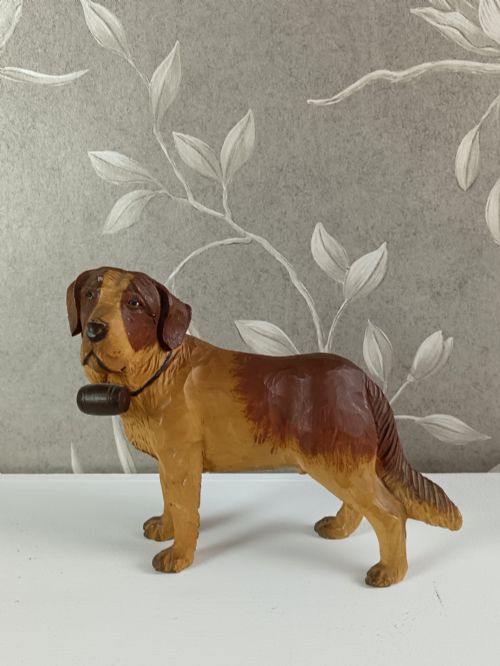
These hand carved dog sculptures and functional carvings bring character into a room through centuries of animal observation.
Hand Carved Dog
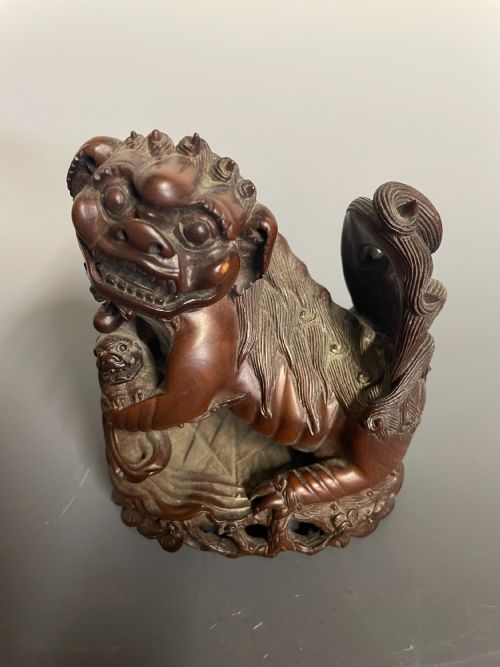
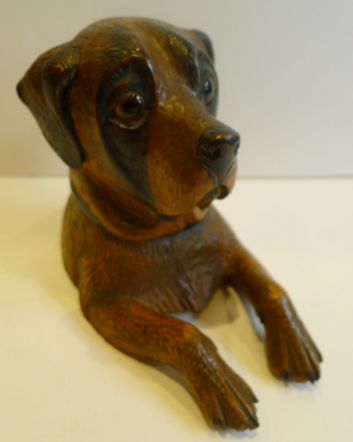
You are most likely to meet Black Forest wooden figures from the nineteenth century alongside Chinese boxwood and soapstone Foo dogs. These pieces range from practical humidores and inkwells to decorative sculptures and pairs of bookends.
The forms vary from realistic canine portraits to stylized mythical creatures like Dogs of Fo and temple guard dogs. Each piece reflects the specific regional carving traditions of its origin, whether Alpine folk art or Chinese export work.
Materials and carving techniques
Makers utilised timber, boxwood, lindenwood, and soapstone to shape these figures with hand tools. The wood carvings often employ traditional Black Forest techniques to render fur texture and facial expressions with high detail.
Stone pieces such as soapstone and Derbyshire alabaster rely on careful incision and smoothing to define the muscular forms of temple guards and canine figures. Some works incorporate applied paint or metal elements like steel fittings on andirons.
Hand Carved Dog Retail Price Guide 2026
Typical asking prices for hand carved dog among the pieces listed under this phrase on Sellingantiques today, from the lower quarter to the upper quarter. They describe what is for sale here now, not the wider market.
Recorded periods span from the eighteenth century through Victorian times up to nineteen-forty.
Assessing quality in carved figures
The distinction between average and superior pieces lies in the anatomical precision of the carving and the depth of expression in the animal's face. Skilled carvers captured muscular tension and lifelike posture rather than relying on stiff symmetry.
Condition and completeness of functional elements, such as inkwell inserts or matched pairs of bookends, influence the standard of the piece. The crispness of detail in the fur or stone defines the work of proficient workshops.
Bright And Sons·Maison F. Mack
The Hand Carved Dog Glossary
- Foo Dog
- A traditional Chinese guardian lion depicted as a stylized canine creature. These sculptures often protect doorways or serve as desk ornaments.
- Black Forest
- A nineteenth-century European carving style originating from the wooded mountain region. Pieces usually feature naturalistic animals rendered in dark wood.
- Soapstone
- A soft metamorphic rock utilised for intricate oriental carvings and seals. Its smooth texture allows for detailed surface work.
- Humidor
- A specialised box designed to store cigars while maintaining humidity. Carved wooden versions often incorporate canine motifs on the lid.
Hand Carved Dog: Frequently Asked Questions
What is a Foo dog?
A Foo dog is a traditional Chinese architectural guardian representing a mythical lion rather than a domestic hound. Artisans carved these figures to protect sacred spaces and homes.
They appear in materials like boxwood, soapstone, and root wood, often acting as temple guards or decorative desk objects.
How do I date a Black Forest dog carving?
Nineteenth-century Black Forest pieces typically display deep relief carving in lindenwood or walnut with realistic textures. Artisans focused on dynamic poses like hunting dogs or rescue animals.
Examine the underside and tool marks to understand the production period, as later reproductions often lack the same crispness of detail.
Where were soapstone dog seals used?
Soapstone dog seals served as functional desk accessories in traditional Chinese settings. Scholars and officials utilised them to stamp documents with personal or official signatures.
The soft nature of soapstone allowed carvers to execute intricate details around the base and the guardian dog figure on top.
How should I care for antique wood carvings?
Antique wood carvings require stable environmental conditions away from direct sunlight and excessive heat. Sudden humidity changes can cause timber and boxwood to split.
Dust the surface gently with a soft, dry brush and avoid applying modern chemical polishes that might damage the historic finish.