
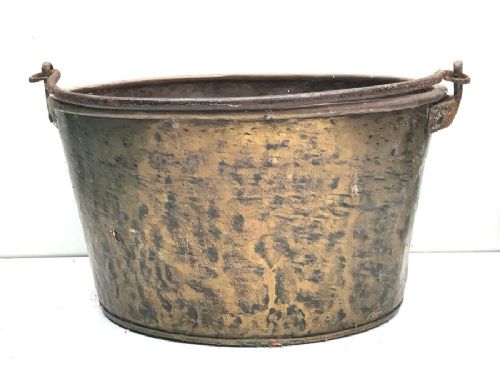
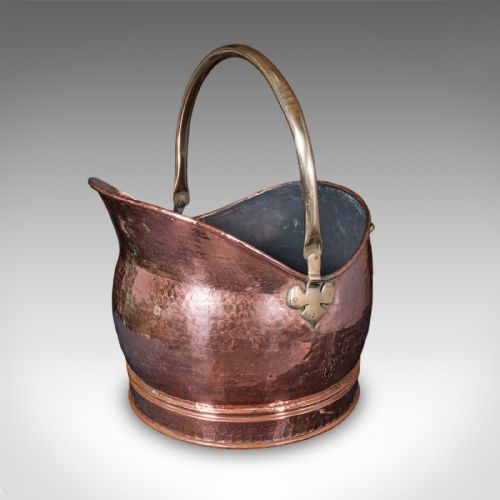
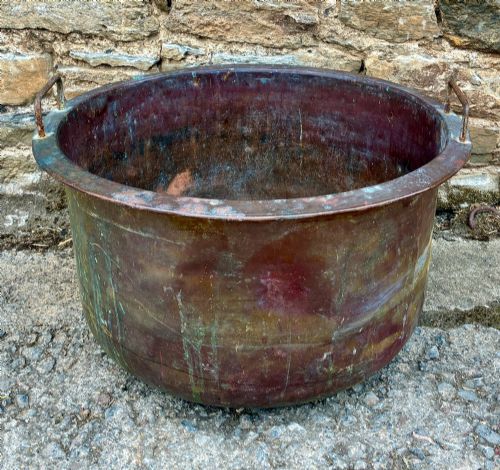
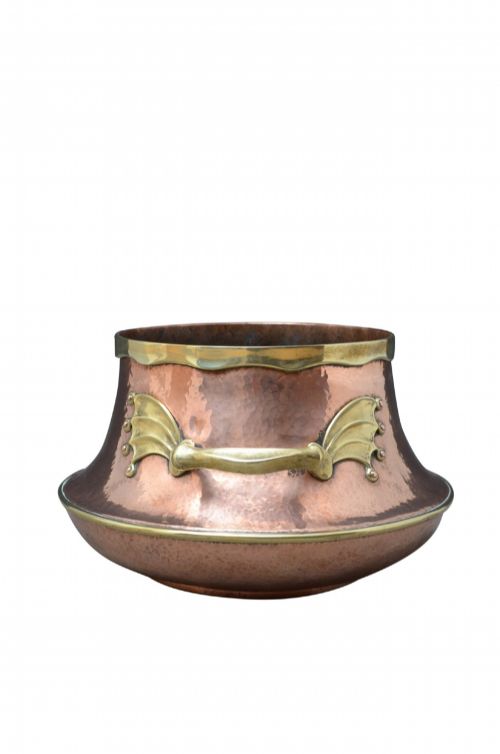


Hammered Copper Log Bucket
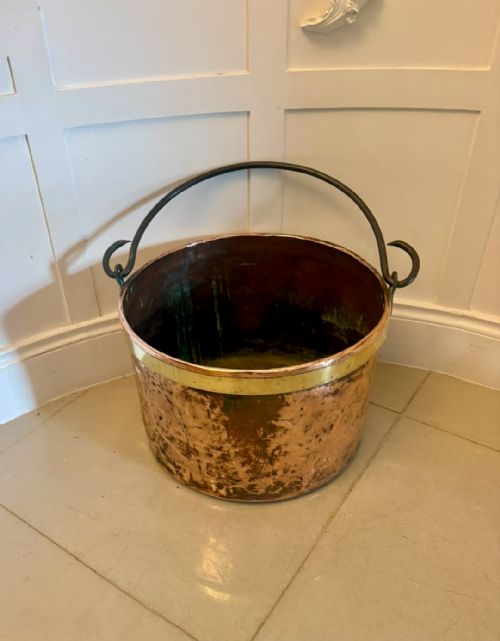
A hammered copper log bucket brings warmth and utility to a hearth, combining robust metalwork with practical fireside storage.
Hammered Copper Log Bucket
A hammered copper log bucket serves primarily as a fireside vessel for holding fuel, drawing on traditions of domestic utility from the eighteenth century onwards. Buyers searching this phrase encounter sturdy containers designed to sit beside an open fire, often sharing forms with coal scuttles, bins, and cauldrons.
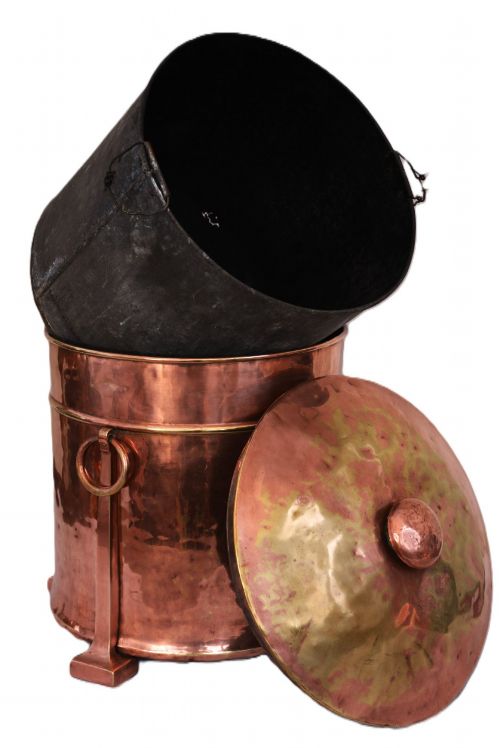
The pieces appearing on this page span several distinct periods, with Victorian and Arts and Crafts examples featuring strongly alongside Georgian and later twentieth-century iterations. Forms range from simple cylindrical bins to helmet-shaped scuttles and riveted vessels mounted on wrought iron stands.
Makers and manufacturers adapted utilitarian vessels like grain measures and wash tubs into decorative fireside accessories, incorporating brass handles, swing bails, and riveted seams. These objects bridge the gap between heavy industrial service and domestic craft, retaining their structural integrity through decades of use.
How they were made
Construction relies upon heavy-gauge sheet copper beaten by hand or machine to shape the body, frequently finished with visible hand-beaten or hammered textures that catch the light. Craftsmen joined the metal plates using robust rivets in iron or brass, ensuring the walls could withstand the heavy weight of logs and coal.
Wrought iron and brass appear frequently as complementary materials, utilised for swing handles, paw feet, decorative bands, and structural reinforcement. Many examples incorporate folded rims and soldered or brazed seams, combining utilitarian strength with refined surface detailing characteristic of the Arts and Crafts movement.
What varies in quality
Quality rests upon the thickness of the metal plate and the integrity of the construction, distinguishing substantial vessels from lighter domestic containers. Heavier copper retains its shape better under the impact of logs and resists denting around the base and rim.
The refinement of the hand-beating and the detailing of the mounts set finer pieces apart. Well-executed riveting, balanced brass handles, and harmonious proportions indicate a higher grade of craftsmanship, whether produced in a Victorian workshop or an Arts and Crafts studio.
The Hammered Copper Log Bucket Glossary
- Dinanderie
- A term for various objects made of brass, copper, or bronze, often associated with vessel forms and decorative metalwork.
- Ferrat
- A traditional metal container or bucket, frequently utilised in continental or regional domestic settings for carrying materials.
- Helmet scuttle
- A fireside coal container featuring a high back and a tapered spout resembling a helmet, designed for controlled pouring.
- Jardiniere
- An ornamental pot or stand designed to hold plants or flowers, sometimes adapted from or resembling heavy metal vessels.
- Riveted
- Joined with metal pins hammered flat at the ends, providing visible structural reinforcement along the seams of copper bodies.
Hammered Copper Log Bucket: Frequently Asked Questions
What is a hammered copper log bucket?
A hammered copper log bucket is a sturdy fireside container designed to store firewood near an open hearth. These vessels combine hand-beaten metal bodies with practical handles for everyday domestic use.
They draw on historical forms including coal bins, scuttles, and cauldrons, utilising durable copper and brass construction to withstand heavy fuel loads.
How do I care for antique copper?
Antique copper requires minimal intervention, typically needing only a gentle dusting with a soft cloth to maintain its surface. Many collectors prefer to leave the natural aged patina undisturbed.
Avoid harsh chemical cleaners or abrasive pads that strip away historical character and thin the original metal plate over time.
Are these buckets waterproof?
While many historical copper vessels were built to hold dry fuel or grain, some retain tight riveted seams that can hold water. However, modern use as a planter requires checking individual interiors for historical repairs or solder.
Using a modern inner liner is recommended if placing live plants or wet logs inside an antique piece to protect the historic metal.
How do I date a copper log bin?
Dating relies on manufacturing techniques, such as hand-beaten marks versus machine rolling, alongside structural styles like Georgian proportions or Arts and Crafts rivets. Examining the type of handles and fastening methods helps place the piece within the nineteenth or early twentieth century.
Comparing the rim construction and overall weight against known period examples provides further clarity on the era of production.