


Hammered Brass Log Bin
A hammered brass log bin brings warmth and texture beside a hearth, storing fuel with practical sturdiness.
Hammered Brass Log Bin
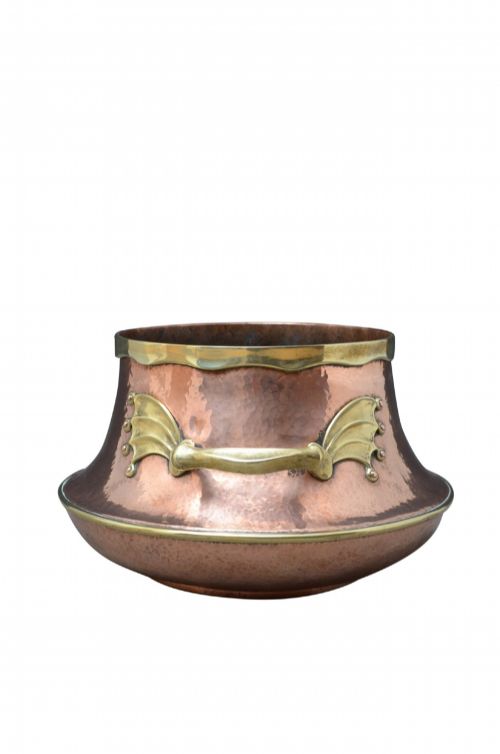
A hammered brass log bin is a fireside vessel designed to hold fuel near an open hearth, drawing on Victorian and Arts and Crafts forms. These containers serve as both practical storage and decorative metalwork, often appearing alongside copper and iron accessories.
Most examples found here date from the nineteenth century into the early twentieth century, spanning Victorian, Art Nouveau, and Arts and Crafts styles. They sit within broader categories of fireside buckets, coal boxes, and jardinieres.
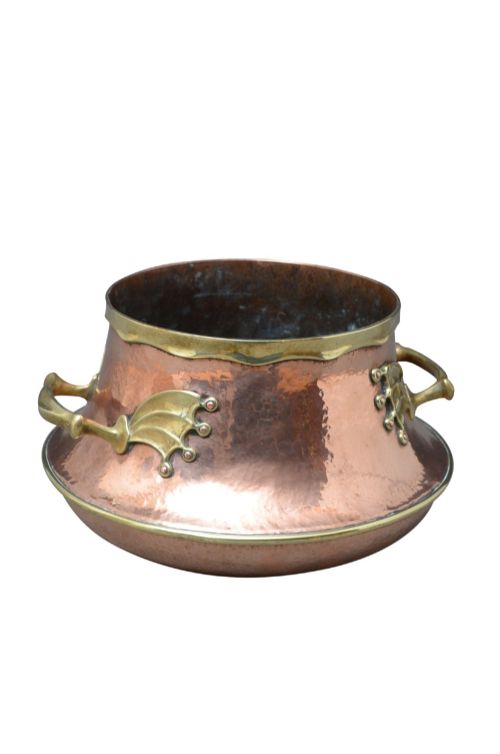
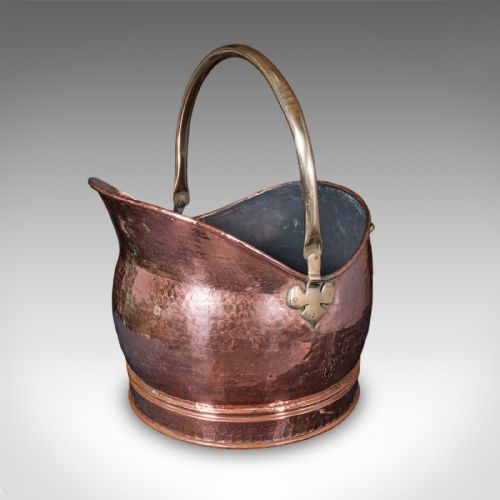
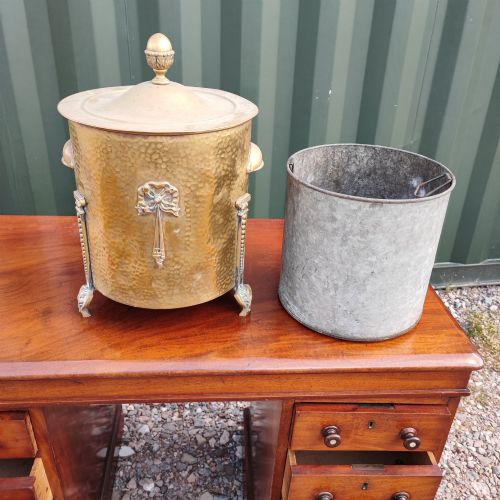
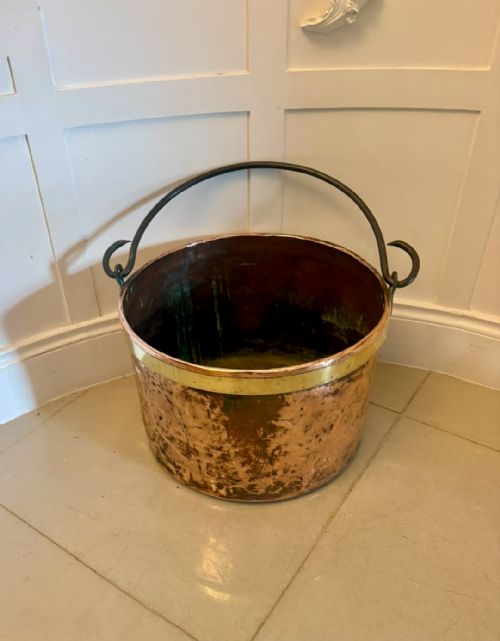
Buyers will encounter cylindrical bins, helmet-shaped scuttles, and cauldrons, frequently showing handbeaten or embossed surfaces. These pieces bridge the gap between utilitarian coal receivers and ornamental plant vessels.
How they were made
Maker's hands shaped sheet brass and copper using cold-working techniques, hammering the metal against anvils to create resilient walls and textured surfaces. This handbeaten or embossed finish strengthens the sheet while catching the firelight.
Construction often involved joining rolled metal cylinders to reinforced bases, sometimes combining brass with copper accents, iron handles, or wooden elements. Rivets and seams secure the bodies, ensuring they could bear the weight of heavy logs or coal.
Some nineteenth-century makers repurposed cooking pots and cauldrons into fireside log bins, giving old kitchenware a warm second act by the hearth.
What varies in quality
Subtlety and weight distinguish finer vessels from simpler production pieces, particularly in the gauge of the metal and the crispness of the hand-hammered texture. Heavier brass retains its structural integrity better over generations of daily fireside use.
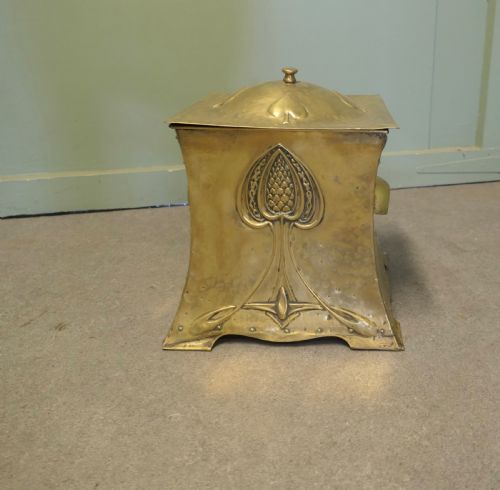
Decorative detailing, such as integrated spade motifs, embossed patterns, or well-wrought iron handles, separates standard utilitarian boxes from more artistic Arts and Crafts or Art Nouveau examples. The articulation of rims, seams, and applied feet shows the maker's care.
The Hammered Brass Log Bin Glossary
- Dinanderie
- Ornamental brass or copper ware, typically beaten or embossed, originating from the Belgian city of Dinant. This term covers various medieval and revival vessels.
- Jardiniere
- An ornamental pot or receptacle for holding plants or flowers. These vessels often share forms with log bins and coal buckets.
- Helmet coal scuttle
- A fireside bucket with a flared rim and shaped mouth resembling a classical helmet, designed for pouring fuel cleanly. They usually include a swinging handle at the top.
- Embossed
- Raised ornamentation created by hammering or pressing a design from the reverse side of the metal sheet. This technique adds tactile depth to the body.
Hammered Brass Log Bin: Frequently Asked Questions
What is a hammered brass log bin?
A hammered brass log bin is a rigid metal container used beside a fireplace to hold wood or coal. They combine functional fuel storage with decorative metalwork.
Most examples date from the Victorian period through the early twentieth century, reflecting styles like Arts and Crafts and Art Nouveau.
How were these bins used originally?
These vessels stood beside domestic hearths to store and transport solid fuel such as logs, peat, or coal. Their sturdy construction allowed them to handle heavy, abrasive materials daily.
Over time, many similar vessels have also been adapted to serve as planters or interior storage bins.
How do I care for antique brass?
Antique brass benefits from gentle dusting and minimal interference with its natural surface evolution. Harsh chemical cleaning strips away the historic patina that develops over decades.
Applying a light, protective wax can help preserve the metal without erasing the character left by age and handling.
How do I tell different periods apart?
Victorian pieces often rely on robust proportions and helmet shapes, while Arts and Crafts examples emphasise hand-beaten textures and simple construction. Art Nouveau vessels introduce flowing, organic motifs and softer, rounded outlines.
Examining the fixings, rivet styles, and surface decoration helps place an item within its nineteenth or early twentieth-century context.