
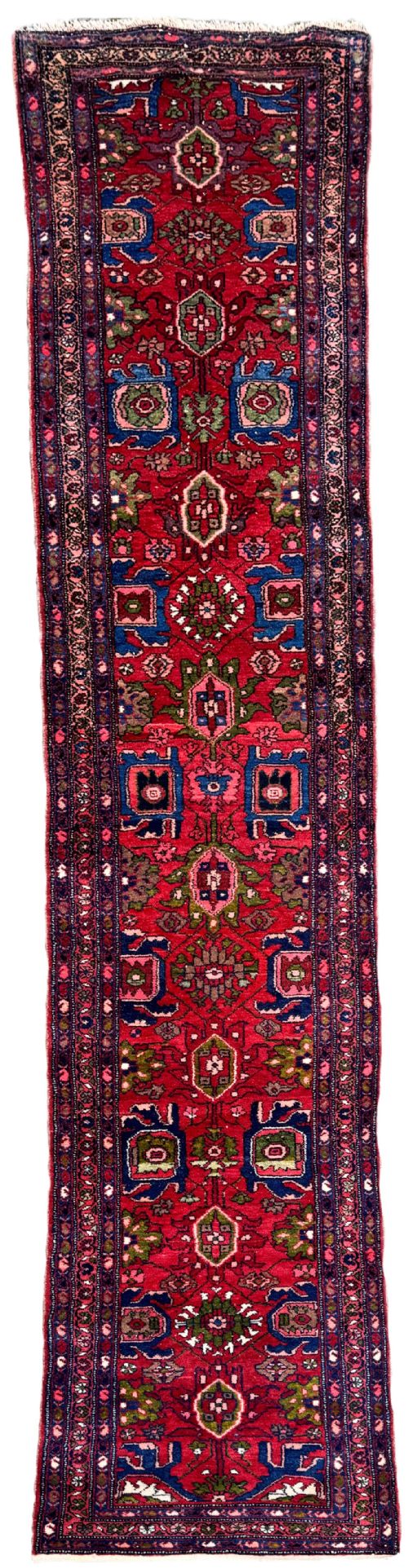
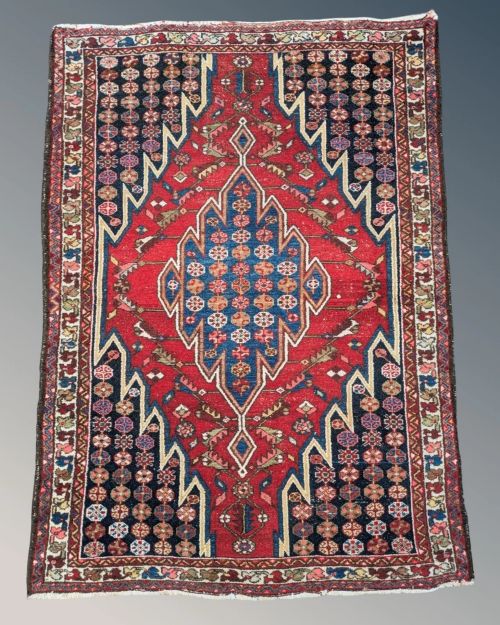
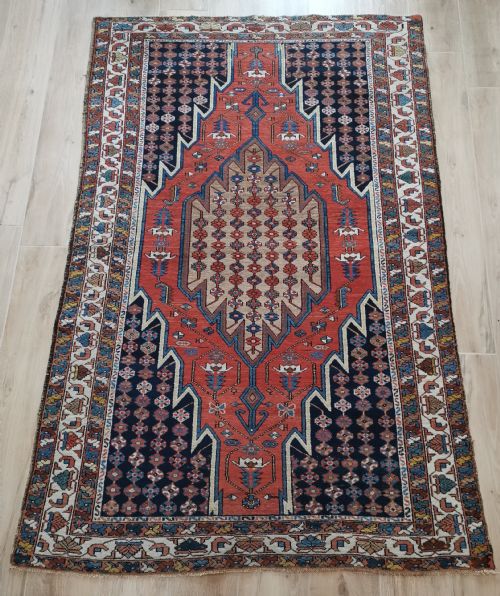
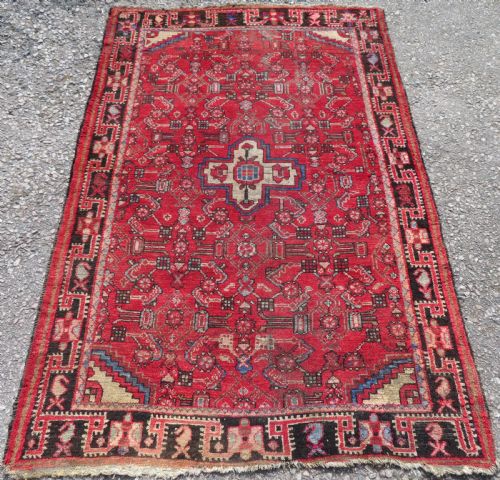
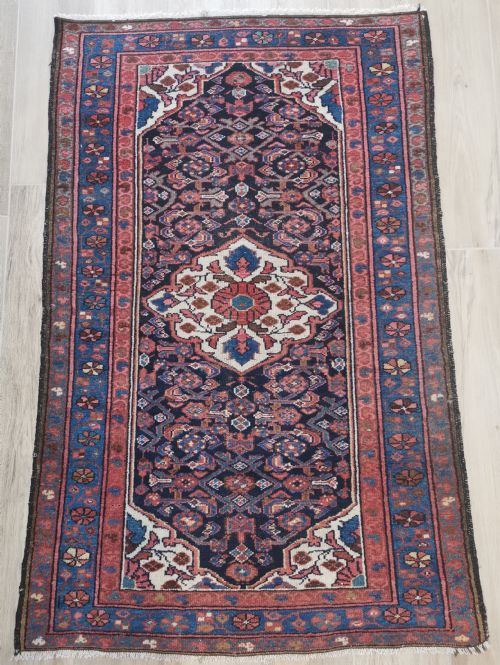
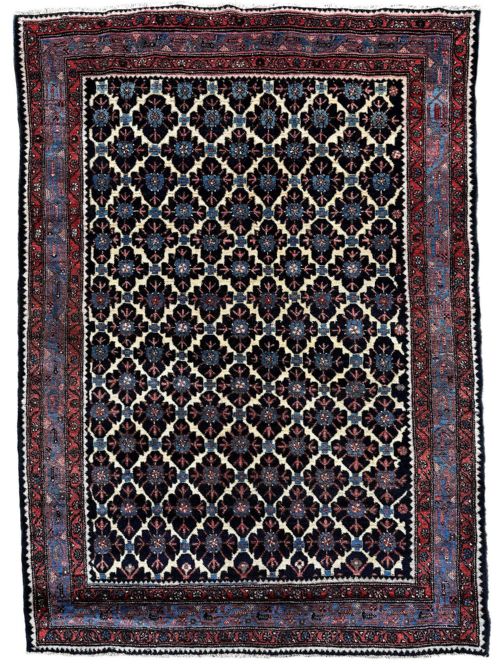


Hamadan Carpet Runner
A hamadan carpet runner brings resilient village wool and traditional Persian patterns directly to long hallways and narrow rooms.
Hamadan Carpet Runner
A hamadan carpet runner is a hand-woven floor covering originating from the West Persian region of Hamadan and its surrounding villages. These pieces span late nineteenth-century origins up to the 1930s, reflecting traditional Persian tribal and village aesthetics.
Buyers seeking this phrase encounter elongated formats designed specifically for hallways and corridors. Alongside distinct runners, the selection includes related village rug formats, narrow runners, and large kelleh carpets woven in the same regional tradition.
Distinctions in Quality
Quality rests in the density of the wool pile and the precision of the village design, from floral lattice arrangements to geometric tribal motifs. Finer pieces demonstrate tighter knotting and greater clarity in pattern execution across the length of the runner.
The integrity of the original edges and ends dictates the overall condition grade. Examples retaining their natural side cordings and full pile depth command greater appreciation among collectors of traditional Persian weaving.
Kurdish weavers and village craftspeople left subtle variations in every narrow format, ensuring no two corridors share the exact same rhythm.
The Hamadan Carpet Runner Glossary
- Runner
- A long, narrow carpet format specifically proportioned for corridors, hallways, and stairs. These pieces measure significantly longer than they are wide.
- Kelleh
- A large-sized rectangular carpet format originating from Persian village workshops. They provide substantial floor coverage while maintaining traditional tribal designs.
- Pile
- The upright yarn loops that form the usable surface of the carpet. Thick pile wool provides both comfort underfoot and durability against wear.
- Mazlaghan
- A style of village rug and runner associated with the Hamadan region. These pieces share weaving techniques and materials with broader Hamadan output.
Hamadan Carpet Runner: Frequently Asked Questions
Where were these runners made?
These runners were woven in the Hamadan region of West Persia, encompassing various surrounding villages and tribal districts.
Local weavers utilised traditional methods and locally sourced materials to produce distinct floor coverings for domestic and export use.
How do I care for an old wool runner?
Regular gentle vacuuming without a rotating brush roll helps maintain the wool pile and removes trapped dust particles.
Professional cleaning tailored to antique textiles preserves the natural lanolin in the wool and protects the foundation.
What periods do these pieces date from?
The available selection primarily spans the late nineteenth century through to the 1930s.
Earlier examples from the 1880s and 1890s sit alongside pieces produced across the successive three decades.
Are these runners suitable for hallways?
Their narrow, elongated proportions make them well suited for hallways, corridors, and transitional spaces.
Dense wool construction provides the resilience needed to withstand regular walking traffic over extended periods.