

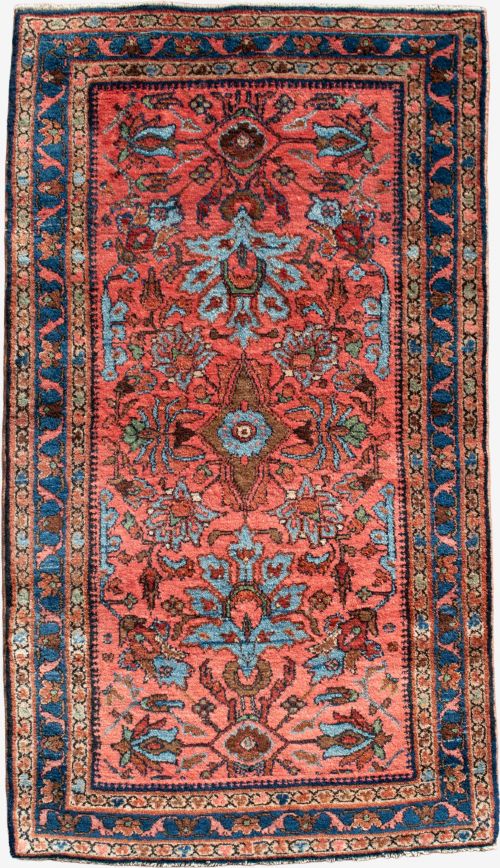
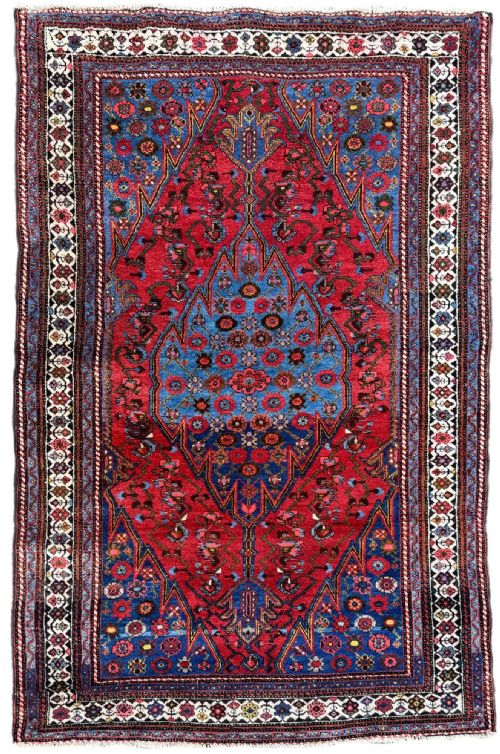
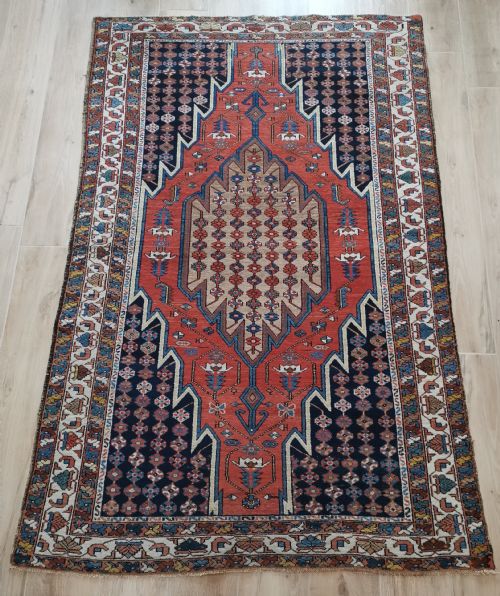
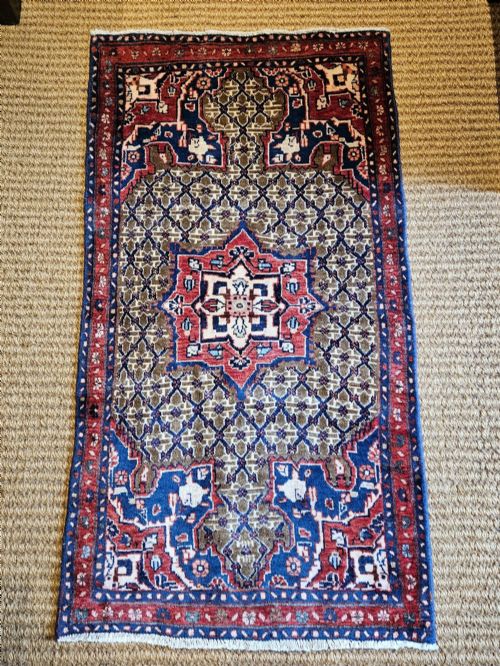
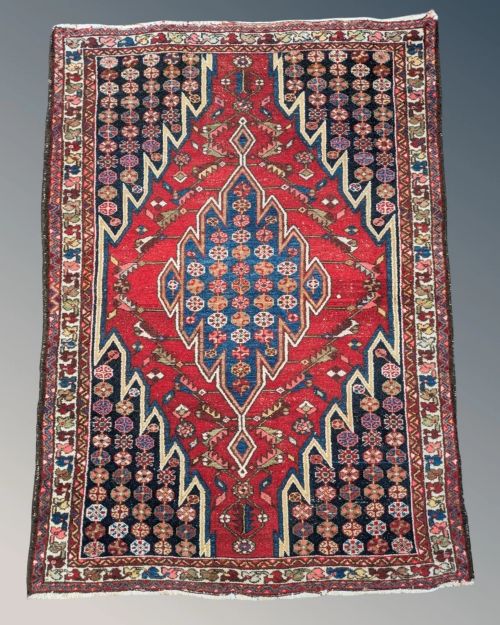
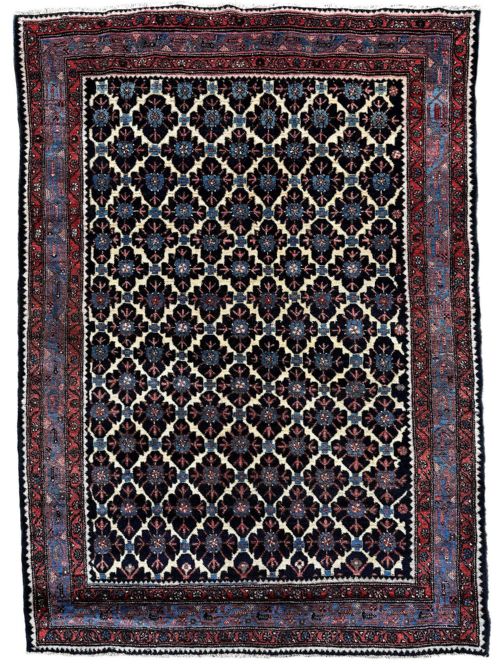
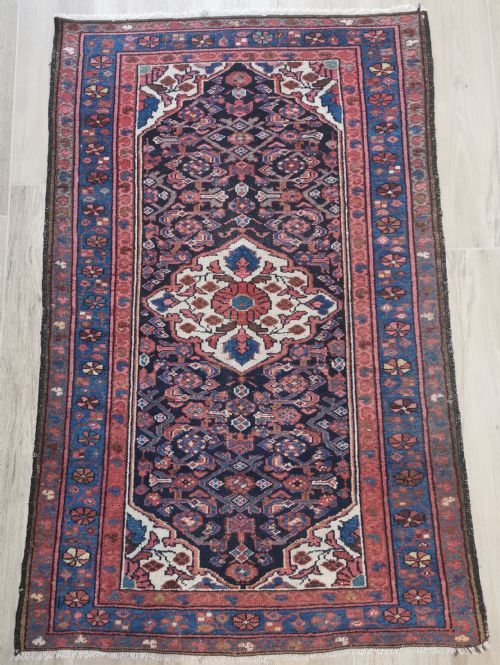
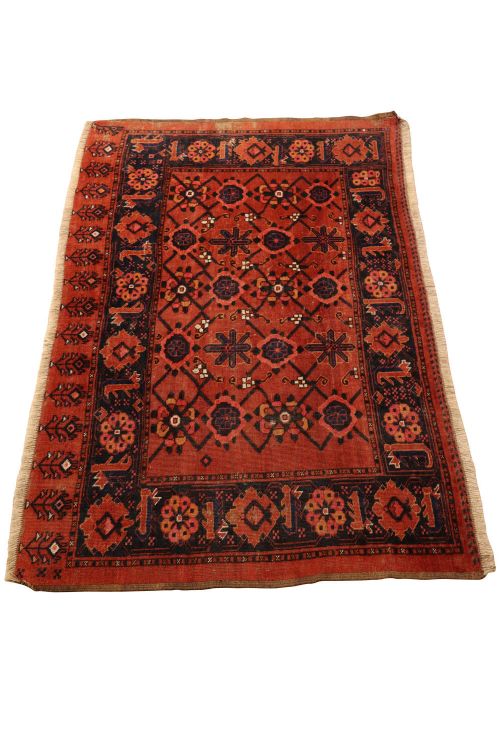
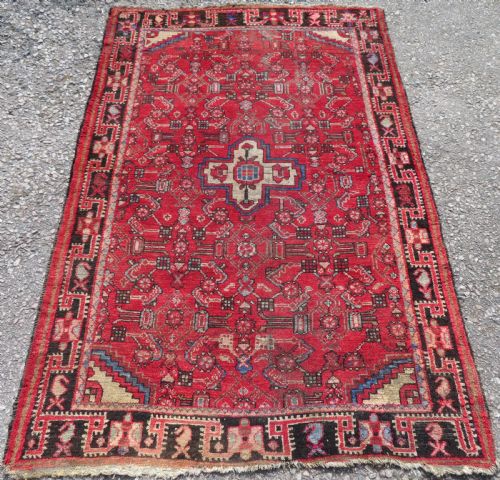


Hamadan Area Rug
These hamadan area rug pieces bring authentic West Persian tribal character and village craft into a room.
Hamadan Area Rug
A hamadan area rug originates from the vast weaving hub of western Persia, encompassing numerous villages that produce distinct tribal and traditional carpets. Buyers seek these pieces for their geometric patterns, medallion layouts, and rich connection to regional weaving traditions.
The selections encountered here span from the late nineteenth century through the mid-twentieth century. Examples include works from specific regional centres such as Malayer, Mazlaghan, Borodjert, and Sanjan, alongside pieces woven by Kurdish weavers in the broader Hamadan region.
Most entries take the form of domestic floor coverings, ranging from compact hearth-sized mats to room-scale carpets. The construction reflects utilitarian village production designed for daily household use rather than urban court workshops.
What separates the finest examples
Pile density and knot count dictate the crispness of the geometric lattice and floral motifs. Finer village output displays greater precision in drawing and a more substantial, tactile weight underfoot.
The integrity of the wool and the vibrancy of the remaining dye palette influence overall visual impact. Wear patterns and historical restorations shape the character of older pieces, where even distressed surfaces retain artistic merit.
Hamadan Area Rug Retail Price Guide 2026
Typical asking prices for hamadan area rug among the pieces listed under this phrase on Sellingantiques today, from the lower quarter to the upper quarter. They describe what is for sale here now, not the wider market.
Listings span several decades, featuring pieces dated across the 1870s, 1890s, 1900s, 1910s, 1920s, 1930s, and 1940s.
The Hamadan Area Rug Glossary
- Hamadan
- A major West Persian market town and collection centre for rugs woven in hundreds of surrounding villages. It denotes a regional style rather than a single specific weaving community.
- Malayer
- A style associated with a district south of Hamadan known for finer floral designs and supple wool. Pieces from this origin often show refined medallion or all-over boteh patterns.
- Mazlaghan
- A village type within the broader region characterised by distinctive geometric medallion formats and contrasting red and white fields. They represent a bolder aesthetic within village weaving.
- Kurdish
- Pertaining to rugs woven by Kurdish tribal groups settled in the Hamadan region. These pieces frequently feature sturdy structures and robust geometric field ornaments.
- Hand-Knotted
- A technique where individual strands of wool are tied by hand around warp threads before being sheared. This method ensures durability and allows intricate patterns to form.
Hamadan Area Rug: Frequently Asked Questions
What is a hamadan area rug?
A hamadan area rug is a hand-knotted floor covering originating from the West Persian market town of Hamadan and its surrounding weaving villages. These pieces reflect traditional tribal and village artistry, using wool piles on cotton foundations.
They capture the domestic craft traditions of the region through distinct geometric designs, floral lattices, and regional variations like Malayer and Mazlaghan.
How do I date a hamadan rug?
Dating these rugs involves examining structural materials, dye palettes, and stylistic nuances recorded in the weave. Pieces from the late nineteenth century often display softer wool and vegetable dyes, while early twentieth-century examples introduce varied regional village characteristics.
Construction traits, such as the tightness of the weave and the specific handling of borders, help place a rug within decades like the 1900s, 1920s, or 1930s.
Where were these rugs made?
These rugs were produced in West Persia, centring on the city of Hamadan and numerous outlying villages across the province. Local weavers in districts such as Borodjert, Sanjan, and Malayer contributed distinct local styles to the regional output.
Kurdish weavers operating within the same geographical area also produced rugs that entered the Hamadan trading sphere.
How do I live with an antique rug?
Living with an antique wool rug involves placing it in low-to-moderate traffic areas to preserve the historic pile and natural dyes. Using a quality underlay prevents slipping and cushions the foundation against floor wear.
Regular gentle vacuuming without rotating brush heads helps maintain the wool surface while protecting the hand-knotted structure from unnecessary strain.
What distinguishes Malayer from Hamadan?
Malayer rugs originate from a specific southern district within the broader Hamadan sphere and typically feature finer knotting and more delicate floral or boteh motifs. Standard Hamadan pieces often lean towards bolder geometric medallions and heavier village wool.
Both share foundational Persian techniques, but Malayer examples frequently exhibit a more supple handle and refined drawing style.