





Hallway Wood Chairs
Hallway wood chairs combine practical entrance seating with striking carved detail, ranging from strict mahogany designs to robust oak settles.
Hallway Wood Chairs
When buyers search for hallway wood chairs, they encounter practical timber seating designed for entrances, passages, and landings. The selection spans distinct forms, from individual side chairs and armchairs to benches, settles, and window seats. Mahogany and oak dominate these listings, appearing across 19th Century, Victorian, and Georgian periods.
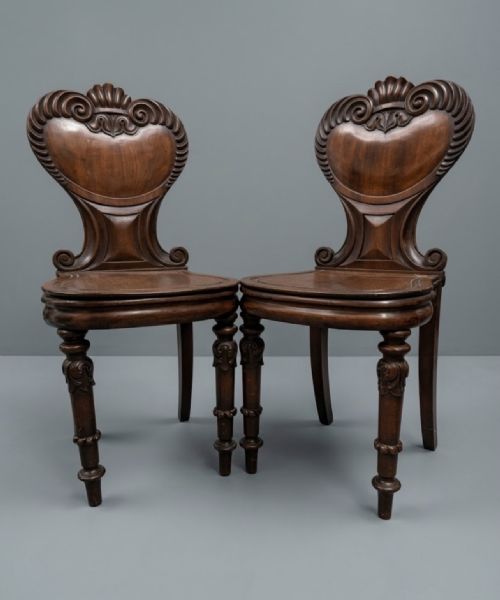
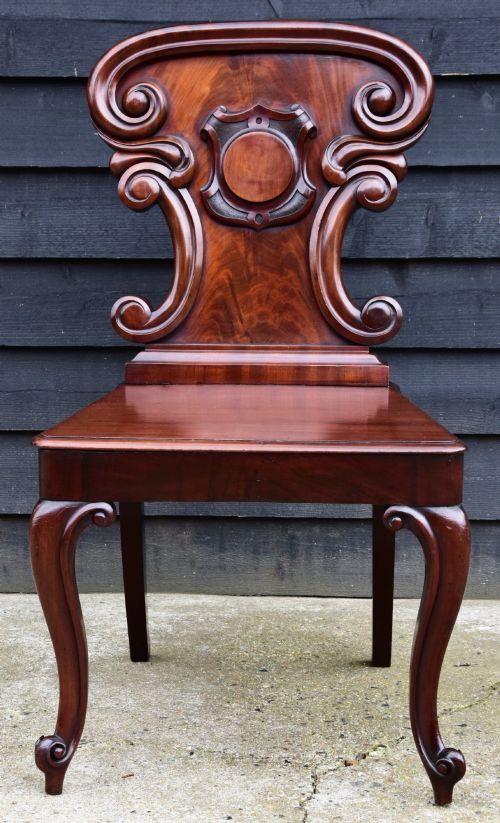
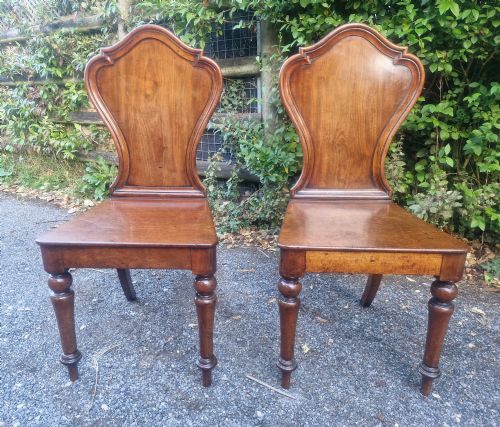
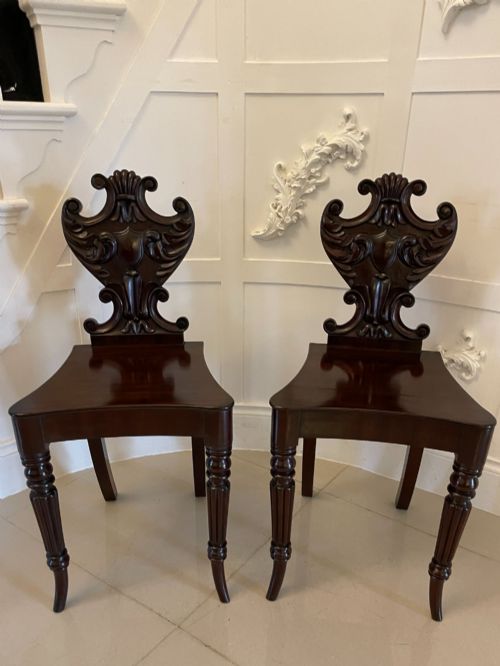
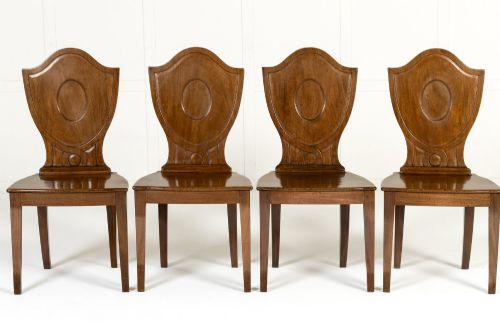
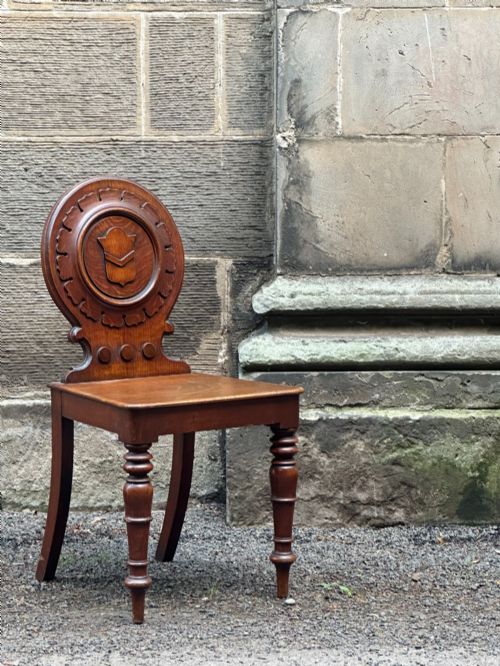
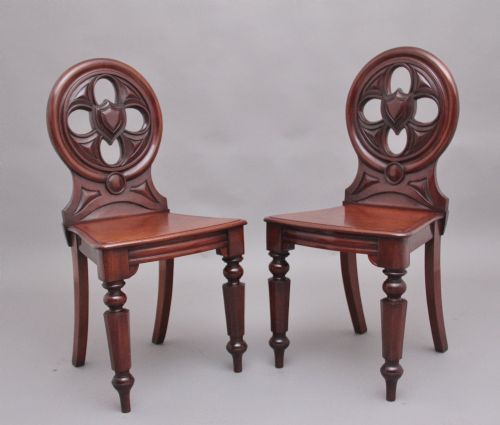
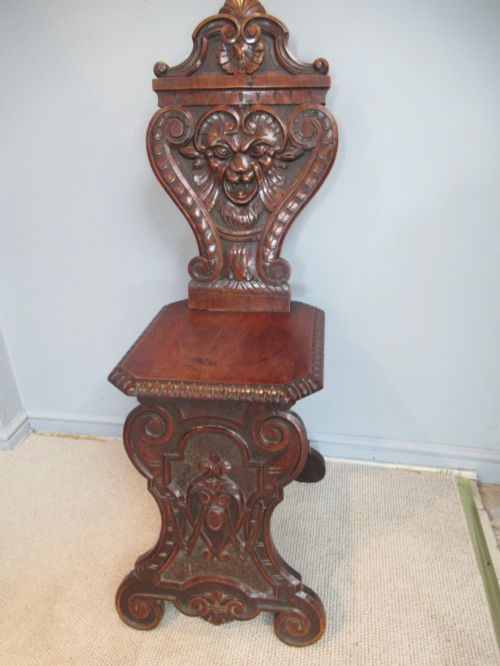
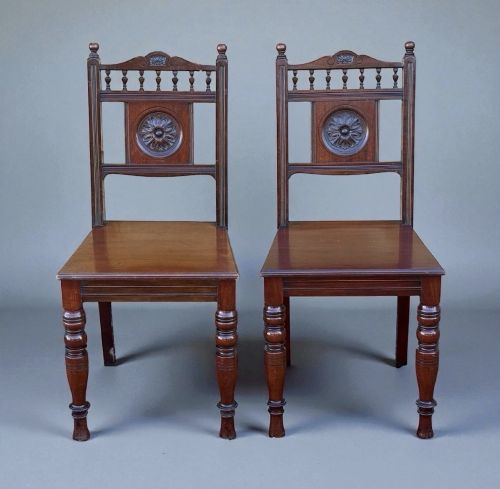
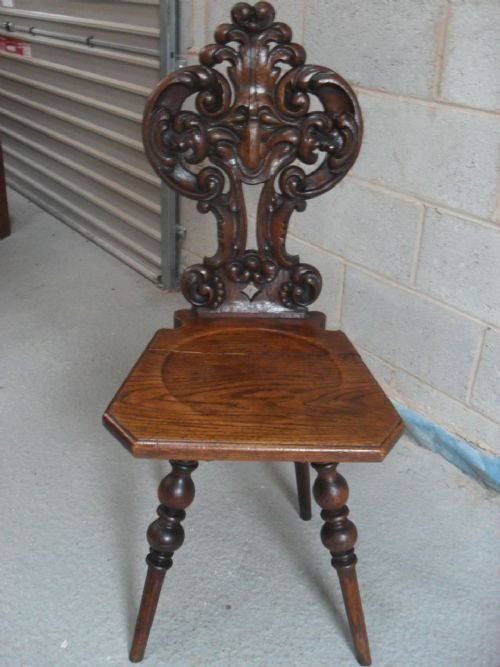
Mahogany examples frequently feature carved shield backs, shell motifs, and solid timber panels typical of formal entrance furniture. Oak pieces lean toward heavier revival styles, including Jacobean and Gothic influences, alongside rustic country benches. Buyers are most likely to meet Victorian and 19th Century mahogany hall chairs, often presented in matched pairs or small sets.
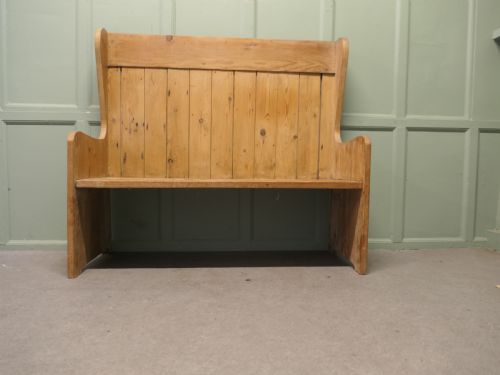
Benches and settles introduce broader seating options into the category, constructed from pine, softwood, and oak. These variants provide high backs or convertible monk bench configurations suited to traditional hallways. Side chairs and elbow chairs complete the range, offering compact footprints for narrow spaces.
Materials and Construction
Makers relied primarily on dense hardwoods like mahogany and oak to withstand regular entrance use. Softwoods and pine appear in utilitarian country settles and benches, whilst fruitwood and maple occasionally shape regional or specialised forms. Solid timber construction ensures stability, avoiding veneered surfaces in traditional hall chair backs.
Carving defines the ornamentation, utilising deep relief work on shield backs, crest rails, and solid seats. Joinery employs traditional techniques such as mortise and tenon joints to secure uprights and heavy seats. Timber surfaces display varied finishes, from polished mahogany to waxed or untouched oak.
Hallway Wood Chairs Retail Price Guide 2026
Typical asking prices for hallway wood chairs among the pieces listed under this phrase on Sellingantiques today, from the lower quarter to the upper quarter. They describe what is for sale here now, not the wider market.
Some heavy oak settles double as tables, allowing medieval monks and Victorian villagers alike to dine off their own seating.
Distinctions in Quality
Depth and crispness of the carved detail separate standard pieces from exceptional examples. Superior items exhibit sharp relief work on shield backs and crests, whereas lesser pieces show softer, shallower execution. The choice of figured mahogany or well-grained oak elevates the visual presence of the timber.
Proportion and structural integrity dictate the standing of a piece within the range. Refined examples maintain balanced proportions and sturdy leg turnings, while utility seating prioritizes simple function over decorative flourish.
The Hallway Wood Chairs Glossary
- Shield back
- A chair back shaped like a heraldic shield, frequently found in 19th Century mahogany hall chairs. This design provides a flat wooden panel suited for painted crests or carved decoration.
- Settle
- A wooden bench featuring a high solid back and enclosed arms to block draughts. These pieces often incorporate hinged seats forming storage boxes beneath.
- Monk bench
- A convertible piece of furniture that transforms from a bench with a high back into a table. The back tilts forward over the arms to create a flat surface.
- Regency
- An English design style dating from the early 19th Century, characterised by classical restraint and polished mahogany surfaces. Pieces from this period often display clean architectural lines.
- Gothic Revival
- A 19th Century style drawing inspiration from medieval architecture, featuring pointed arches, tracery, and heavy carved oak. This aesthetic appears frequently in Victorian hall chairs.
Hallway Wood Chairs: Frequently Asked Questions
Where did hallway chairs stand?
These chairs stood in entrance halls, corridors, and landings to offer brief seating for callers and residents.
Because entrance spaces were transitional, the furniture prioritized upright posture and sturdy timber construction over deep upholstery.
How do I spot a Georgian chair?
Georgian pieces display the restraint and proportion characteristic of the 18th century and early 19th century.
They frequently employ figured mahogany with disciplined carving, pre-dating the heavier ornamentation of the high Victorian era.
Are these chairs comfortable?
Most historic hall chairs feature solid wooden seats without upholstery, designed for short-term sitting rather than lounging.
Benches and settles with padded fabric or fireside placement offer softer seating alternatives within the category.
Why are pairs common?
Hall chairs were traditionally produced in matching pairs or sets to stand symmetrically against entrance walls.
Original pairs remain sought after for balancing the proportions of long hallways and formal landings.