




Hallway Crystal Pendant Light
These hallway crystal pendant light fixtures catch the light in narrow spaces and bring period presence to a threshold.

Hallway Crystal Pendant Light
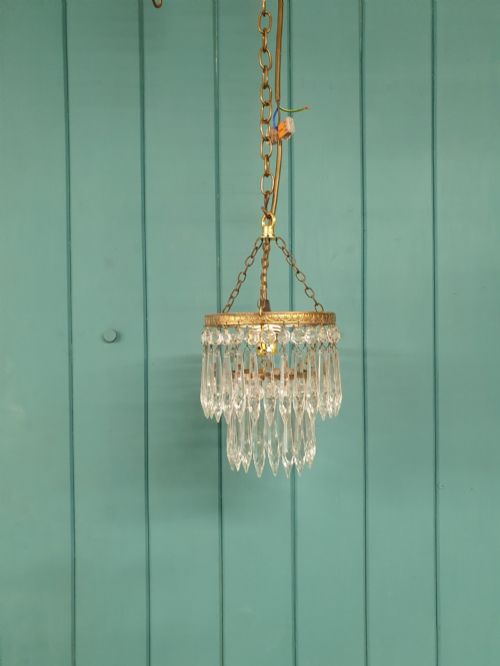
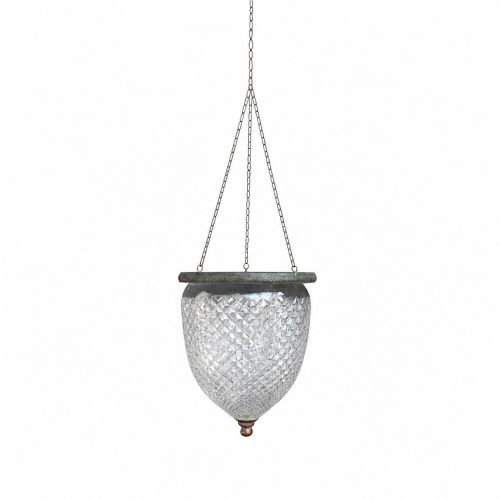
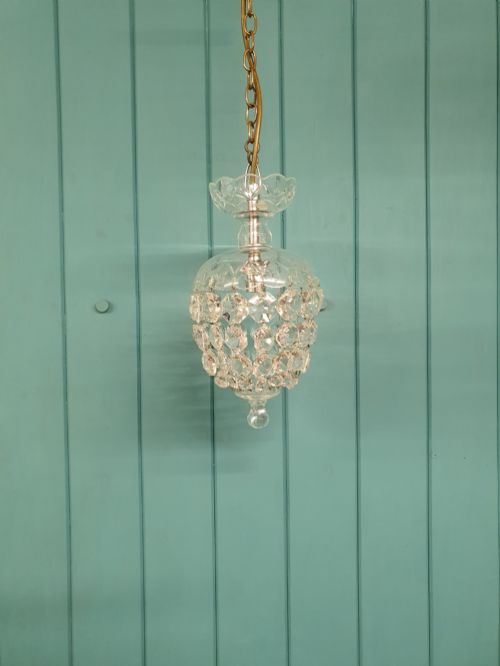
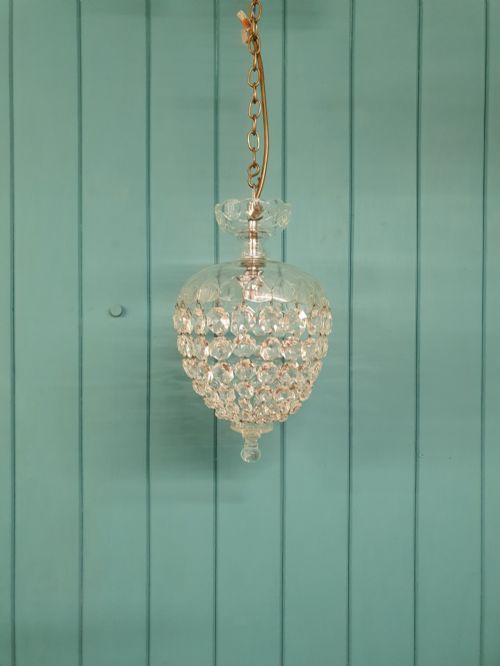
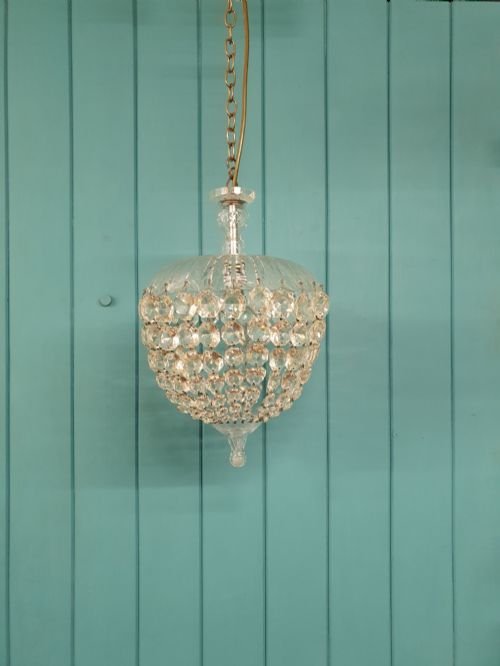
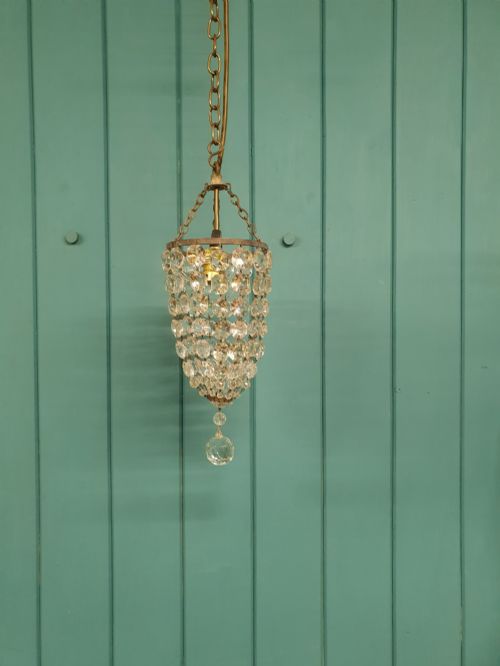
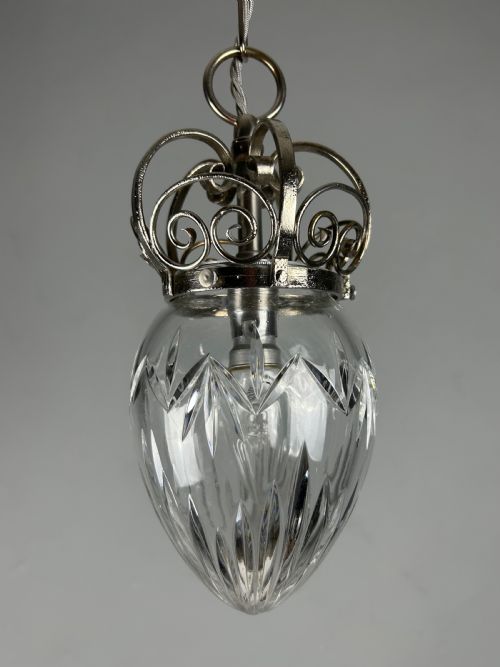
A hallway crystal pendant light brings focused sparkle to entrances and narrow passages through compact hanging forms. Buyers hunting for a hallway crystal pendant light will discover compact bag chandeliers, dome top fixtures, and bell jar lanterns designed specifically for restricted ceiling heights.
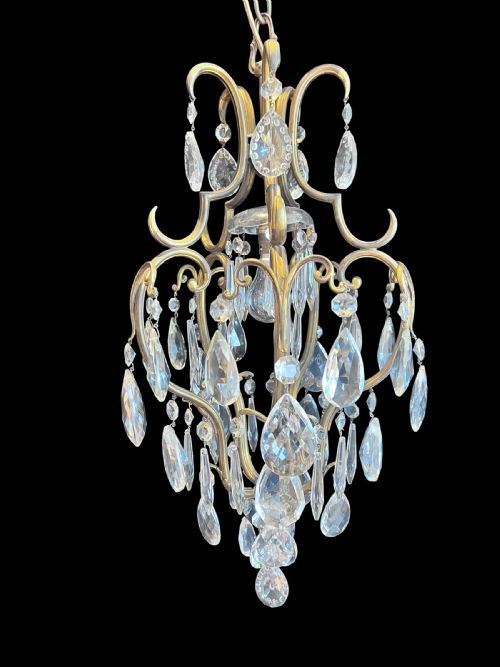
The selection ranges from Edwardian spike chandeliers to 1930s cut glass pieces and larger Bohemian examples. Forms span small basket lights, acorn plafonniers, and single light brass frames equipped with hanging prisms.
Origins stretch across English, French, and Italian workshops from the nineteenth century through the early decades of the twentieth century. These lighting pieces provide functional illumination while maintaining decorative elegance in transit zones.
How they were made
Metalwork frames utilise brass, chrome, and gilt brass to support the heavy glass elements. These structural components are cast or spun to hold the optical glass securely.
Prisms, drops, and lustres feature hand-blown and cut glass construction. Diamond cutting on bell jars and sharp facet work on crystal drops maximise light refraction.
Occasional pieces feature unexpected red glass drip elements among the crystal drops, adding a sudden splash of colour overhead.
What varies in quality
The density and clarity of the crystal components dictate the brilliance of the illumination. Richer material selection in the glass produces sharper prismatic refractions and deeper resonance when struck.
Metal framework construction determines structural integrity and longevity. Substantial brass or gilt brass castings provide superior weight distribution compared to lighter pressed metal alternatives.
The Hallway Crystal Pendant Light Glossary
- Plafonnier
- A ceiling-mounted light fixture that sits flush or very close to the ceiling surface. These enclosed or semi-enclosed glass bowls suit lower entryways.
- Bag chandelier
- A light fixture featuring a flattened or rounded base covered in closely strung crystal beads resembling a mesh bag. They concentrate light downward while sparkling across the perimeter.
- Lustre
- A large cut glass pendant drop hung from the rim of a chandelier. These larger elements catch stray light from the bulbs.
- Bell jar lantern
- An enclosed glass shade shaped like a traditional bell enclosing the light source. They protect internal candles or bulbs while offering clear visibility of the glass cutting.
Hallway Crystal Pendant Light: Frequently Asked Questions
How do I choose the right size?
Measure your ceiling height and hallway width carefully before selecting a hanging fixture. Compact bag chandeliers and small dome top designs work best in restricted spaces without obstructing movement.
Ensure adequate clearance beneath the lowest crystal drop so the fixture remains safe and visually balanced within the threshold.
Are these lights wired for modern use?
Many period fixtures arrive with updated wiring or modern components fitted to meet current safety standards. Rewired examples allow straightforward installation in contemporary homes.
Check individual listings for specific electrical details and consult a qualified electrician regarding safe installation practices.
What periods do these lights represent?
The available pieces span from the nineteenth century through the Edwardian era and into the nineteen thirties. Early twentieth century designs dominate the current selection.
Stylistic influences include French Chateau, Italian Regency, and Bohemian traditions alongside domestic English production.
How do I clean a crystal pendant?
Remove dust gently using a soft feather duster or microfiber cloth on the hanging drops and frame. For deeper cleaning, apply a mild glass cleaner to a cloth rather than spraying directly onto the metal and crystals.
Support fragile bag chandeliers and loose lustres carefully from underneath while wiping to prevent accidental strain on the wire lacings.