

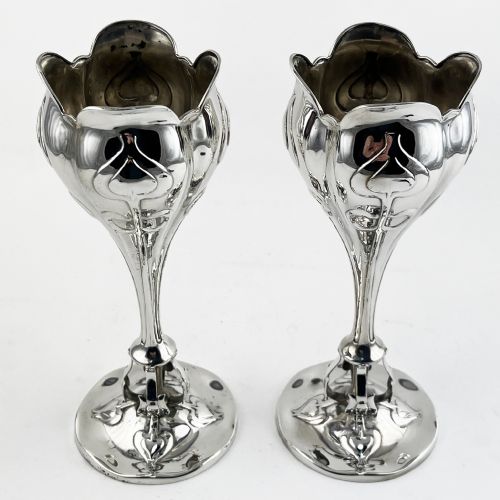


Hallmarked Sterling Silver Vases
Hallmarked sterling silver vases bring domestic polish and floral display together, offering tangible weight and bright metalwork for the table.
Hallmarked Sterling Silver Vases
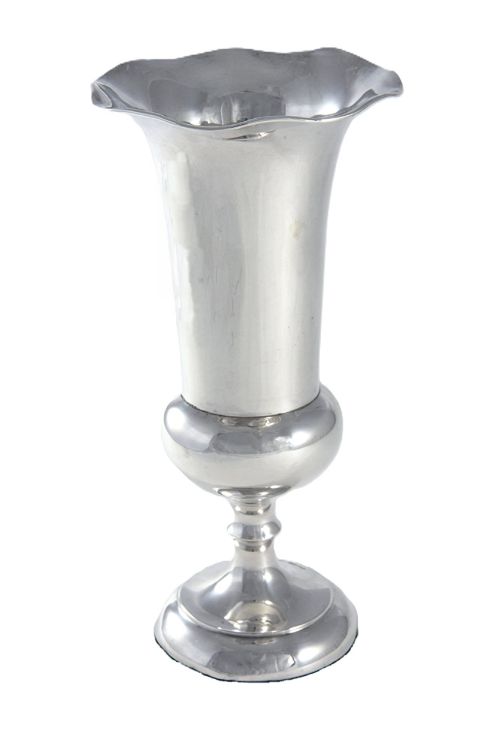
When searching for hallmarked sterling silver vases, buyers encounter items produced primarily during the Victorian and Edwardian eras, stretching from the late nineteenth century through to the early twentieth century. The forms available on this page include single posy vases, trumpet shapes, and pairs designed for symmetrical placement.
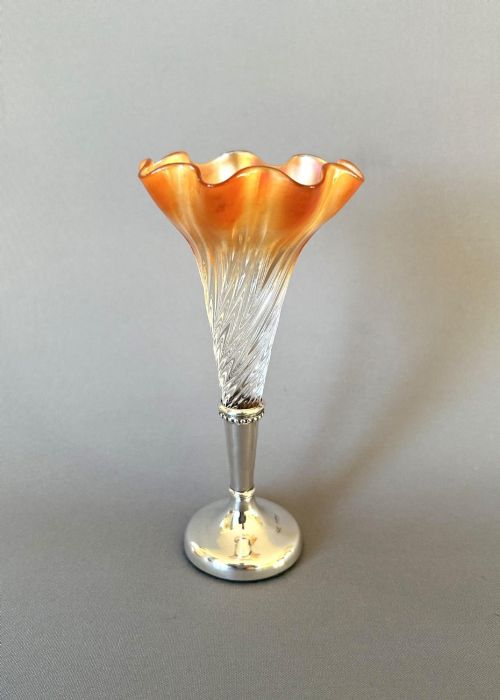
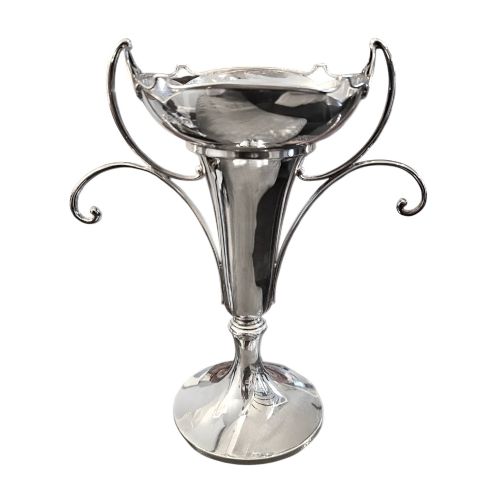
The objects span standard single-stem vessels alongside more complex table centerpieces such as epergnes and bud vases. Material combinations also appear, notably glass bodies fitted with weighted or solid silver bases.
Makers working within these periods favoured domestic floral display, resulting in vessels intended for small posies rather than heavy arrangements. Buyers will find both plain polished surfaces and distinctive Art Nouveau styling across the current selection.
How they were made
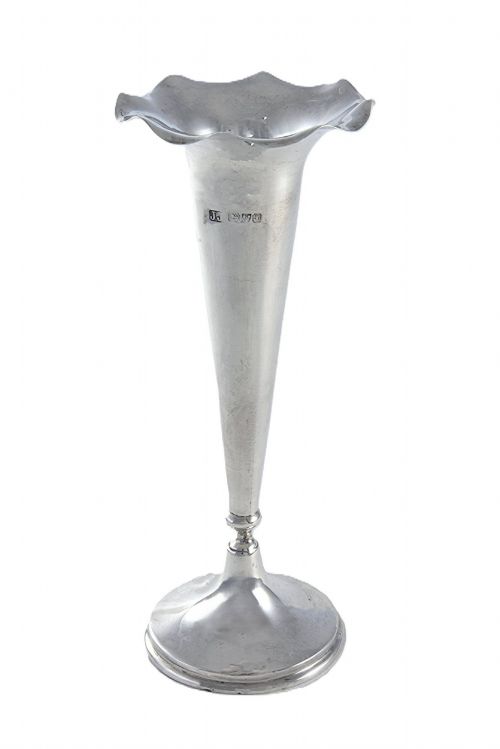
The construction of these pieces relies heavily on sterling silver combined with glass in specific instances, such as flutes supported by silver bases. Silversmiths shaped the metal through spinning or hammering to achieve slender trumpet and bud profiles.
Official hallmarks applied directly to the silver certify the purity of the metal and record the assay office and year of manufacture. These assay marks provide a precise historical anchor for each individual vessel.
Hallmarked Sterling Silver Vases Retail Price Guide 2026
Typical asking prices for hallmarked sterling silver vases among the pieces listed under this phrase on Sellingantiques today, from the lower quarter to the upper quarter. They describe what is for sale here now, not the wider market.
Listings on this page span the Victorian and Edwardian periods, featuring materials such as sterling silver and glass.
What varies in quality
Quality across these vessels is distinguished by the crispness of the silversmith's shaping and the retention of clean lines in decorative motifs. Art Nouveau examples depend upon the fluidity of their organic curves for visual success.
The presence of clear, legible hallmarks adds historical substance, while pairs demonstrate higher desirability when matching in weight, height, and decorative detail.
The Hallmarked Sterling Silver Vases Glossary
- Hallmark
- Official marks stamped onto precious metal to indicate purity, origin, and the year of assay. These stamps provide a reliable guide to an object's age.
- Posy vase
- A small vessel designed to hold a compact bunch of flowers. These items are typically compact in scale for table use.
- Trumpet vase
- A vessel featuring a narrow base that flares outward toward the rim in the shape of a musical horn. This silhouette was particularly popular during the Edwardian period.
- Epergne
- An ornamental centrepiece featuring a central basket or flute surrounded by smaller attached holders. They were used on dining tables for fruit or flowers.
- Sterling silver
- An alloy consisting of pure silver and other metals, usually copper, combined to increase durability. Items made to this standard carry official assay marks.
Hallmarked Sterling Silver Vases: Frequently Asked Questions
What periods do these silver vases date from?
The available pieces span the Victorian and Edwardian eras, with manufacturing dates clustering around the turn of the twentieth century.
Assay marks stamped onto the silver provide precise verification of the year and location of manufacture for each item.
How were trumpet vases used originally?
Trumpet vases were designed to hold single stems or modest floral arrangements for display on dining tables and mantelpieces.
Their slender profiles allowed guests to converse across a table without visual obstruction from large flower arrangements.
What is an epergne?
An epergne is a multi-vessel table centrepiece featuring a main flute or basket accompanied by smaller attached holders.
These pieces served as decorative centrepieces for formal dining tables during the Edwardian period.
How do I identify silver purity?
Silver purity is identified by examining the stamped hallmarks on the metal surface, which denote standard sterling quality.
These official marks often include symbols representing the assay office and the specific year of production.