

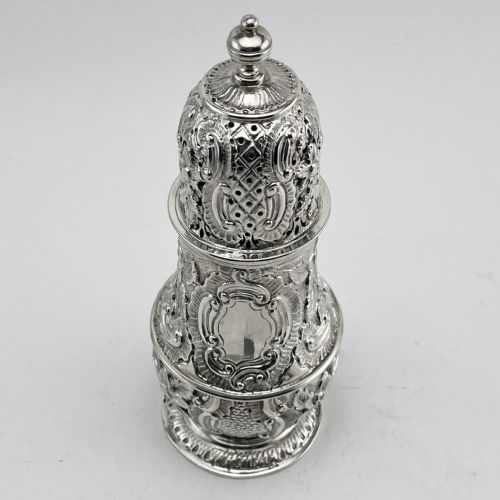


Hallmarked Silver Sifter Caster
A hallmarked silver sifter caster delivers fine dining history to the table, offering pierced lids designed for dusting sugar.
Hallmarked Silver Sifter Caster
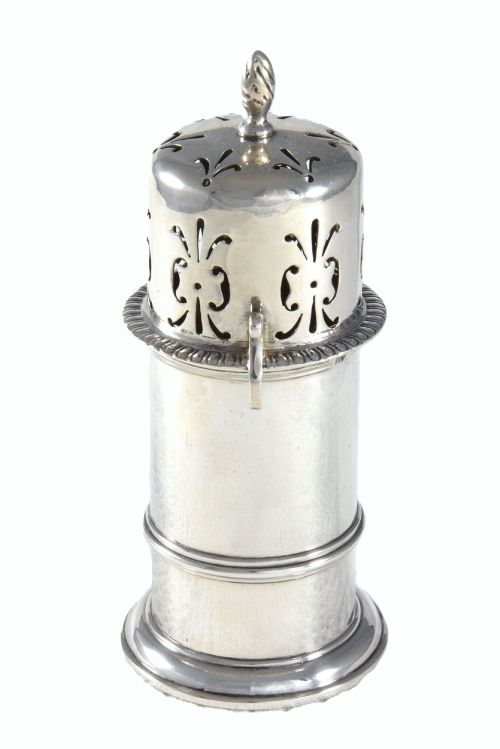
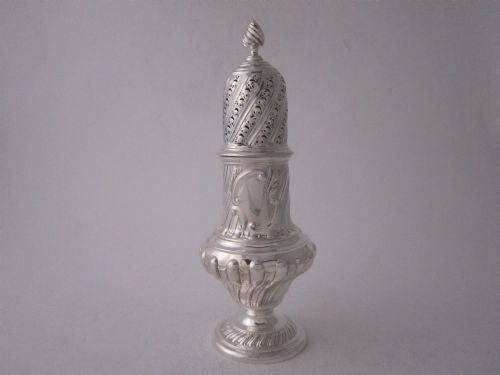
A hallmarked silver sifter caster is a form of tableware primarily used for dispensing sugar onto food and desserts. These pieces appear in forms such as sugar shakers, sugar casters, and lighthouse form vessels.
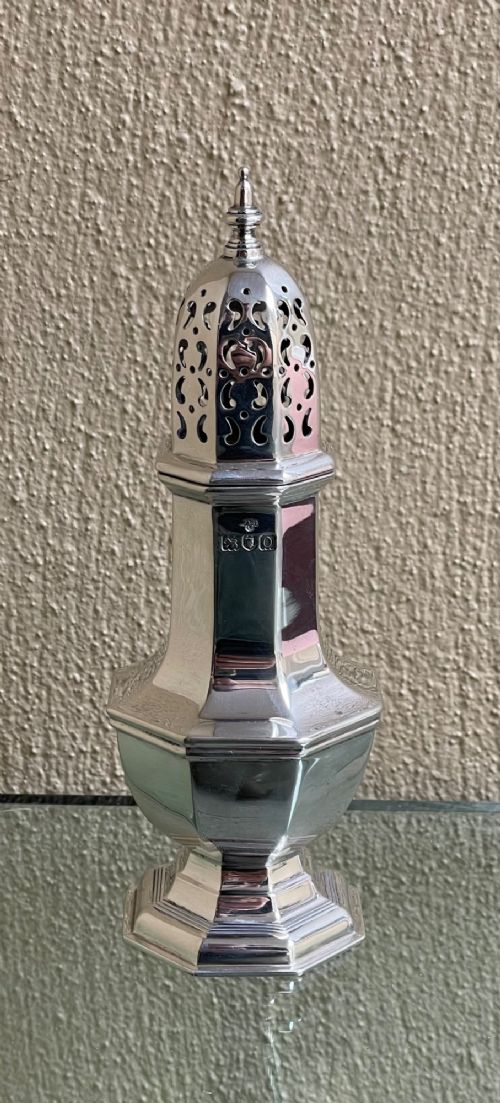
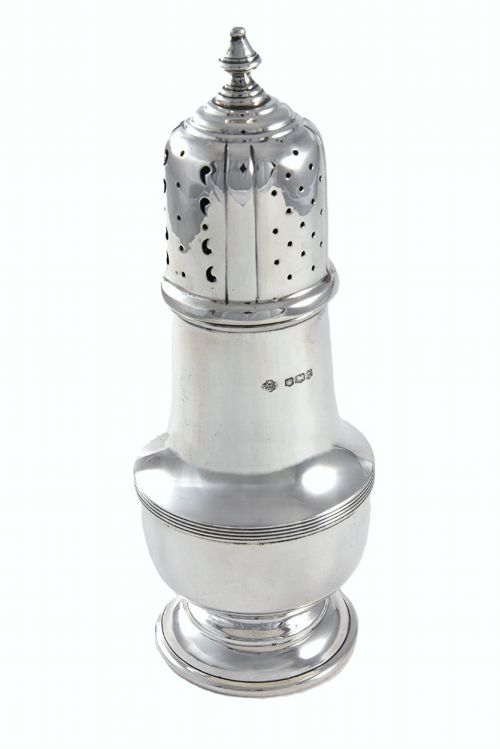
Buyers encountering this search phrase frequently meet examples from the Victorian, Edwardian, and Art Deco periods, alongside Georgian Revival and mid-twentieth century designs. Common shapes range from traditional pear-shaped silhouettes to polygon sides and cornucopia vessels.
The origins span various assay offices and makers in England, reflecting changing dining habits from the nineteenth century through to the 1940s. Each piece carries official hallmarks that verify its metal standard and year of manufacture.
How they were made
Makers fashioned these vessels using sterling silver and solid silver, occasionally incorporating silver gilt and cut glass elements to create distinct textural contrast. Metalworkers shaped the bodies through techniques like forming and casting, then pierced the lids with decorative patterns to allow sugar to pass through.
Silversmiths applied surface decoration ranging from restrained Art Deco polygon lines to elaborate Rococo Revival motifs and cornucopia details. The completed components received official hallmarks stamped directly into the metal to record the town, metal quality, and date.
Hallmarked Silver Sifter Caster Retail Price Guide 2026
Typical asking prices for hallmarked silver sifter caster among the pieces listed under this phrase on Sellingantiques today, from the lower quarter to the upper quarter. They describe what is for sale here now, not the wider market.
Listings feature solid silver, silver gilt, and cut glass across Victorian, Edwardian, and Art Deco styles.
What varies in quality
The distinction between standard examples and exceptional pieces rests upon the crispness of the piercing on the lid and the weight of the solid silver used in the body. Heavier gauge silver provides a more substantial feel in the hand and resists denting over decades of use.
Artistry in the silhouette and decorative chasing also separates ordinary tableware from masterwork productions. Pieces bearing marks from notable makers or featuring unusual forms like cut glass bodies with silver mounts demonstrate higher manufacturing ambition.
The Barker Brothers·James Dixon And Sons Ltd·Horace Woodward And Co Ltd·Roberts And Belk·Berthold Muller Hanau·Henry Williamson
The Hallmarked Silver Sifter Caster Glossary
- Hallmark
- A set of official marks stamped onto precious metals to guarantee the purity, origin, and year of assay. These stamps provide the primary evidence for dating British silver.
- Sterling silver
- An alloy consisting of 92.5 percent silver and 7.5 percent other metals, usually copper, chosen for durability in tableware. This standard forms the basis of the majority of British casters.
- Silver gilt
- Silver that has been coated with a thin layer of gold on its surface. This technique adds warmth and protects the interior of vessels from corrosive substances.
- Piercing
- The method of cutting decorative holes through the metal lid of a caster. This allows sugar to be shaken evenly over food.
- Assay office
- An official body charged with testing the purity of precious metal items and applying hallmarks. Towns like Sheffield, Birmingham, and London maintained active offices.
Hallmarked Silver Sifter Caster: Frequently Asked Questions
What is a silver sifter caster used for?
These vessels served a practical role on the dining table for sprinkling powdered or caster sugar onto desserts, pastries, and fruit. The pierced top allowed the host to control the flow of sugar evenly.
Over time, as dining styles shifted, they remained decorative table centrepieces while retaining their original functional design.
How do I read the hallmarks?
British hallmarks typically include a maker's mark, a standard mark indicating sterling quality, an assay office symbol, and a date letter. Each letter corresponds to a specific year of testing in that particular town.
Reference tables compiled from assay office records allow collectors to match the date letter and find the exact year of manufacture.
What is the difference between a sifter and a caster?
The terms are frequently used interchangeably to describe tall vessels with perforated lids designed for dry condiments like sugar. Historically, a caster referred generally to any container with a pierced top for shaking spices or sugar.
In modern collecting terminology, both names apply to these silver tableware pieces regardless of minor variations in lid hole size.
How should I clean my silver caster?
Silver requires gentle cleaning with a specialised non-abrasive polish and a soft cloth to remove tarnish without scratching the metal. Avoid harsh chemical dips that can strip away the original finish and darken recessed details.
Frequent light dusting and careful handling help preserve the surface polish and the integrity of the hallmarks.